Long Lu begins his career story with a number small enough to remember: 9,000 yuan. That was his first monthly salary in Beijing in 2013. Rent consumed enough of it that adding meat to a spicy hot pot felt like a luxury. It is a useful opening for someone whose subsequent résumé includes Harvard Business School, Amazon and IDEO. Before the institutional names arrive, there is dinner. The detail is modest, specific and memorable, exactly the sort of thing a résumé leaves out.
In his 2021 TEDxSansuSquare talk, Lu recalls much larger pay packets later in his career. Yet the comparison that interests him is between money and the experience of living with it. Progress on one measure had failed to settle the question on the other. The hot pot had become affordable. The definition of success still needed work.
That gives his story an appealing complication. A career can be impressive in a single line and much harder to understand in full. Job titles tell us where someone stood. They say considerably less about what the position made possible, which questions followed them home, or how they decided what to do next. Lu has made those questions part of his public conversation.
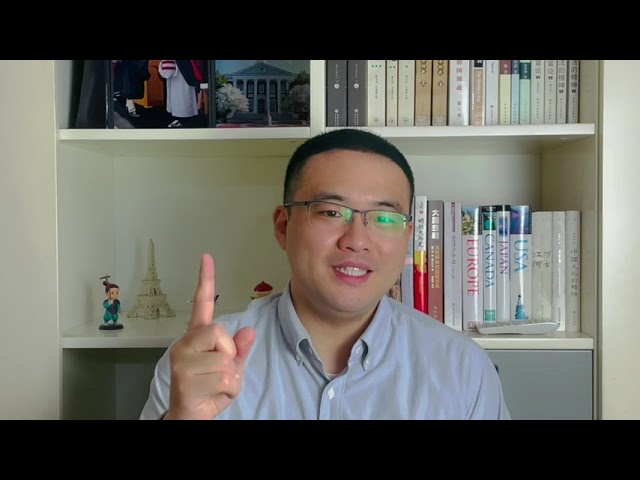
A résumé with several verbs
Born and raised in Shanghai, Lu describes having lived in seven cities. His working life has crossed several industries, too. He was a BP management trainee from July 2013 to June 2016, studied for his Harvard MBA between 2016 and 2018, and joined Amazon as a senior program manager in July 2018. His Amazon tenure ran to August 2019.
The sequence is easy to compress into a familiar professional success story. Compressing it also removes the interesting parts. Energy, technology and design put different kinds of work under the same broad heading of business. A trainee learns inside an organization. A program manager coordinates work. A business designer considers how an offering and its commercial logic fit together. The nouns on a résumé conceal a surprising variety of verbs.
Between March 2021 and February 2023, Lu worked as a senior business designer at IDEO. His coaching profile lists a startup CEO role beginning in October 2023. In Toronto, he is associated with TZG Partners as CEO in Residence. The record moves from established organizations toward business design and startup leadership, with education threaded through it.
It would be tidy to present every move as a step toward a destination visible from the beginning. Careers rarely grant the reader that convenience. Here, the observable thread is the work itself: learning organizations, managing programs, designing businesses and leading. Each entry adds a different practical setting in which a business idea has to meet the inconvenience of reality.
- 2013-2016BP · Management trainee
- 2016-2018Harvard Business School · MBA
- 2018-2019Amazon · Senior program manager
- 2021-2023IDEO · Senior business designer
- 2023 onwardStartup · CEO
The view from the concert seats
For his TEDx audience, Lu illustrates competitive escalation with a concert. One spectator stands to improve the view. Others must stand too. Eventually everyone is on their feet, with no collective improvement in what they can see. His example makes an abstract term, involution, immediately legible: extra effort can leave the whole room in much the same position.
The illustration works because it separates movement from improvement. Standing up is an action. A better experience is an outcome. Confusing the two is easy, especially when everybody nearby is moving. The first person has a reason to stand; the next person has a reason to follow. The result can still be absurd. A perfectly sensible individual decision has produced a room full of unnecessary standing.
As a way of reading a professional life, that distinction has teeth. A promotion can be valuable. A prestigious employer can open doors. A higher income can change daily circumstances. None of those facts automatically answers which door a person wants to walk through. The difficulty lies in choosing a measure that belongs to the life being lived, rather than borrowing the nearest available scoreboard.
Lu brings a business vocabulary to a personal subject. That is the interesting editorial tension in his story: the tools used to evaluate a career can also interrogate its rewards. A résumé records changes in role and affiliation. A life includes how time is spent after the résumé has been put away. The two documents would have very different tables of contents.
“Choose things to do, not things to be.”
Advice Lu shared on LinkedIn with “Faculty Advice for Graduates”
Business design, with a human question attached
Business design sits at a meeting point between an idea and the arrangements that allow it to work. The phrase contains both imagination and constraint. A product needs a purpose; an organization needs a way to deliver it. A promising concept still has to survive contact with customers, costs and competing priorities. Lu’s IDEO role places that discipline directly in his career.
An executive role introduces another set of demands. Decisions become schedules, responsibilities and commitments other people rely on. The title CEO in Residence suggests proximity to the work of building a business, but the more useful way to understand Lu’s background is through the concrete jobs around it. His record combines corporate experience, business design and startup leadership.
TZG Partners describes its focus in terms of investment, innovation and sustainable development in China and the United States. That is the organizational setting attached to his current professional profile. The firm’s stated mission supplies context for the affiliation; Lu’s earlier roles supply the personal history. Keeping both in view makes the profile more intelligible than treating a company’s ambitions as an individual’s accomplishments.
The question raised by his talk also has a place here. Businesses are routinely judged by visible outcomes, and people have to choose which outcomes deserve their attention. There is no neat conversion rate between an impressive title and a worthwhile afternoon. Business language is exceptionally good at counting certain things. Its usefulness increases when somebody remembers to ask what the count is for.
The application is someone else’s beginning
Lu also works with MBA applicants through Leland. He reports helping candidates gain admission to Columbia Business School, Tuck and Kellogg. His own educational experience therefore appears twice in the story: first as a qualification he earned, then as experience he offers to people considering a similar move. A graduation date becomes the beginning of another kind of work.
Coaching an applicant places the familiar career questions at an earlier stage. Why this degree? Why now? What does the person want to do with the opportunity? An application rewards clarity about experience and intention. The exercise is also revealing because an answer has to be specific enough to belong to one person. The most polished generality in the world remains a generality.
There is an ordinary social motive alongside the professional one. Lu says that, as someone new to Canada, he would be happy to make friends there. That detail gives his coaching work a human scale. International experience can look frictionless when reduced to city names. Arriving somewhere still means finding people, making introductions and turning a location into a place where one has connections.
His educational work has also included guest lecturing in innovation and entrepreneurship at Shanghai University of International Business and Economics, from April 2021 to April 2024. He describes coaching students on business plans and effective operations. These are practical subjects. A plan has to articulate what a business intends to do; operations determine whether the intention survives an ordinary working day.
By October 2024, his volunteer record also included the HBS Club of Toronto. The geography has changed, while the educational connection continues. Taken together, the coaching, lecturing and alumni activity show repeated participation in settings where other people are developing plans of their own. That is a concrete part of his working life, alongside the executive positions.
The MBA graduation year that connects Lu’s education with his later coaching work.
A city is more than a line on the profile
Toronto is Lu’s current base. Shanghai is his place of origin. Harvard Business School supplies a dated educational chapter between them, and his employment history adds several professional settings. The resulting profile has geographic breadth, but its most interesting feature is the recurrence of a practical question across those settings. What should professional progress enable?
The question becomes more useful when brought down to the size of an actual choice. A person can compare two roles, decide to study, coach an applicant or join an alumni community. These actions are small enough to describe clearly. Their value need not depend on whether they make a biography sound grander. Some of the most consequential decisions would look thoroughly unimpressive on a conference badge.
There is room for ambition in that view. Lu’s education and employment history contain plenty of it. There is also room to inspect ambition’s terms: the work involved, the people around it, and the opportunities it creates to contribute. The inspection matters precisely because a successful career offers more possible next steps. Having options does not relieve someone of deciding what they want those options to accomplish.
The opening image of dinner in Beijing remains a useful companion to the later titles. It keeps the story at the scale of a person making a life, with bills, choices and an appetite. Lu’s public career stretches across organizations and countries. His public question brings it back to something recognizable: getting somewhere is one achievement; deciding how to use the room it gives you is continuing work.