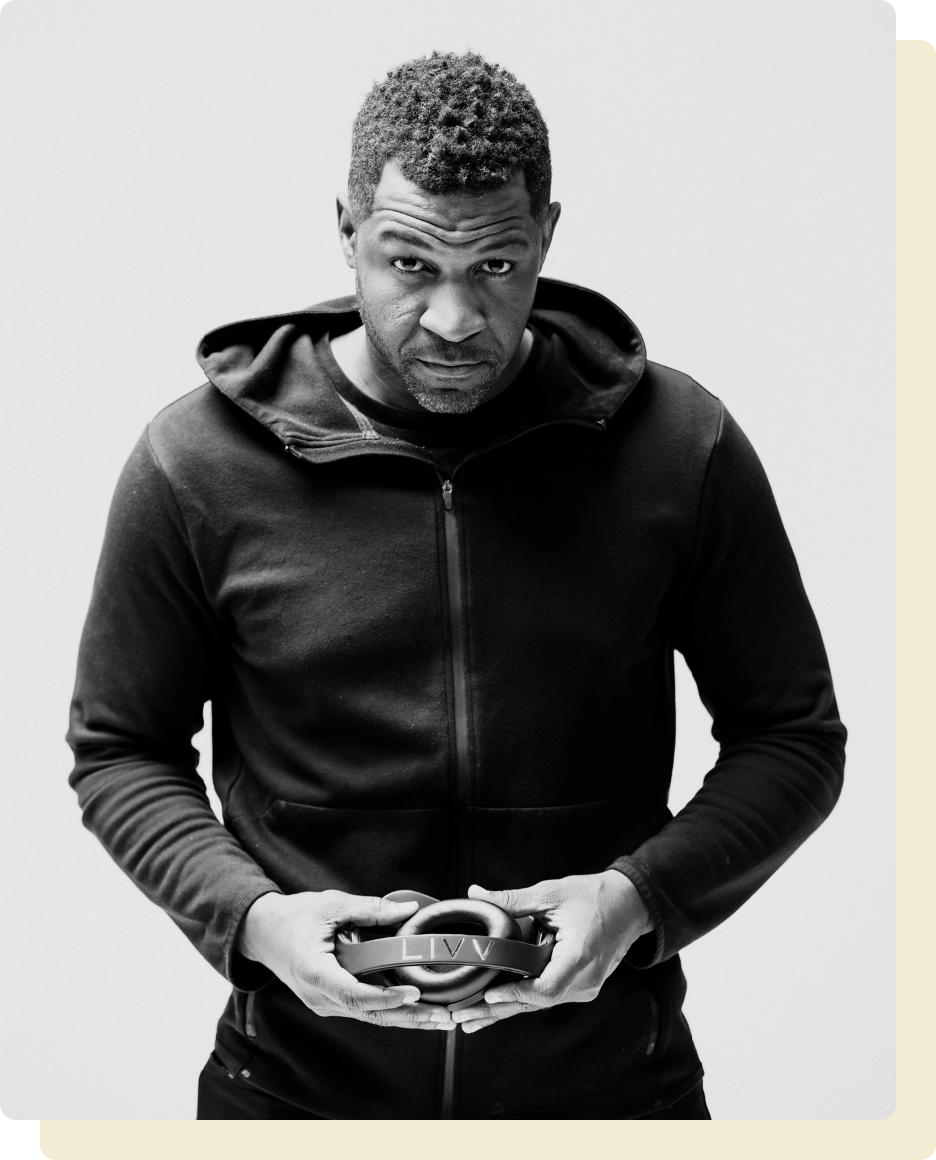
The useful thing about Mark Clayton’s founder story is that the light-bulb moment did not save him. The former Baltimore Ravens and St. Louis Rams receiver had an unusually clean problem to solve: premium over-ear headphones sounded the way he wanted, but they slipped during hard movement, collected sweat and sometimes broke. In 2008 he broke a pair of Beats. During knee rehab in 2010, an underwater treadmill made the fit problem impossible to ignore. He began sketching. The insight took minutes. The company took a decade.
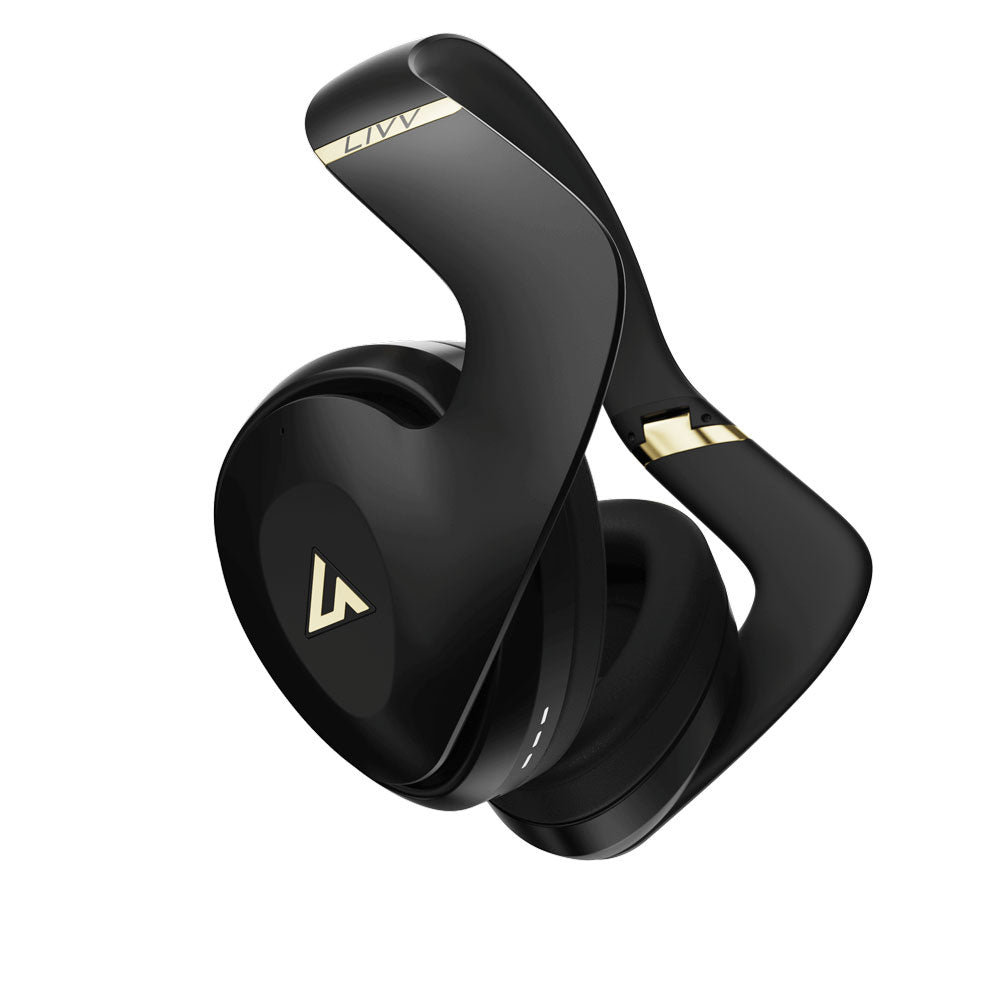
LIVV Audio now sells one flagship idea in two colors. The LIVV Pro is a $349.99 wireless over-ear headphone designed for athletes who do not want to surrender big drivers, active noise cancellation or physical controls just because they are moving. Its zig-zag counter-tension band tries to hold the earcups in position. The pads detach magnetically for washing. The enclosure is rated IPX4 against splashes and sweat. Battery life is advertised at 50 hours with noise cancellation off and 40 with it on.
That is the product. The business is a seven-person-ish, Texas-based consumer hardware company selling directly through Shopify into one narrow gap: earbuds are practical in a gym; premium over-ears are pleasurable almost everywhere else. LIVV is betting that enough people resent choosing.
01 / The wedgeThe entire company lives inside a headband
Most headphone pitches arrive carrying a shopping bag of familiar specifications: codec, driver size, microphones, battery, app. LIVV has those. The Pro uses two 40mm drivers, Bluetooth 5.3, five microphones, wear detection, transparency settings and up to 35 decibels of active noise cancellation. But none of that explains why the company exists. Its wedge is mechanical geometry.
A normal arch relies on passive inward spring tension. LIVV’s patented shape redirects force so the cups resist movement without simply squeezing harder. The large logo on the right cup is also a physical button, a small kindness when fingertips are sweaty and touch surfaces become guesswork. Magnetic pads can be removed, washed and replaced. Together, those choices treat headphones less like salon furniture and more like training equipment.
The customer is easy to picture: a lifter, runner, trainer or frequent traveler who likes immersive sound, dislikes in-ear pressure and is willing to wear a conspicuous object. The product also serves people who want one pair for the weight room, flight and desk. It is less convincing for swimmers, minimalists or anyone who needs headphones to disappear into a pocket. At roughly 350 grams in LIVV’s own specification, the Pro is equipment, not a whisper.
“Over-ear is a music thing. I love big sounds.”Mark Clayton, explaining the stubborn premise
02 / The first actKickstarter proved desire. Manufacturing graded the homework.
Clayton founded LIVV in 2013 after years of sketches and prototypes. Audio specialist Dale Lott helped develop the original sound and band. In September 2015, a Kickstarter campaign asked for $75,000. It collected $117,583 from 624 backers, or 156 percent of goal. The average pledge was about $188. For a first-time hardware founder, the green bar looked like validation.
The original $299 LIVV reached reviewers in 2016. It looked industrial: glossy cups connected by a stiff, tube-like SureFit band that hovered behind the head. It included 8GB of storage, letting an athlete drag MP3 files onto the headphones and leave the phone behind. Reviews agreed on the important bit. The headphones stayed put. One reviewer tried to shake them loose and failed. Another used them for CrossFit, running and hiking without slippage.
Then the supply chain delivered the kind of curriculum no podcast can reproduce. The first batch from a Chinese manufacturer ran late. A virus reportedly affected about a third of 1,000 units. LIVV recalled them and stopped. Crowdfunding had paid for a production attempt, not immunity from production. The original model survived as a very limited run.
What failed, and what the failure taught
A second verdict landed more quietly. Parkour users loved the secure original, but its aggressive engineering did not translate into broad desire. Women, Clayton later said, were especially lukewarm about the look. That changed the brief. The team no longer needed to prove it could lock a headphone to a skull. It needed enough hold for vigorous movement in a shape customers would wear through the rest of their day.
03 / The second actLess exoskeleton, more object of desire
LIVV paused, reconnected and eventually worked with JLab Audio to incubate a redesigned product. The current Pro borrows some familiar visual language from Beats - padded arch, hinges and sliders - then bends the band into LIVV’s own angular silhouette. It drops the original onboard MP3 storage and adds the table stakes of current premium audio: ANC, transparency, USB-C, a companion app and wear sensors.
The reset received $1 million in seed funding, including backing from former professional tennis player Mark Knowles, toward a reported $1.5 million target. That money is separate from the Kickstarter total and is the clearest public answer to what the second attempt cost outsiders. LIVV has not disclosed total development expense or revenue. It did state an ambition to sell 6,000 pairs in the first year of the redesigned launch. At list price, that would represent about $2.1 million in gross merchandise value before discounts, returns, retail margins and every expensive reality between a sale and profit.
Independent pre-production testing in early 2025 found reasons for both confidence and caution. The wired sound was excellent and the secure-fit details made sense. Bluetooth playback sounded compressed, while transparency was too aggressive and the app was not ready. That matters because LIVV cannot charge premium money for a product whose signature problem is solved while ordinary listening feels unfinished. Software is now part of the hardware promise.
The business model is refreshingly legible. Sell the Pro directly for $349.99 in matte black or creme latte. Offer free shipping, a 14-day return window and replacement pads. Build a brand around athletes rather than licensing a famous athlete’s name onto a generic chassis. In February 2026, LIVV appointed Dallas-based Uptown Agency as agency of record, a sign that its next bottleneck is awareness and conversion, not merely invention.
04 / The category betA narrow market can still be a real market
LIVV sits between two mature shelves. On one are workout earbuds from Apple, Beats and Jabra: tiny, stable and relatively unobtrusive. On the other are lifestyle over-ears from Bose, Sony, Apple and Beats: strong noise cancellation, recognizable shapes and retail distribution LIVV cannot match. LIVV’s argument is that neither shelf was designed around a barbell.
Its advantage is most persuasive when movement is forceful but not aquatic, sound matters enough to justify bulk, and hygiene matters over repeated sessions. The pads deserve more attention than their glamour rating suggests. A foam cushion soaked five times a week becomes its own ecosystem. Magnetic removal turns cleaning from a service problem into a sink problem.
Its disadvantage is equally plain. Secure over-ears solve a problem many customers already route around with earbuds. IPX4 is suitable for sweat and splashes, not submersion. A bold 350-gram headphone is not for a runner who wants to forget all hardware exists. And $349.99 asks buyers to trust a young brand beside products with mature apps, celebrated ANC and hundreds of retail counters.
What another founder can steal
- Start with a physical failure you experience repeatedly, not a demographic assembled in a slide deck.
- Name the prerequisite feature. For LIVV, fit stability makes every audio specification relevant.
- Use extreme users to prove function, then test whether ordinary buyers want the identity attached to the object.
- Treat factory, firmware and aesthetics as one product. Customers do.
- Keep the distinctive mechanism through a redesign, but release everything around it from founder ego.
The tempting copy is “athlete founds athlete brand.” The useful copy is narrower: observe a compromise, isolate the prerequisite, build the mechanism, and let the market insult the first version. LIVV’s second design exists because Clayton did not confuse strong feedback from parkour athletes with universal product-market fit.
That makes LIVV more interesting than a clean comeback tale. The company has a credible feature, a visible audience and an honest scar. It also has the harder work ahead: consistent wireless sound, reliable production, customer support and the slow conversion of a new category phrase - “luxury sport headphones” - into repeatable demand. A patent can protect the band. It cannot make the market care.
Clayton’s first product answered, “Can over-ear headphones stay on during a workout?” Yes. The LIVV Pro must answer a more commercial question: “Will enough people spend $349.99 to stop adjusting theirs?” That is a better question, purchased with ten years of imperfect answers.