The job next door involved Santa Claus. For a girl growing up in Grosse Pointe Woods, that was a persuasive introduction to working life. Lisa Vallee-Smith’s neighbor ran public relations for J.L. Hudson, the Detroit department store associated with the Thanksgiving parade. His daughter was her best friend. When Lisa asked what her father did, the answer supplied a name for something she already found fascinating. Public relations sounded like a profession worth investigating. It also sounded rather more entertaining than many jobs available to the adult imagination.
Years later, Vallee-Smith would help launch a technology communications agency, lead it through successive upheavals and hand its management to a longtime colleague. The route stretches from Detroit’s public celebrations to the business of explaining unfamiliar technology. More recently, it has led toward the civic institutions close to home. The thread is an interest in how organizations reach people, and what people might do once they are reached.
A parade, then the practical work
At Wayne State University, she studied communications and journalism/public relations. The training covered the mechanics behind the appealing job description: writing, editing, production and the legal questions surrounding journalism. An enthusiasm acquired over the garden fence had become something she could practice. In her own compact description, she was a “PR nerd.” There are worse qualifications for spending decades in a profession that requires an appetite for other people’s business.
Her early work at Detroit Renaissance put her among the city’s major events, including the Grand Prix, the Thanksgiving parade and the jazz festival. These were occasions with something concrete at stake: people had to know about them and want to turn up. An event supplies a useful deadline for a communicator. The public either arrives or it does not. The calendar is unimpressed by an elegant plan delivered late.
Agency leadership followed. After working in New York, she returned to Franco Public Relations Group in 1996 and became chief operating officer. In 1999, she was named president. By the time she co-founded Airfoil, she had experience of running an established agency. Starting another one meant exchanging the advantages of an existing institution for the freedom, and the exposure, of building her own.
Five employees, fewer clients
Airfoil began in 2000 with Vallee-Smith and fellow Franco colleague Janet Tyler. Its early home was a plug-and-play incubator in Detroit’s Penobscot Building. Vallee-Smith remembered five employees, fewer clients and laptops. It is a nicely proportioned founding picture: enough people to have an organization, few enough customers for everyone to know the arithmetic.
The opportunity was technology. Young businesses receiving investment needed help explaining themselves while competing and growing quickly. Airfoil organized around that demand. The timing brought opportunity and danger in the same package. A firm launched amid dot-com enthusiasm soon had to operate through the dot-com collapse. Later came the Great Recession and the pandemic. The date on a founding document does not tell you much about how many different businesses its owners will have to learn to run.
The firm’s relationships eventually included Microsoft, eBay, NVIDIA and other technology companies. Its startup portfolio included Duo Security and Carbonite. These names describe a range of communication problems. An unfamiliar company needs an introduction; an established company launching something new needs people to reconsider what they think they know. Both require attention to the audience’s starting point.
By its twentieth anniversary in 2020, Airfoil’s work included helping Microsoft explain cloud computing to business owners when the concept was still comparatively new. There is a particular satisfaction in that kind of assignment. The subject may be technical, but the question from the prospective customer is ordinary: what does this let me do?
The company kept changing shape
Airfoil’s ownership and leadership evolved alongside its clients. Vallee-Smith and Tyler became co-CEOs in 2012. When Tyler left in 2014, Vallee-Smith took over as CEO, president and owner. Tyler’s contributions had included the Silicon Valley operation and the agency’s global partner network. Airfoil’s story had already grown beyond its original Detroit room.
The next evolution concerned the work itself. In 2018, the agency launched Airfoil Digital, with Jon Pielak as president. Digital strategies, content marketing and demand generation joined the traditional communications business. The change reflected a practical problem for agencies: a client’s audience moves across channels without much concern for the boundaries on an agency’s organization chart.
In an anniversary video conversation with Keith Donovan, Vallee-Smith looked back across those changes. The occasion offered a different measure of a founder’s work from the familiar launch-day photograph. Twenty years requires repeated decisions about what to retain, what to learn and what to stop treating as permanent. Longevity makes adaptation less glamorous, perhaps, but considerably more useful.
The publicity professional who argued for listening
Vallee-Smith’s own writing gives a more precise view of her thinking. In 2014, she urged communicators to pay close attention to learning about audiences. She connected the technology industry’s interest in responsive systems with a communications profession that needed to understand people before addressing them. For someone paid to help organizations speak, she gave considerable weight to the preparation that precedes speaking.
Her argument included asking direct questions alongside examining behavioral data. It also challenged familiar measures of activity. Counting releases or impressions can describe a busy department without establishing whether the work achieved anything useful. A business needs to know what changed in understanding, preference or action. A spreadsheet can look reassuringly industrious while avoiding that question altogether.
This concern with the audience helps connect her agency career to her later fundraising work. A customer and a donor arrive with different purposes, but neither is obliged to care simply because an organization has prepared a message. Interest has to be understood and earned. The discipline travels well beyond the client meeting.
Making room at the top
On March 23, 2022, Airfoil announced that Keith Donovan would become CEO immediately. He had spent more than fifteen years at the agency. Vallee-Smith moved to chairperson, with responsibilities that included business development, partnerships and community relations. The announcement also set out a plan for Donovan to assume ownership over the following years.
She explained that the company was ready to move beyond its founder. Her confidence rested on years of working with Donovan, watching him manage and lead. There was no need to invent familiarity for the announcement. He had already spent a substantial portion of his career inside the business he was taking on.
A founder’s departure changes the meaning of success. Building an organization establishes that it can work with you in charge. A succession asks whether it can continue under someone else’s judgment. For Vallee-Smith, the decision extended the work of building Airfoil into a period she would no longer direct. By the autumn of 2024, a War Memorial profile described her as having sold her firm and retired from her profession.
The honor, and the work around it
Just before the handover, PRSA Detroit inducted Vallee-Smith into its Hall of Fame in 2021. The recognition considers contributions to the profession and the Southeast Michigan community. She had previously received the chapter’s Robert Hefty Distinguished Service Award in 2010. The two honors put formal dates around a career that included service to the profession as well as running a business within it.
Her connection to Wayne State also continued beyond graduation. Her public professional record includes service on its College of Fine, Performing and Communication Arts Board of Visitors and its Midtown Media Advisory Committee. The latter brought her back to an enduring concern: how Detroit’s story is told, and how the next generation learns to tell it.
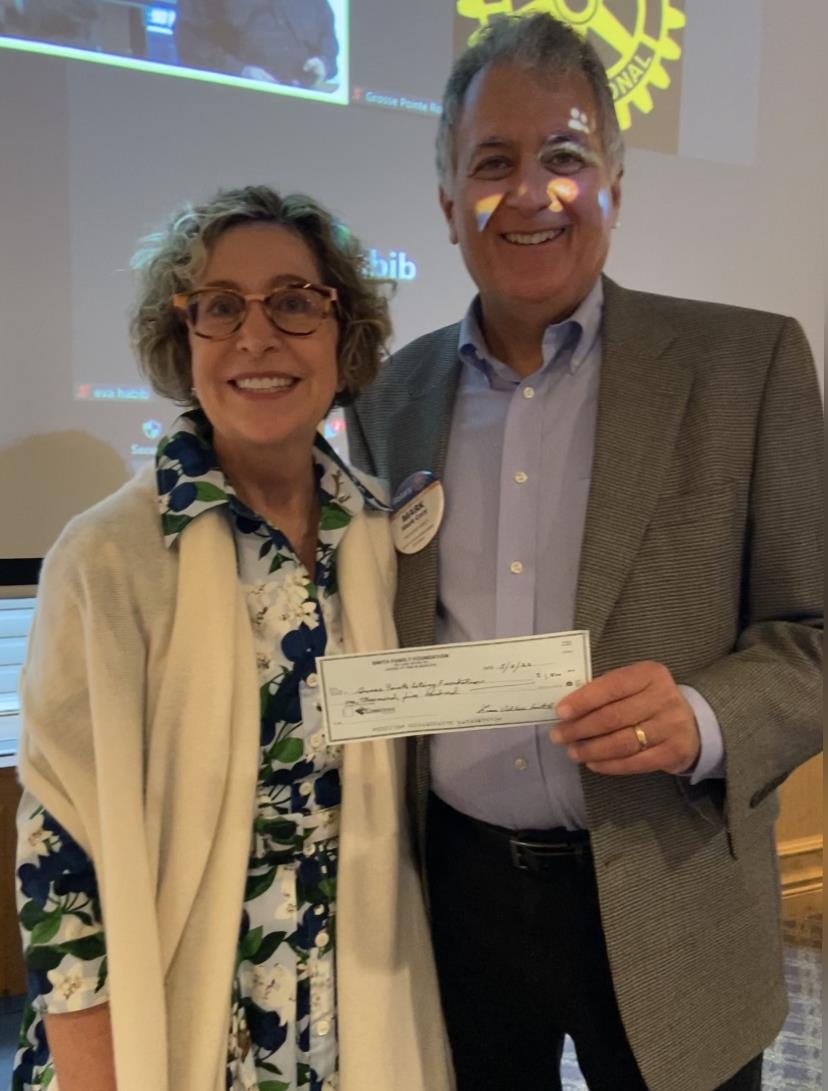
With her husband, Jeffrey Smith, she co-founded The Smith Family Foundation. Its public filings list her as president/director. Community work thus acquired an organizational home of its own, with responsibilities extending beyond a single donation or a good intention. The foundation’s name belongs to a family; the work connects that family to a much wider neighborhood.
Another committee, another beginning
The later appointments are specific and local. In 2024, she joined The Helm’s board; its current roster continues to list her among the directors. Grosse Pointe Farms communications committee minutes also record her participation in municipal work. These are settings where professional experience meets the everyday demands of a place.
At The War Memorial, the connection is personal as well as practical. Her father served in the Korean War. She has described preserving the campus, its programs and its veterans mission as reasons for joining the board. Chairing its Development Committee gave her another opportunity to shape an undertaking. “I like to start up and recreate things,” she said.
“I like to start up and recreate things.”
Lisa Vallee-Smith, on development work at The War Memorial
Her plans there include donor relationships, digital communication and support for the organization’s longer-term strategy. She places particular value on meeting people face to face. After a career spent helping organizations attract attention, she still gives a conversation a central place in the work.
The girl who wondered about the parade acquired a profession, then an agency, then the experience to help other institutions. Leaving the CEO’s chair opened more room for those commitments. The next beginning happened close to home.