The old caricature of public relations begins with a telephone. Someone knows a reporter, understands a deadline, and can persuade one person to pay attention to another. Weber Shandwick still does that kind of work. It is simply no longer the most revealing thing about the company. The more useful object is a fire alarm that does not lead to a fire.
In 2010, the agency introduced Firebell, a private simulation in which a client team could face the mess of a social-media crisis without actually becoming tomorrow's scandal. Posts appeared. Pressure accumulated. Decisions made inside the room changed the invented story outside it. The exercise treated communications less like speechwriting and more like flight training: mistakes were valuable precisely because nobody had to read about them over breakfast.
That product now looks like an early clue. Weber Shandwick, formed in 2001 by combining the Weber and Shandwick operations and then BSMG, grew up as a giant network of human expertise. Over the next quarter-century it also became a workshop for tools. Q used machine learning to triage social customer service. A-Hub sifted billions of data points for patterns. HALO, built on Google's infrastructure, brought AI agents, synthetic audiences and scenario testing into the everyday work of communicators.
The agency's most interesting product is not publicity. It is a shorter distance between surprise and a useful decision.The operating idea
The first thing to fail was the tidy sequence
Traditional campaign logic is comforting. Research first. Make something. Release it. Measure what happened. The problem is that public conversation does not politely wait for the final slide deck. A boycott crosses platforms before lunch. An employee memo becomes a screenshot. A joke travels into a community for whom it is not funny. By the time the measurement arrives, the consequential decision has already been made.
Weber Shandwick's product history reads like a series of attempts to collapse that sequence. Firebell moved learning before the crisis. Q moved sorting closer to the incoming comment; in a three-month pilot, the agency reported response times 93 percent faster than the manual operation, followed by an average 45 percent efficiency gain after six months. A-Hub moved analytics from the post-campaign report toward the beginning of strategy. HALO moves the rehearsal further upstream, letting teams test language and possible reactions before the public has a reason to care.
The known price attached to the latest move is a seven-figure, three-year agreement with Google for HALO. That is meaningful because agencies usually make money by billing people and projects. A reusable platform is a different kind of commitment: expensive before it becomes useful, valuable only if thousands of employees actually use it, and difficult to copy without the client work that supplies the questions.
Three businesses wearing one good coat
Today Weber Shandwick explains itself through three connected practices. Advisory works on the CEO agenda: reputation, public affairs, organizational change, transactions and crises. Create works on culture: ideas, influencers, media, content and experiences designed to earn a reaction. I/O works on the machinery: AI transformation, digital products, performance, analytics and intelligence. The point is not that every client buys all three. The point is that a public problem rarely stays in its assigned department.
Decide what the organization should do and say when business, politics and culture collide.
Make behavior, stories and experiences that people might choose to carry into culture.
Use data, technology and AI to see patterns, test choices and improve the work.
Its customers make the model legible. The agency says it serves nearly half the Fortune 100. Public work includes General Motors, Abbott, eBay, Ancestry and Mars brands, alongside Visit Sweden, HealthCare.gov and nonprofits. One brief might ask how to place SNICKERS on the game-day menu. Another might ask how to help three million Americans understand health coverage. The common problem is not industry. It is permission: why should anyone give this organization a moment of attention?
This is also where Weber Shandwick separates itself from a management consultancy or a traditional ad shop. A consultancy may end with a recommendation. An ad agency can purchase certainty about where a message appears. Weber Shandwick sells the more awkward middle - counsel that can survive contact with culture, plus creative work and distribution meant to make people respond without being ordered to. Edelman, Burson, FleishmanHillard, Ketchum, APCO and Brunswick all compete across parts of that territory. The proprietary systems are intended to make Weber Shandwick's version quicker, more measurable and harder to separate from the agency that built them.
The clue is “earned,” not “free”
Earned-first is easily mistaken for a thrift strategy: make something clever, hope the internet distributes it, save the media budget. That is not the proposition. Weber Shandwick still works across paid, owned, social and influencer channels. “Earned” describes the organizing idea. Give the audience something useful, surprising or culturally specific enough that sharing becomes part of the design rather than an afterthought.
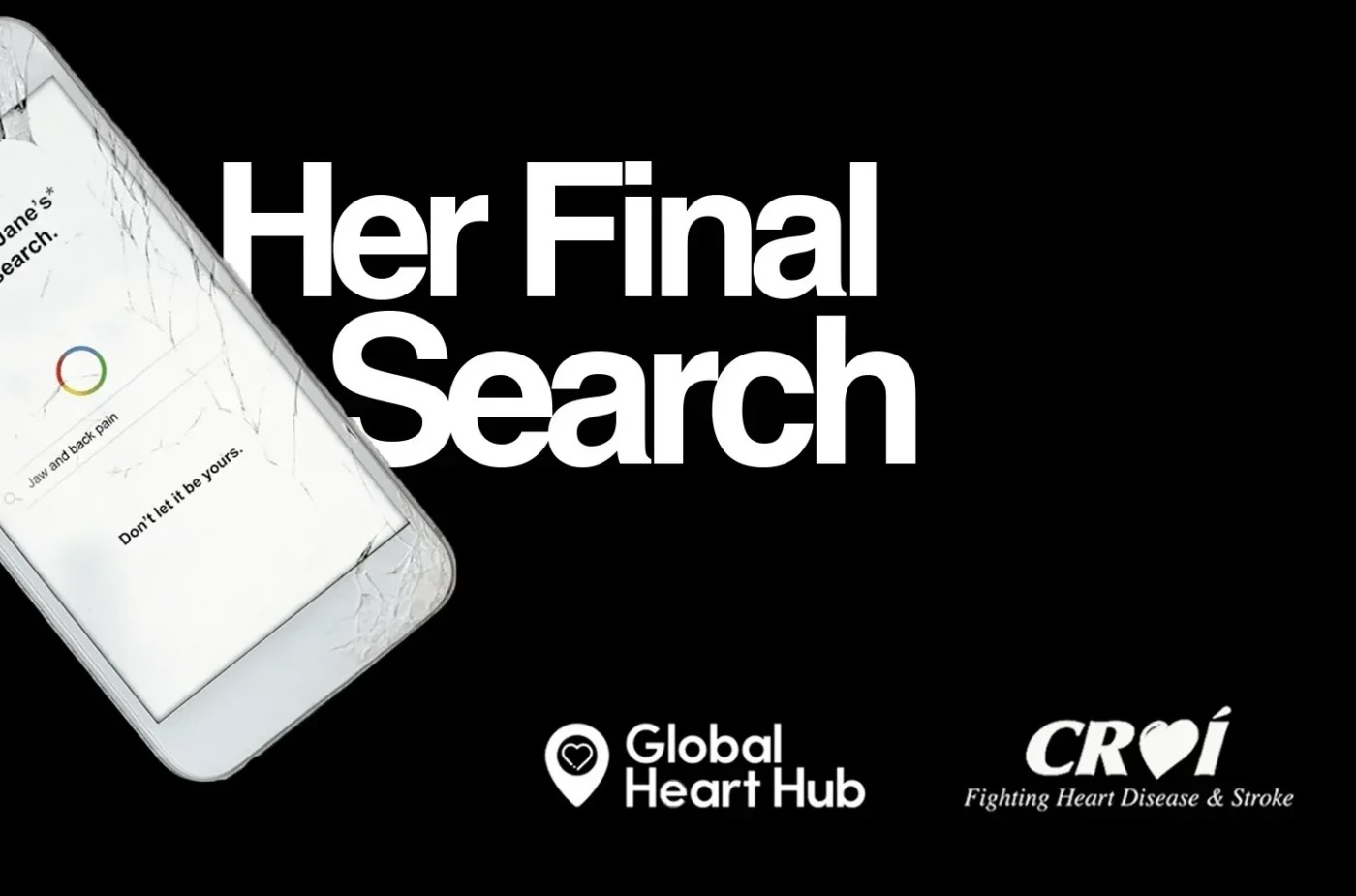
Visit Sweden's “Swedish Prescription” presented the country as a wellness intervention a doctor could prescribe. Corona's “Lime Guides” used food-safe lasers to mark cutting guides on actual limes. A women's heart-health campaign told the story of a fatal delay through a cracked phone and its final Google search. These are not variations on a press release. Each turns an abstract message into an object or behavior someone can explain to a friend.
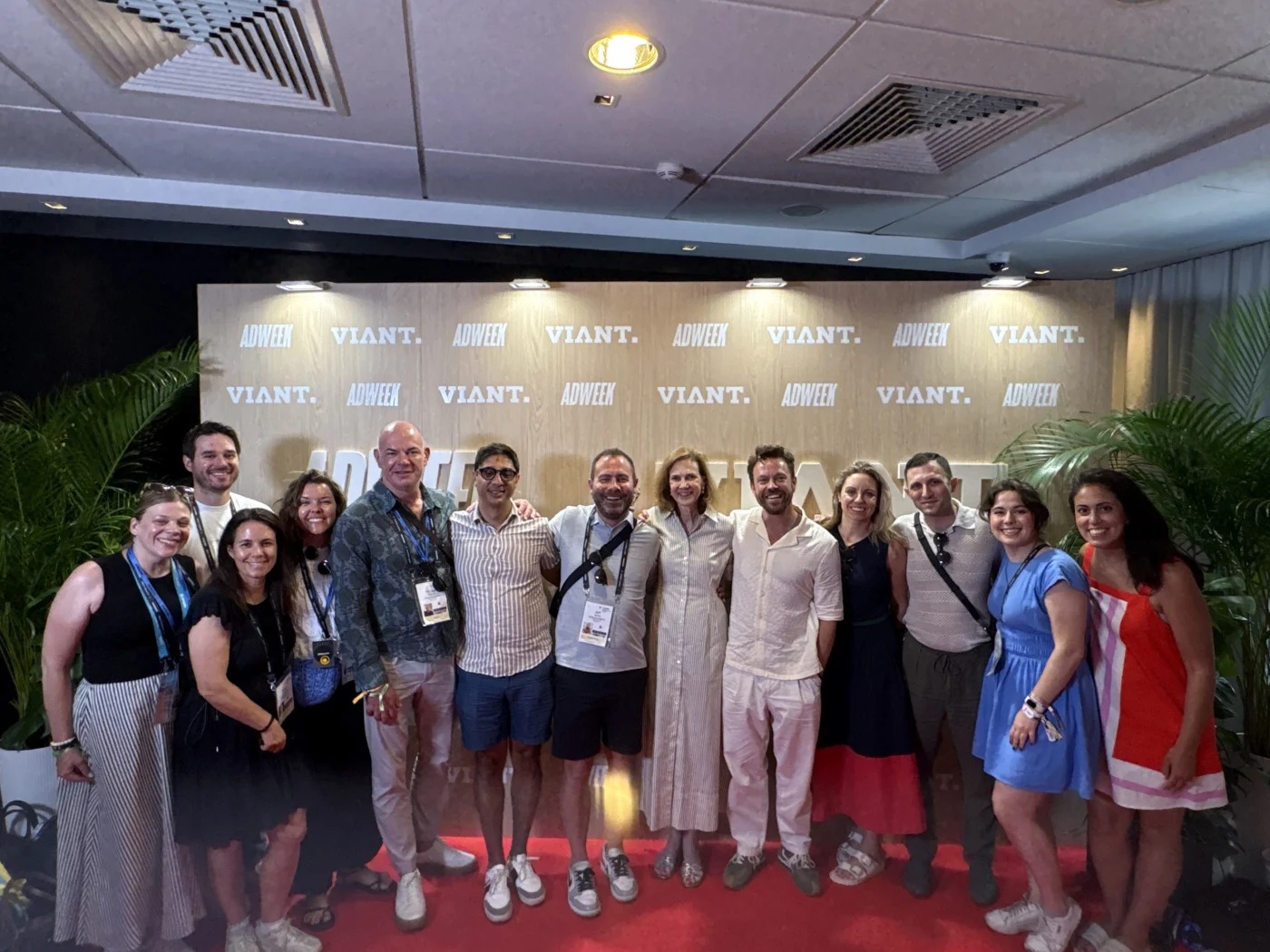
The awards are plentiful - the collective reported 25 Lions and 70 shortlists in 2026, its fourth consecutive year as Cannes' most awarded PR agency. But the more instructive measure is the one the agency developed with the Institute of Practitioners in Advertising. Its study found campaigns with strong earned effects were 53 percent more likely to produce very large business effects and 2.6 times more likely to generate very large profit growth. It is the argument underneath the trophies: attention matters when it changes behavior, not when it merely fills a dashboard.
What another team can actually copy
Most companies cannot reproduce a global network, a client list spanning six continents or a seven-figure AI agreement. Fortunately, those are not the portable parts. The repeatable move is to find a recurring decision that people currently make late, manually or under pressure, then create a rehearsal or tool that moves learning earlier.
A five-step field note
- Name the repeat emergency. Start with the question teams keep answering from scratch.
- Rehearse before automating. A simulation reveals the judgment calls a workflow must preserve.
- Put insight at the start. Research should shape the idea, not merely grade it afterward.
- Design a behavior, not a slogan. Give people something concrete to do, use or retell.
- Keep a human accountable. Speed is useful; ownership is essential.
Practice the crisis while the room is still calm.
Use machine learning to triage social requests.
Connect earned, social, paid and client data for prediction.
Give communicators agents, synthetic audiences and scenario tools.
What the machine still cannot earn
This approach has conditions. It is weak when an organization wants the appearance of listening but will not change its behavior. It becomes dangerous when synthetic audiences are treated as actual communities, or when speed outruns legal, ethical and cultural judgment. It is wasteful for a small, infrequent communications need that a clear brief and an experienced person can solve. And it cannot guarantee earned attention. The audience retains the right to shrug.
Those limits explain why Weber Shandwick remains an agency rather than a software company. The tools compress search, sorting and rehearsal. They do not assume responsibility for the decision. That still belongs to advisers and clients, in rooms where the neat output meets an inconvenient fact.
In September 2026, Karen Pugliese succeeded Susan Howe as chief executive, inheriting a company now inside Omnicom Public Relations and carrying the history of one of the industry's great agency rollups. Her more interesting inheritance is a habit: when the same problem appears often enough, do not only staff it. Build something that lets the next team encounter it sooner. The telephone is still on the desk. Beside it now sits a simulator, a data hub and an agent waiting to ask what happens next.
Keep following the signal
Explore the agency's work, thinking and public channels.