The infectious-disease physician who left the clinic, picked up a microphone, and went looking for the people the system keeps missing.
Lisa Fitzpatrick stands on a sidewalk in Washington, DC, holds out a microphone, and asks a stranger what they actually know about their own body. The answers are honest, sometimes wrong, often funny, and always the point. This is Grapevine Health, the digital health media company she founded and runs, and this is the work: meeting people where they already are instead of waiting for them to show up where doctors expect them to be.
The company has a plain idea behind it. In every neighborhood, health information already travels by word of mouth - through cousins, barbers, group chats, and the lady at church. The grapevine is real and it is fast. Fitzpatrick's bet is that you don't fight the grapevine. You feed it better information, in language people use, from a face that looks like theirs and is willing to listen.
So Grapevine Health makes short, plain-language videos. "Dr. Lisa on the Street." "Ask Dr. Lisa." Clips in English and Spanish, featuring providers of color, taking real questions from real people about rashes and diabetes and heart disease and whatever else someone was too unsure to ask a clinician. It does not diagnose. It clarifies, and it corrects the misinformation people have already absorbed from everywhere else.
She puts the mission bluntly: "We are trying to save lives." Not entertain. Not go viral for its own sake. Use the tools of media - YouTube, Instagram, Facebook, text messaging - to do what a fifteen-minute appointment can't.
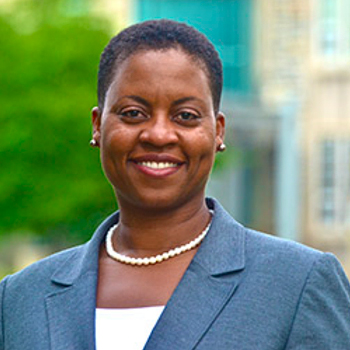
I just became humbled by how little people understood about what we were saying as providers and researchers.
That humility is the origin story. Fitzpatrick spent decades fluent in the language of medicine - infectious disease, epidemiology, the careful hedged sentences of research. Then she watched those same sentences land on patients like a foreign tongue. The gap between what doctors said and what people heard wasn't a footnote. It was the disease, in a sense. And nobody was treating it.
Early in her career, at a hospital in Southeast DC, Fitzpatrick had a patient who was HIV-positive and too scared to come back for treatment. The clinic, with its forms and fluorescent lights and weight of bad news, was the problem. So she found him on the street. She explained his diagnosis in plain words, in a place that didn't frighten him. He returned to the clinic the next day.
Forty-eight hours, start to finish. A man who had vanished from care walked back in - not because the medicine changed, but because the conversation did. Years later, that moment is visible in everything Grapevine Health does. The setting matters. The trust matters. And sometimes the most powerful clinical tool is a doctor willing to step outside the building.
Joined the CDC's elite Epidemic Intelligence Service, chasing outbreaks and investigating tuberculosis - the medical equivalent of detective work.
Served as a global health diplomat, carrying public-health work across borders long before "health communication" was a job title.
Associate professor of medicine, running clinical programs and teaching the next generation of physicians.
Led medical strategy for the District's Medicaid program - and saw firsthand where the system loses people.
Incorporated Grapevine Health, turning a career of observation into a company built on plain language and trust.
Professorial lecturer at the George Washington University Milken Institute School of Public Health, alongside running Grapevine.
I think distrust is driving a lot of the health outcomes we're seeing in Black and brown communities.
A lot of the magic is seeing that connection between a patient and a Black doctor who cares and is listening - and turning that into a tool that builds trust.
We are trying to save lives.
Improve health literacy and patient engagement by incorporating the voice of the community in the interventions.
Grapevine Health's channel is where the work lives - candid sidewalk interviews about science, public health, and the questions people never schedule an appointment to ask. Watch "Dr. Lisa on the Street" do what no brochure ever managed.
▶ Watch on YouTubeIn 2020, Fitzpatrick advised Joe Biden's campaign on health policy. The same year, she rolled up her sleeve for the Moderna vaccine trial - and shared the experience publicly, so her community could weigh a real decision with a real face attached to it. Policy rooms and clinical trials are exactly the kind of places a physician with her credentials is supposed to end up. She visits them, and then she leaves, because the work she cares about is happening on K Street and in Ward 8, microphone in hand.
That is the quiet radical move. Most of medicine pulls its most decorated people up and away from patients, into administration, into research, into rooms with no patients in them at all. Fitzpatrick keeps walking back down. The accelerated MD, the CDC pedigree, the Harvard degree, the Medicaid title - she spends all of it on the most ordinary thing imaginable: a clear conversation with someone who has questions.
She finished both her bachelor's and medical degree through a six-year accelerated program - a doctor by an age when most are still in undergrad.
Her career runs from disease detective at the CDC to Caribbean health diplomat to social-media host. Few resumes turn that corner.
Grapevine Health makes "Ask a doctor" videos in English and Spanish, featuring multiple providers of color - not just Dr. Lisa.
Her HuffPost contributor handle is "missfitz08" - a small reminder there's a person behind all the credentials.
She's a member of the National Academies' Roundtable on Health Literacy and an Aspen Institute Health Innovators Fellow.