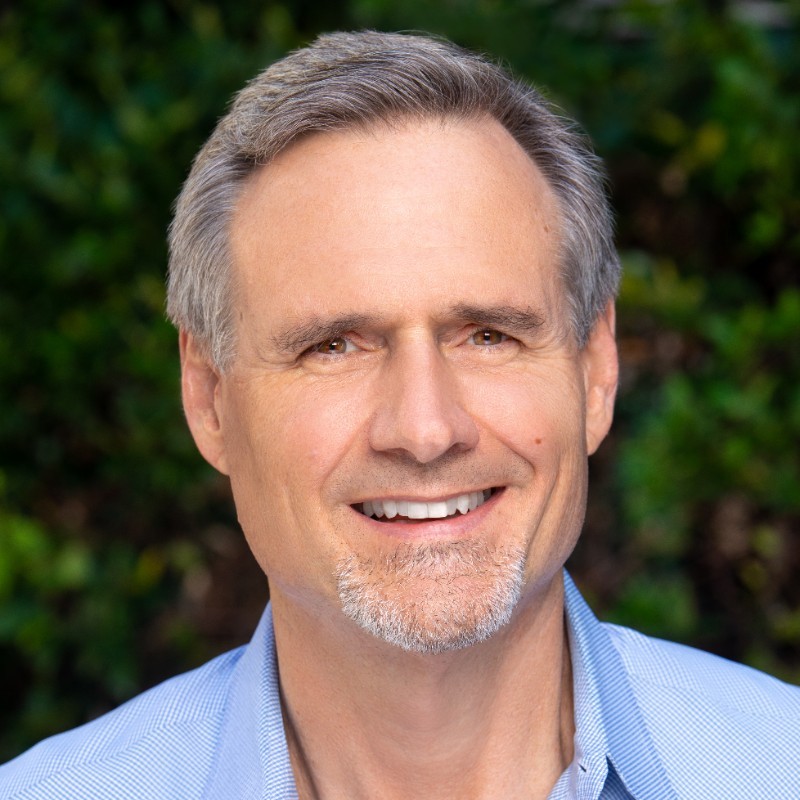
Eric Klasson runs a company built on a stubborn idea: that most crises leave a trail in data before they arrive, and that reading the trail early is worth more than reacting late. From an office on Brazos Street in downtown Austin, his firm Resilienci.ai turns human-movement patterns, behavioral signals and machine learning into hyperlocal maps of risk - who is exposed, where, and how supply chains might buckle next.
The work is deliberately unglamorous. There is no viral consumer app, no billion-dollar valuation to point at. What there is, according to public accounts of the company, is scale that looks improbable for its size: a coverage model that expanded from a few thousand reporting districts to roughly 130 million daily-updated risk indexes across the United States, maintained by a team that Apollo's records list at just three people. That ratio is the clearest window into how Klasson thinks about leverage. Small team, heavy automation, wide reach.
Resilienci.ai grew out of Pandemic Insights, the preventive-health software company Klasson founded as COVID-19 spread in 2020. The premise then was that combining data and AI with the messy reality of human behavior could help individuals and organizations make better decisions about slowing the spread of a virus - any virus, not just one. The company describes its aim as reducing the occurrence and impact of infectious disease, starting with COVID-19 and extending to a broader, multi-pathogen view, while folding forward-looking indicators into corporate supply chains.
“We needed to know, in a building, how people are moving through it. Nobody answered. We didn't think it was possible. Then our friends at Foursquare raised their hands and said we can tell you how many people are going through any building in the world.”
That partnership with Foursquare is a good illustration of how he builds. Rather than trying to construct a global foot-traffic dataset from scratch, Klasson found the group that already had it and wired their Places and Visits data into his risk models. The result, described in a Foursquare case study tied to his 2022 TEDxWaterStreet appearance, was the jump from 3,000 districts to 130 million risk indexes. It is a founder's move: know exactly which piece of the problem is yours to solve, and partner for the rest.
By the numbers
Finance first, mission second - then both at once
Klasson did not start in health tech. His early career reads like a tour of corporate America: Price Waterhouse, PepsiCo, ConAgra, FoxMeyer Corporation. Over the decades he collected the C-suite alphabet - CFO, COO, president, CEO - and a reputation for corporate finance, technology commercialization and the kind of public-private research partnerships that fund hard, non-obvious ideas.
The academic grounding is broad. He earned a bachelor's degree in economics from the University of Michigan, an MBA from Texas A&M University, and completed a pharmaceutical-industry executive development program at the University of Southern California - a combination that maps neatly onto a founder who moves between spreadsheets, science and go-to-market strategy.
His first real turn toward the work he does now came with Snaptrends, the social-media location-analytics company he co-founded in 2012. Snaptrends mined public social conversation to help organizations deploy emergency resources more intelligently. One of its more striking uses: tracking discussion of the Zika virus during the 2016 Rio Olympics, using social analytics layered onto Esri GIS mapping to see how and where an outbreak was being talked about. The through-line from that project to Resilienci.ai is direct. Same instinct - read the signal early - applied to steadily higher stakes.
Illustrative arc of Klasson's ventures - not to scale
A pitch for resilience, not panic
In June 2022, Klasson took the TEDxWaterStreet stage at the REImagine event in New York with a talk titled “The Future of Human and Economic Resilience.” His argument was less about fear than about capability: the technologies to guide safe human movement and to predict corporate supply-chain disruption at the vendor level, he said, already exist. The harder problem is the will to build and deploy them openly.
He framed himself there as a social entrepreneur working on behalf of the roughly 3 billion at-risk and under-vaccinated people worldwide - the population that existing health infrastructure tends to miss. That framing matters. It positions Resilienci.ai less as a premium enterprise tool and more as something closer to public infrastructure, an open resilience layer meant to reach people the market usually skips.
Hunger and disease, treated as the same problem
There is a second thread running through Klasson's life that helps explain the first. For more than two decades he has worked on food insecurity, serving as a nonprofit director for organizations including the Monterey County Food Bank, Mobile Loaves & Fishes and the Capital Area Food Bank - where he chaired the affiliated foundation. It is easy to read those roles as separate from his tech career. They are not. Both a food bank and an outbreak map are answers to the same kind of question: how do you keep a fragile system, and the people depending on it, from breaking under stress?
Austin, Texas - 701 Brazos Street, in the heart of downtown.
Information technology & services, focused on AI for health and resilience.
A reported $5M Series A, last raised in early 2021.
Partner for the data, own the risk model. Small team, wide reach.
What he is really building
Put the pieces together and a coherent figure emerges. Klasson is not chasing the newest trend so much as returning, again and again, to one theme. Snaptrends read social signals to help first responders. Pandemic Insights read behavior to slow a virus. Resilienci.ai reads movement and supply chains to warn before the shock. The tools change; the mission does not. It is prevention over reaction, quietly and at scale.
None of this guarantees the outcome he is after. Building open, hyperlocal resilience for billions of people is a far larger task than any three-person team can finish, and much of Resilienci.ai's ambition remains ambition. But the direction is unambiguous, and it is the same direction Klasson has been walking for years. He is betting that the world's next crisis is already legible in the data - and that someone should be reading it now, not after.