The Long Game
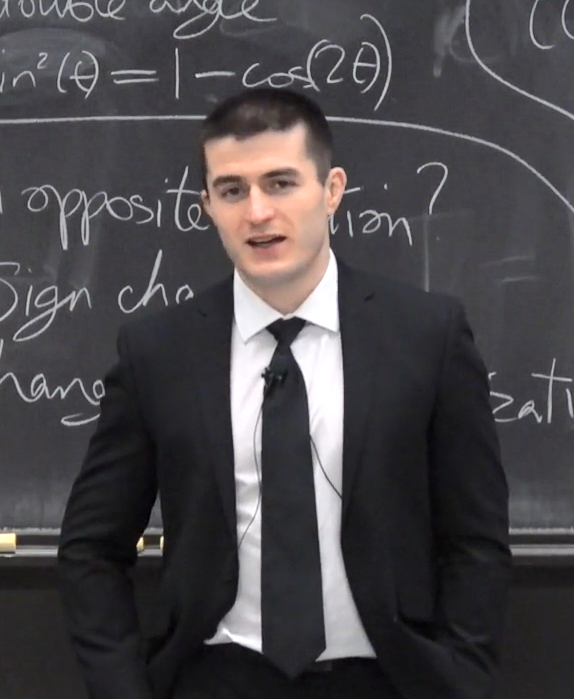
Lex Fridman shows up to interviews in a black suit and asks questions most journalists won't. Not because they can't - because they haven't read 1,000 pages of Dostoevsky, spent a morning on the mat training jiu-jitsu, and also hold a PhD in electrical engineering. The combination is unusual. The results are unignorable.
Since 2018, he has hosted the Lex Fridman Podcast - first as "The Artificial Intelligence Podcast," a name that quickly proved too narrow for what he was actually doing. Today, episode #490 is a deep dive into the State of AI in 2026. Episode #489 is about uncontacted Amazonian tribes and jungle conservation. That range is not an accident. It is the point.
As a research scientist at MIT's Laboratory for Information and Decision Systems, Fridman works on problems at the intersection of human cognition, machine perception, and autonomous systems. His academic publications on autonomous vehicles and behavioral biometrics gave him the vocabulary to speak fluently with the engineers building the future. His early life - emigrating from the Soviet Union to suburban Illinois at age 11, growing up in a household where his father was a plasma physicist and his brother would go on to be a university professor - gave him something harder to quantify: a genuine, slightly-unnerving hunger to understand everything.
The podcast has become the vehicle for that hunger. More than 490 episodes. Over 855 million views. Guests who range from Elon Musk to Noam Chomsky to Jensen Huang to Indian Prime Minister Narendra Modi. Each conversation runs for hours. Each one is available free. The business model is straightforward: be so compulsively useful that the world keeps showing up.
"I'm a silly little kid trying to do a bit of good in this world."
- Lex FridmanThat self-description lands differently when you realize the audience. MIT Professor Manolis Kellis put it more precisely: Fridman is "a listener...there to learn." The result is a conversational style that makes guests relax into candor - scientists explain their most speculative theories, politicians say things they probably wouldn't in a press briefing, philosophers go three levels deeper than they usually do in public.
Nobel laureate Frank Wilczek has praised his communication skills. MIT LIDS director Sertac Karaman has cited his research contributions. Critics point out that his friendly, non-adversarial approach can let problematic claims pass unchallenged. Fridman doesn't dispute this entirely - he has said, repeatedly, that his job is to understand his guests, not cross-examine them. Whether that is a flaw or a feature depends on what you think a long-form interview is supposed to accomplish.
From Chkalovsk to Cambridge
Alexei Fridman was born on August 15, 1983, in Chkalovsk - a small city in the Tajik Soviet Socialist Republic. His father, Alexander Fridman, is a plasma physicist who would later become a professor at Drexel University. His brother Gregory followed into academia. The family moved to Moscow, then emigrated to the Chicago area around 1994, shortly after the Soviet Union's collapse.
He attended Neuqua Valley High School in Naperville, Illinois. At Drexel University in Philadelphia, he earned a B.S. and M.S. in Computer Science in 2010, then a PhD in Electrical and Computer Engineering in 2014. His dissertation - "Learning of Identity from Behavioral Biometrics for Active Authentication" - was a study in using behavioral patterns to identify people. The interest in understanding human behavior through data would run through everything that followed.
In 2014, he spent six months at Google working on AI identity authentication. The following year, he moved to MIT's AgeLab as a research scientist. There, he led a team developing machine learning algorithms for semi-autonomous vehicles in collaboration with Toyota - analyzing how humans interact with technology that is partly in control and partly asking them to be. The research gave him a front-row seat to one of the most consequential engineering debates of the decade.
In 2019, Elon Musk publicly praised a Fridman-authored MIT study on Tesla's Autopilot system - a study that concluded drivers remained attentive while using it. The endorsement made Fridman's profile spike overnight. The study was also non-peer-reviewed and drew pointed criticism from other AI researchers. Fridman's name was now known well beyond academia. The podcast, launched a year earlier, was already recording the conversations that would define the next chapter.
490 Conversations & Counting
The Lex Fridman Podcast started in 2018 as a narrow project: conversations about artificial intelligence, machine learning, and the future of autonomous systems. Within two years, it had expanded to cover everything. The name changed from "The Artificial Intelligence Podcast" to "The Lex Fridman Podcast" - an acknowledgment that the container had grown larger than any single subject.
What makes the format work is deceptively simple: Fridman comes deeply prepared, moves slowly, and does not try to generate controversy. He asks what a guest thinks about mortality. He asks Elon Musk about loneliness. He asks a mathematician about the emotional experience of encountering infinity. The questions are not gotchas. They are invitations, and they produce answers that shorter, more combative formats never would.
By 2026, the podcast has passed 490 episodes. Episode #490 - a conversation with ML researchers Nathan Lambert and Sebastian Raschka on the State of AI in 2026 - covers open versus closed models, China-US competition in AI, RL with verifiable rewards, and AGI timelines. Episode #489 is Paul Rosolie on uncontacted tribes in the Amazon and the fight to protect rainforest from loggers and narcos. The range is a deliberate editorial choice: the most important conversations in science, technology, history, philosophy, and human connection, with no wall between them.
Black Belt in Everything
Lex Fridman holds black belts in both Brazilian jiu-jitsu and judo. He earned his BJJ black belt under Rick and Phil Migliarese and trains regularly, competing in BJJ tournaments against opponents who are often younger, physically stronger, and entirely dedicated to the sport. He has said he believes the brown belt was the hardest rank to earn - the competition at that level is brutal, with no shortcuts.
The judo background shapes how he moves on the ground. Cross-training in throwing arts gives a jiu-jitsu player different instincts - where to be, how to fall, what distance means. It also gives them a particular kind of equanimity about losing, because in judo you fall constantly, and falling correctly is a technical skill unto itself.
He is also a marathon runner. He plays guitar. He maintains a public reading list that includes 1,000-page Russian novels (Dostoevsky, Tolstoy), Nietzsche, Camus, and graduate-level science and mathematics textbooks. His personality type has been identified by multiple assessments as INFJ - the so-called "Advocate" type - characterized by deep empathy, a preference for listening over speaking, and an almost compulsive orientation toward meaning.
The martial arts training and the intellectual work are not separate. Fridman has talked at length about how jiu-jitsu taught him that there is always someone who knows more than you, and that this reality is not humiliating but clarifying. The mat is an honest place. The podcast is an attempt to bring that same honesty to the conversation.
What He Actually Says
I'm a silly little kid trying to do a bit of good in this world.
Jiu-jitsu teaches you that there's always someone better than you, and that's a beautiful thing.
The most important thing in life is to love what you do.
The pursuit of knowledge is the greatest adventure.