A brewery cooler is a rather good test of an IT company. The machine has no interest in your cloud strategy. It has one job, and the beer inside it offers a blunt verdict on whether that job is being done. In 2018, Lewan Technology described requests to monitor brewing equipment, including refrigerators, fans, and coolers. A business that began with calculators had found its way to the temperature of somebody’s beer.
- Lewan combines office printing with managed IT, cloud infrastructure, security, and support.
- Its documented model includes partial coverage for companies that already have IT staff.
- The lesson for buyers: agree who acts on a warning before buying more monitoring.
That curious journey is a useful entrance to the company. Lewan’s place in the market is between a customer and the collection of machines, systems, and suppliers that customer needs to work. Its proposition concerns the ordinary business day: documents move, people connect, equipment works, and an interruption reaches someone equipped to handle it.
The calculator was only the beginning
Paul Lewan founded the business in 1972, selling calculators. By 2001, BizWest’s account described a computer retailer and systems integrator serving Northern Colorado and southern Wyoming. Regional manager Steve Cluff explained a brief that extended from network design to deployment and maintenance. The relationship had grown beyond the machine on the desk.
There is an appealing lack of drama in that progression. One office device gives way to another; the customer still needs help. Read this history as an argument for staying close to the work. A company devoted exclusively to yesterday’s equipment has a difficult conversation ahead. A company that understands the customer’s routines has somewhere else to go.
The ownership story adds another layer. A 1999 FTC record names Global Imaging Systems as the acquiring party in a Lewan transaction. Xerox subsequently acquired Global Imaging in 2007. Xerox’s annual report puts that larger acquisition at approximately $1.5 billion, net of cash acquired. That figure belongs to the whole Global Imaging transaction; it is no price tag for Lewan alone.
The result is a regional service identity within a much wider corporate network. Lewan’s public company description emphasizes Colorado, Wyoming, New Mexico, and beyond. Xerox ownership helps explain why an IT services portfolio still has printing at its center. The business grew additional responsibilities without shedding the office’s physical machinery.
The trouble between the suppliers
Consider a hypothetical office whose application has become painfully slow. Its staff see one problem. Behind the screen may sit several suppliers: connectivity, hosting, software, and local hardware. Every supplier can have a perfectly respectable support queue. The customer can still spend an afternoon carrying messages between them.
Lewan’s monitoring work addresses that gap. The LogicMonitor account of its service describes shared dashboards that let Lewan collaborate with cloud providers and telecommunications partners. Customers in co-managed arrangements could also inspect their environments and handle some issues themselves. Visibility became something to distribute, rather than something to keep behind the service desk.
“We started Monitoring as a Service with LogicMonitor.”Wray Smith, then VP of Technology Services
Lewan packaged installation and tuning into a monitoring service. In one arrangement, the customer receives the alerts; other needs call for greater operational involvement. This matters commercially. A business can buy the capacity to see without purchasing the same amount of outside intervention everywhere. Lewan, meanwhile, can charge for useful oversight as a defined service.
The limitation is equally practical. A dashboard needs data, thresholds that mean something, and a person who owns the response. Those are buying conditions, not decorative contract language. If the alert lands in an unattended inbox, the graph has merely recorded the trouble with admirable punctuality.
- ObserveCollect the relevant signal.
- InterpretDecide what warrants attention.
- AssignName the responder.
- ActResolve or escalate.
Editorial model: the last two steps deserve as much attention as the software.
The beer is a business metric
CRN reported that Lewan’s services revenue rose more than 20% in 2017. Its 2018 coverage linked the growth to monitoring and described interest from a brewery and a cheese manufacturer. The point was expanding observation from IT devices to the conditions of a business process. These were reported examples, not a claim that Lewan operates every customer’s factory.
A historical company-reported result covered by CRN in 2018. Not a current growth forecast.
The cooler makes the argument wonderfully legible. Ask an executive to admire a technical measurement and you may get a polite nod. Connect the measurement to the product the business must preserve and the conversation acquires purpose. For a buyer, the transferable habit is to begin with the consequence: what must keep working, and what early signal would justify action?
You cannot hire a fraction of a person
The other useful detail is organizational. In a 2019 conversation with Aux, then CTO Scott Pelletier described flexible services that could cover all of a customer’s IT, selected portions, or gaps in an existing team. Aux was announcing a credit-union technology partnership, including access to project work and CIO/CISO-level services.
A small organization may need a specialist’s judgment periodically and dependable coverage every day. Those are different purchasing problems. Partial service lets the organization discuss the missing responsibility instead of pretending the answer must always be another full-time position. The appeal is especially clear when the customer already has capable staff who need additional skills or availability.
Pelletier also described combining project managers and client experience managers into a client success department. The reason was coordination: a project changes the same account whose daily service another person oversees. His interview outlined vendor advocacy too, including speaking directly to a software supplier on the customer’s behalf. These are management’s descriptions of its approach, but they identify concrete things a prospective customer can ask to see.
The printer still has a vote
The print business supplies a less glamorous, more tangible view of the model. MSU Denver’s procurement guidance identifies Lewan as its partner for leased or purchased networked multifunction devices and says Lewan leases Xerox models. The buying sequence includes selecting a device, obtaining a quote, and completing purchasing steps before installation support.
University of Northern Colorado guidance likewise documents device ordering and self-service portals. Xerox maintains a Lewan supplies-registration page offering genuine Xerox supplies and toner for non-Xerox printers. Together, these details show the business model in working clothes: equipment, consumables, procurement, maintenance, and support around an institution’s daily use.
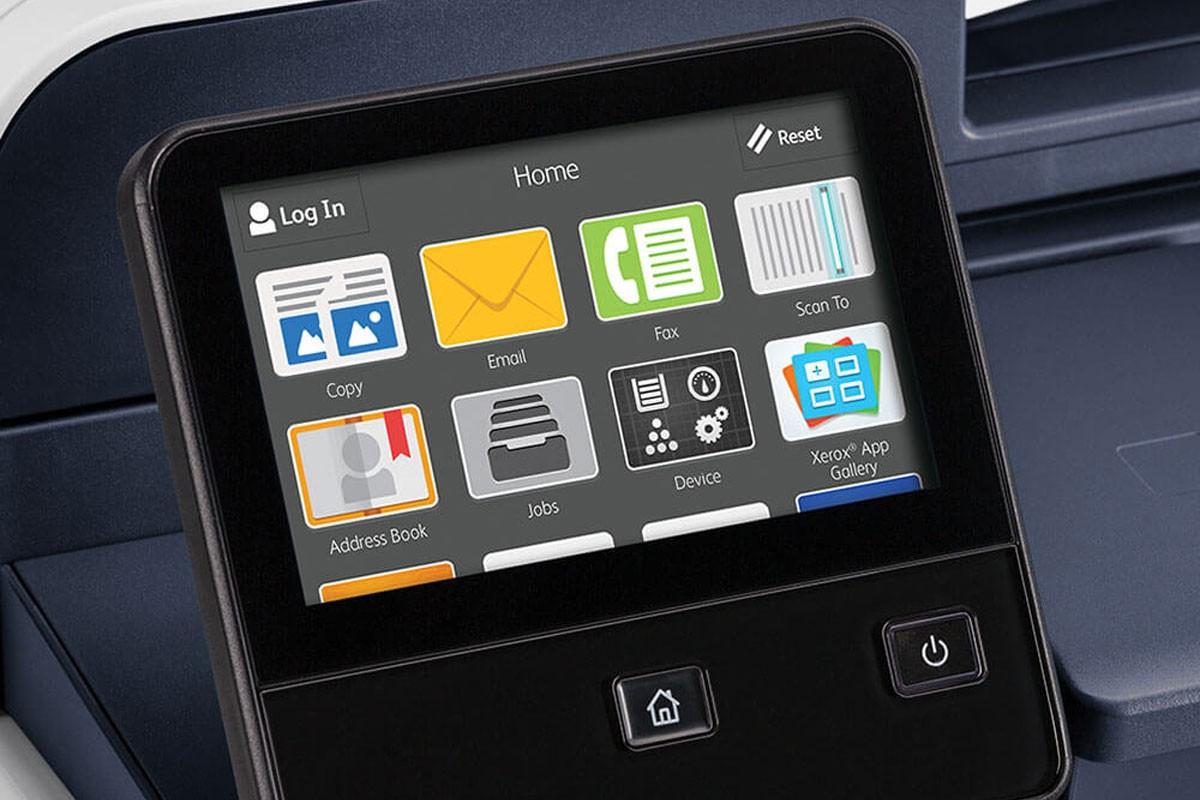
A printer can therefore be part of the same discussion as networking, security, and document handling. Lewan’s service range includes cloud hosting, virtualization, data protection, voice and video collaboration, and infrastructure. Its difference is the combination and the service relationship; individual offerings also exist at other providers. Regional MSPs such as NexusTek offer overlapping IT capabilities. Equipment dealers, internal teams, and direct supplier contracts provide other routes.
Buy the next step
For a prospective customer, price needs to follow scope. Equipment purchase, leasing, project work, monitoring, and managed operations create different obligations. A useful comparison asks which devices and users are covered, who handles escalation, what happens outside ordinary hours, and which work requires a separate project. The relevant number is the cost of an agreed responsibility.
There is also a present-day signpost: as checked in October 2026, lewan.com redirects to Xerox Business Solutions. Lewan’s historical record remains useful, but today’s buyer should establish the contracting entity and delivery team in the proposal. Familiar branding is an introduction; the operating agreement does the work.
The habit to copy is modest: choose one consequential interruption, name its warning signal, and decide who acts. Then ask the provider to demonstrate the handoff. Somewhere between an alert and an answered call lies the service the customer actually meant to buy. The beer, mercifully, requires no slide deck.