A car purchase is a peculiar act of optimism. You choose a machine that weighs two tons, entrust it with your commute, and then meet its paperwork. The paperwork is less charismatic. Titles, appraisals, pricing, financing, inspection, inventory, delivery - the little administrative parade can make a gleaming electric car feel remarkably analogue.
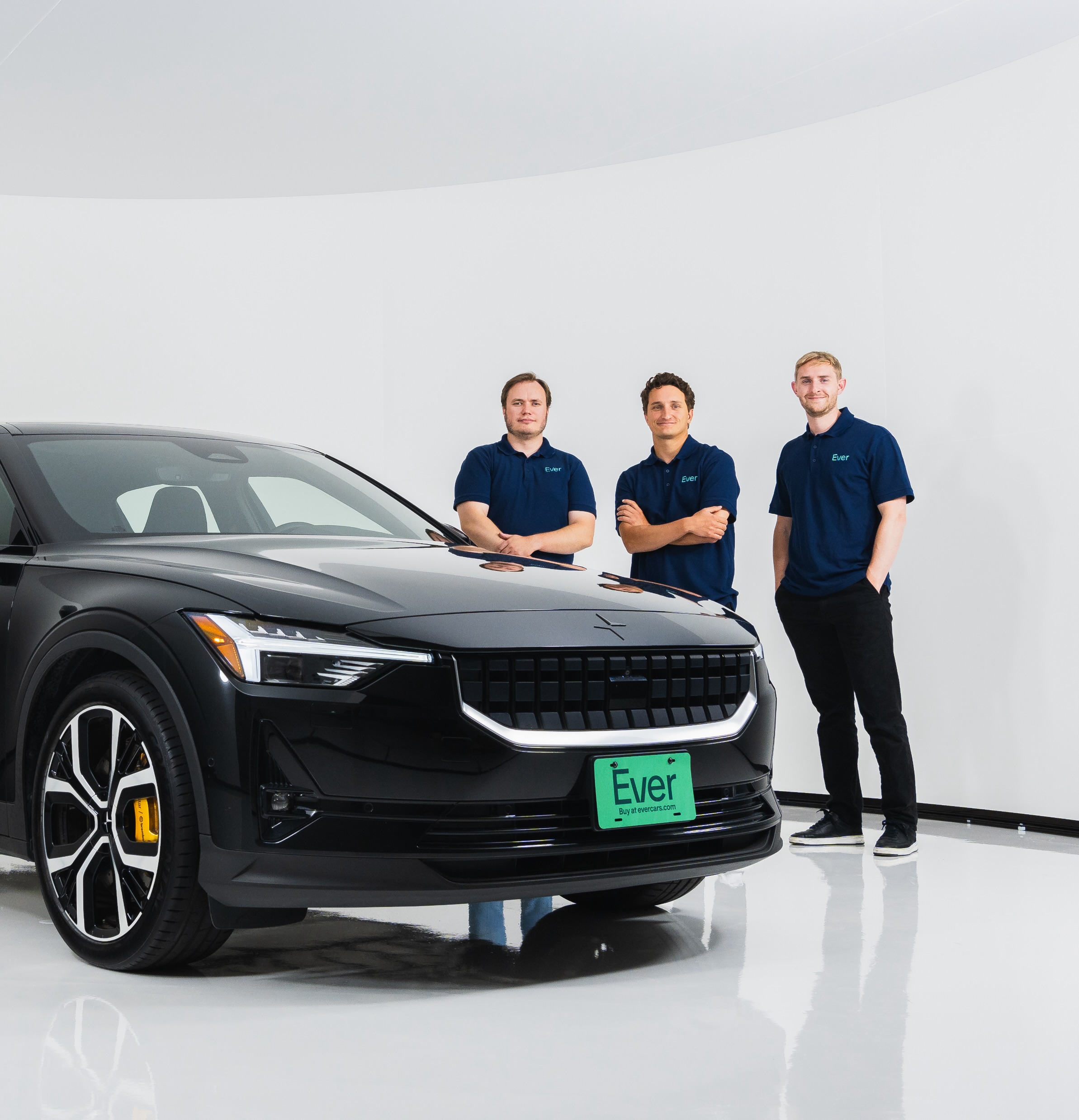
Lasse-Mathias Nyberg has chosen this parade as his problem. As co-founder and CEO of Ever, the San Francisco retailer he started with TJ Casner and Maximilian Quertermous in 2022, Nyberg is building software for the work customers rarely see. Ever buys and sells electric vehicles online and in physical stores. Beneath that familiar retail surface sits what the company calls an AI-native operating system, designed to coordinate the hundreds of steps that move a car from one owner to the next.
There is a pleasing mismatch between Silicon Valley’s taste for clean interfaces and the used-car trade’s devotion to complicated reality. A vehicle has a battery, a history, a location and a legal identity. A buyer may begin on a phone, turn up at a showroom, ask for financing, change a preference and want delivery in another state. None of these events is exotic. Their combination is where elegance goes to acquire a clipboard.
“There’s massive complexities or frictions on both sides.”Lasse-Mathias Nyberg on the work behind a vehicle transaction
The education of an operator
Public records place an early chapter of Nyberg’s route to the car lot in Finland. At Aalto University’s School of Business, he was among students recognized with an Ilkka Kontula Foundation grant for academic performance in 2017. Ever’s biography lists a B.Sc. and an LL.B. He later worked at Boston Consulting Group, learning the professional art of looking at a complicated institution and asking why it behaves that way.
There is another line in the Finnish record that suits the portrait. Nyberg finished first in Reserve Officer Course 243 and received the Finnish Reserve Officers’ Federation’s honorary sword. It is a formal distinction from a world of sequence, responsibility and coordinated action. Years later, the company he would run began describing car retail in much the same operational vocabulary: many prescribed actions, one desired outcome, little room for a missed handoff.
In 2021 he announced a move to Palo Alto to pursue what he called a long-held dream: an MBA at Stanford Graduate School of Business. His stated interests were consumer businesses, entrepreneurship and investing. He thanked friends, family and BCG for supporting him through the application and visa process, then invited people in the Bay Area to send travel tips and connections. Ambition arrived with good manners and a request for a decent cycling route.
Stanford’s 2023 commencement bulletin lists Nyberg among the Graduate School of Business class. That same year, he met a visiting Finnish business delegation on campus and shared lessons about entrepreneurship and innovation models. By then the abstraction was becoming an operation. Ever’s founding team had spent about a year researching auto retail before settling on a digital-first retailer - not merely a piece of software sold to dealerships, but a company willing to touch the cars, serve the buyers and own the awkward consequences.
A thousand errands hiding in one sale
Nyberg says buying or selling a car can trigger hundreds or thousands of actions for a retailer. Appraisals and titles follow rules. Pricing, listings and inventory follow more rules. Yet the industry often handles them through separate tools and teams. Each system may perform its narrow job. The customer, meanwhile, experiences the gaps between them - the repeated question, the lost update, the afternoon spent wondering what happened after “submit.”
Ever’s thesis is that an orchestration layer can remember the whole journey. Nyberg calls it a clean-sheet approach: use agentic AI and a unified system to remove the micro-frictions. This is an operator’s idea of artificial intelligence. The magic trick is not a talking dashboard. It is the correct form appearing at the correct moment, a price changing everywhere it should, and the next person already knowing what the previous person learned.
The company says its sales team performs at two to three times the productivity of a conventional operation. That is Ever’s own measure, and growth will test it. Still, the economic logic is straightforward. Fewer manual steps can become margin, lower prices or both. A smoother internal process has the rare corporate virtue of being useful before anyone puts it in a keynote.
Digital first, physical on purpose
Ever is not trying to make the showroom disappear. This is a subtle point and perhaps the most human one. People will happily buy socks without touching them. A used electric car invites more questions. How does it feel? What shape is the battery in? Will the range suit a winter commute? Where will it charge? Buyers who are new to EVs may want the reassurance of a test drive and a conversation before accepting a machine, a loan and a new vocabulary.
So the company operates online and in person, with locations in San Francisco and Costa Mesa. A customer can move between the two. That hybrid model treats the physical store as part of the product rather than evidence that the internet has failed. Software supplies memory and coordination; the showroom supplies seats one can actually sit in.
The EV focus makes the challenge narrower and deeper. Ever reports having sold more than 30 brands and 250 models and trims. Variety is an advantage until it becomes homework. Used EVs add battery health, charging compatibility and changing incentives to the familiar questions of mileage and condition. The retailer’s task is partly commercial and partly interpretive: turn a fragmented category into a choice a normal person can understand before lunch.
When the customer journey crosses software, paperwork and a physical object, the product is also the handoff between them.
Stealth ends; the harder part begins
In February 2026, Ever emerged from stealth with an oversubscribed $31 million Series A led by Eclipse. Lifeline Ventures, Ibex Investors, Maki VC, Joint Effects and JIMCO were among the participants. Ever said the round brought its total funding to roughly $100 million across equity and debt facilities. The distinction matters in automotive retail, where software ambitions coexist with inventory, facilities and vehicles that stubbornly decline to become weightless.
Nyberg described the financing as a milestone and directed the next chapter toward engineering, operating capacity and nationwide expansion. Eclipse partner and former Rivian executive Jiten Behl joined the board; Joe Fath became a board observer. The founders now have capital, industry counsel and a live operation serving customers across more than 40 states.
They also have the unforgiving education of retail. Early customer responses have included praise and complaints, and Nyberg has treated the rougher experiences as lessons from the company’s early, quieter stage. No operating system abolishes the moral of a missed phone call. Automation raises the standard because it makes every remaining lapse feel less excusable. Trust in used cars is not a slogan painted above the lot. It is a thousand promises, most of them small, kept in order.
For now, Nyberg is keeping Ever focused on electric vehicles, even as American EV demand has cooled from its most exuberant forecasts. He has not ruled out combustion vehicles later. The present logic is specialization: the market still lacks a retailer concentrated on the peculiarities of used EVs, and a young company benefits from knowing which argument it is having.
“We rebuilt the system with AI at the core.”Lasse-Mathias Nyberg
The useful ambition
Nyberg’s career has moved through institutions that prize models - Aalto, BCG, Stanford - into a business that punishes any model unable to survive a Tuesday afternoon. A customer arrives late. A title has an exception. A vehicle needs another inspection. A financing decision changes. The software must make room for reality without surrendering to chaos.
That is the interesting tension inside Ever. Its language is modern: AI-native, agentic, orchestration layer. Its object is ancient by startup standards: helping one person buy a valuable thing from another person without either regretting the day. The company’s technology will matter to the extent that it makes this old exchange calmer, clearer and more honest.
The bet is now moving from a San Francisco operation toward national scale. More locations and more transactions will multiply both the efficiencies and the exceptions. Every new market will offer local rules, customer habits and fresh ways for a clean diagram to meet mud. Nyberg appears to want precisely that test. His aspiration is not to decorate the dealership with AI. It is to build a retailer whose software, people and physical operations behave as one system.
Perhaps that is why the unglamorous middle is worth watching. The car gets photographed. The funding gets announced. The customer remembers whether someone called back, whether the number was the same at signing, whether the keys arrived when promised. Between the click and the clean title lies the company Nyberg is actually building. Everything else is the showroom.