A truck driver opens a load board and decides where to go. At Landstar System, that small act of choice sits inside a business that recorded $4.7 billion in annual revenue. The driver can decline. Another load may suit the truck, the route home or the economics better. A corporation has built its operating model around thousands of people making decisions for themselves.
- Independent agents find customers and arrange shipments.
- Independent truck owners choose their loads; other carriers add capacity.
- Landstar supplies shared tools, support and standards, while retaining a slice of shipment revenue.
The driver gets a vote
Landstar calls its leased owner-operators business capacity owners, or BCOs. The terminology is revealing: owning a truck means owning an enterprise, with expenses and judgments that a dispatcher cannot simply wish away. Its owner-operator proposition makes the arrangement explicit: “You choose the loads that meet your business needs.” There is no forced dispatch. Fuel and tire discounts, business classes and an advisor help newcomers learn the system.
At the other end of the transaction sits an independent sales agent. That agent earns the customer’s business, coordinates transportation and handles communication. Landstar provides supporting departments, including compliance and finance. A customer gets an identifiable person with a financial reason to answer the next call. The corporation gets distribution without employing every salesperson who brings it freight.
Landstar supports the connections: technology · credit · compliance · specialist teams
Its 2025 filing describes approximately 960 independent commission agents and more than 70,000 third-party capacity providers. These are different kinds of relationships. Leased BCOs operate under Landstar subsidiaries’ authority; brokerage carriers work under their own authority through non-exclusive arrangements. Combining them gives the network both a committed core and additional capacity.
A network earns its keep on awkward freight
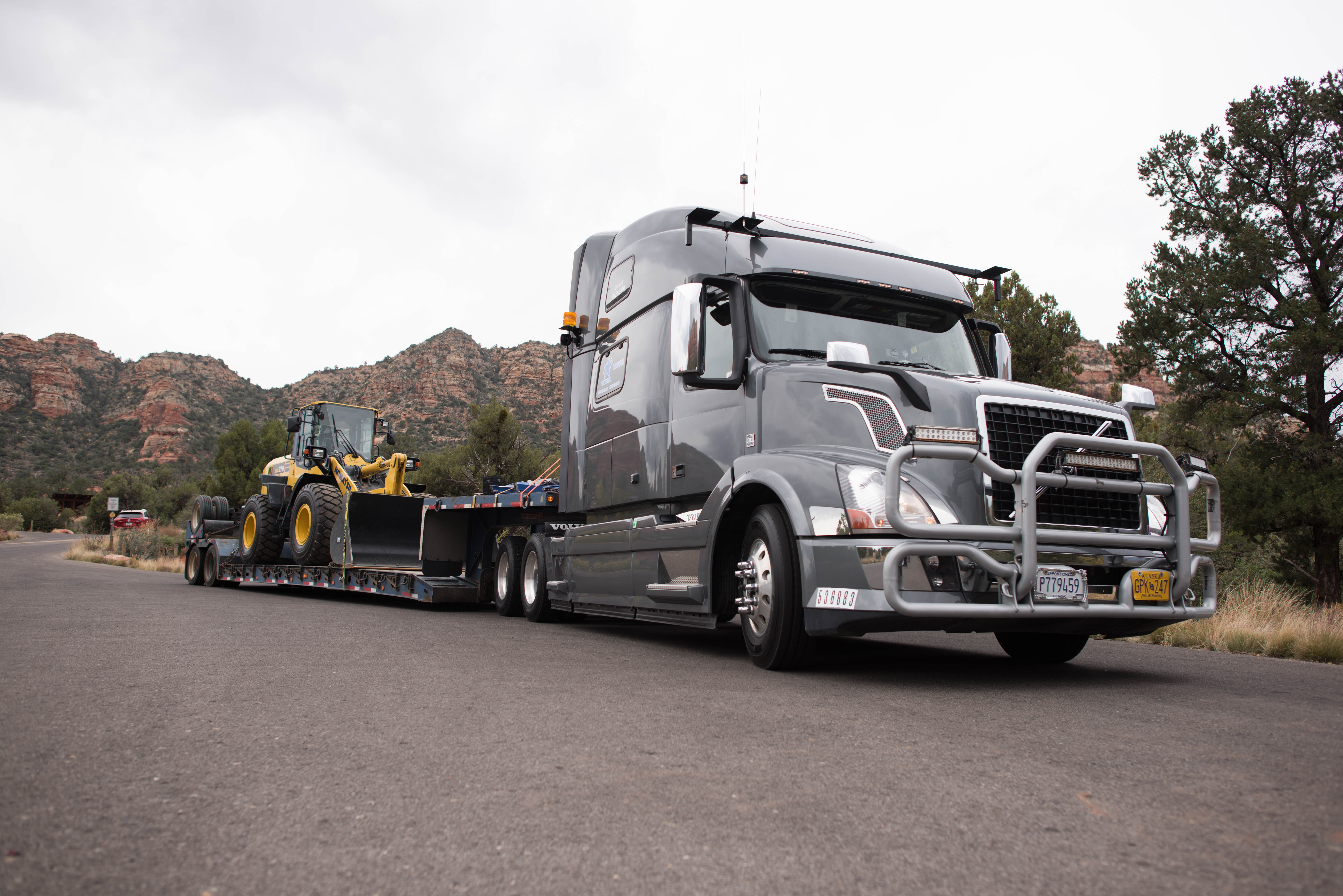
Ordinary freight needs a truck. Awkward freight needs a plan. Landstar’s heavy-haul services include equipment matching, permitting, route engineering and escort coordination. Its specialized trailer options include removable goosenecks, stretch trailers and multi-axle configurations. For a machinery shipper, the useful question is whether the load can negotiate the route and arrive when the installation crew needs it.
That expertise extends to the border. At Laredo, Landstar offers cross-docking and transloading with a 120-ton bridge crane, alongside customs brokerage and bilingual support. Automotive suppliers, manufacturers and other shippers can coordinate freight that needs more than a handoff between two trucks. Global services add ocean freight, air freight, charter aircraft and project cargo.
Landstar’s September 2026 agency profile supplies a particularly good example. Mind Right Logistics coordinated more than 50 loads of pipe from Arkansas to Houston, followed by ocean transport to Peru and a barge journey on the Amazon for a mining project. Its co-owners, Juston Ramirez and Josh Waggle, grew their agency from two people to 16. Ramirez credits diversified freight and access to specialist support. Independence, in this telling, includes knowing whom to ask.
For buyers, the practical starting point is a shipment brief: dimensions, weight, pickup and delivery requirements, and any handling restrictions. An agent can then match the job to the network’s capabilities. For an experienced freight salesperson, the opportunity is different: build an independent agency using shared billing, credit and operational support. The same infrastructure serves both sides, but each has a different reason to want it. The shipper wants a move completed; the agent wants a customer to return.
Follow the hundred dollars
Landstar occupies territory between a conventional trucking fleet and a freight broker. Brokers such as C.H. Robinson and RXO offer alternative routes to capacity; specialized carriers offer equipment and expertise. Landstar combines agency relationships with leased owner-operators, outside carriers and shared infrastructure. For a shipper, the comparison depends on the equipment, lane and service required.
Its revenue figure needs unpacking. In the 2025 results, purchased transportation consumed about $3.69 billion and agent commissions another $387 million. Subtract those from $4.74 billion in revenue and roughly $668 million remains as variable contribution. That still has to cover insurance, operating expenses, technology and other costs before it becomes earnings.
$77.75Transportation providers
$8.17Agent commissions
$14.08Remaining before other costs
The second quarter of 2026 brought $1.432 billion in revenue, up 18.2% from a year earlier. Truck revenue per load rose approximately 17%; truck load count rose about 2%. Much of the improvement came from the price of moving freight. A rising revenue line can describe a rate recovery as much as a busier road.
Freedom still needs rules
Landstar has held monthly Safety Thursday calls since 1991. Independent agencies designate safety officers, while leased trucks and trailing equipment require inspections every 120 days at approved facilities. These routines give a dispersed business repeated occasions to discuss standards. A logo on a trailer cannot conduct an inspection.
The freedom to choose a load rests on a shared system capable of supporting the choice.
And standards do not abolish exposure. Fourth-quarter 2025 results included approximately $56 million in insurance and claims costs, versus $30 million a year earlier. In 2025’s third quarter, a strategic review also led Landstar to market its intra-Mexico subsidiary Metro for sale, select a primary brokerage transportation system and wind down an alternative. The associated non-cash charges included $16.1 million for Metro assets, $9 million for software and $5 million for a technology investment. Those are write-downs, rather than new cash spending.
Keep the customer, share the machinery
The useful lesson is an allocation of responsibility. Put customer knowledge near the customer. Pool support that would be expensive for each small business to reproduce. Landstar says agents pay no start-up or franchise fees, although running an agency still brings its own expenses. Its technology team uses focus groups and beta testing with agents and truck owners before releasing tools.
The arrangement needs capable agents, dependable carriers and freight worth accepting. A driver’s freedom creates little value when the available loads cannot support the business. Shippers still need confirmed capacity and clear shipment terms. Meanwhile, Landstar’s September announcement of 2,000 new dry van trailers shows the investment beneath the model. Independence travels better when somebody maintains the common equipment.