Feature • Community Software
The Land Grab for Communities the Algorithm Can't Touch
Zapnito, Almabase, Disciple, XenForo, Gainsight and CMNTY are quietly selling brands a way to own their audience instead of renting it from a feed. Here is how one market splits into six very different bets.
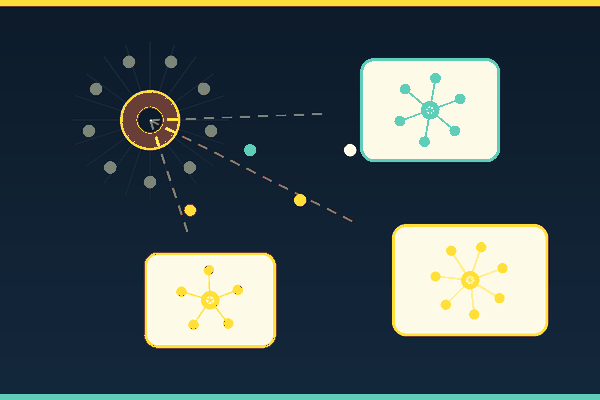
There is a strange thing about the six companies in this story. Put Zapnito, Almabase, Disciple, XenForo, Gainsight and CMNTY on the same slide and they look like rivals. Sit in on their sales calls and they almost never meet. An alumni director at a university and a customer-success lead at a software firm are both shopping for "community software," and they will end up buying products that share barely a feature. That gap is the whole story of this market.
The common thread is not a feature. It is a decision. For fifteen years the default way to reach an audience was to post into someone else's feed and hope the algorithm agreed. It was cheap, it scaled, and it worked - right up until the platform changed the rules. Reach you built on Tuesday could be gone by Friday. The companies here are all selling the same escape hatch: a place you own, where the relationship does not depend on a ranking model you cannot see.
People have started calling this community-led growth. Stripped of the jargon, it means the audience that already chose you becomes the engine - answering each other's questions, making content, staying longer. One number gets quoted in every deck: fully engaged B2B customers carry a lifetime value roughly 23% higher than the disengaged kind. That is the pitch, and it is a good one. The hard part is that "community" is six different products wearing one word.
01One word, six jobs
The fastest way to understand this market is to stop asking which platform is best and start asking what job you are hiring it for. Once you sort by job, the "competitors" fall into lanes that hardly touch each other.
Knowledge
Expert-led communities for brands and publishers - content, courses, events and conversation built around people who actually know the subject.
Alumni
Alumni engagement and giving for schools and universities. Turns a static graduate roll into a living network - and a fundraising channel.
Branded app
White-label mobile community apps for creators and brands. Your community lives on the home screen with your name on it, not buried in a timeline.
Forum
Self-hosted forum software. You run it on your own server, own the data outright, and skip the monthly platform tax.
Support
Customer support and success communities (formerly inSided). Members answer each other, deflect tickets, and it all ties back to retention metrics.
Research
Insight communities - standing panels of customers a brand can study over time. Not chatter; ongoing market research.
Look at that list and the "market" dissolves. A publisher wanting to monetize expertise is not choosing between XenForo and Gainsight. A university raising money from graduates is not weighing Disciple against CMNTY. They are each solving for an outcome, and the outcome decides everything.
This is also why the analyst reports read so strangely. They lump these companies into one line item, size the whole thing in the billions, and project a tidy double-digit growth rate. The number is probably directionally right - more brands want owned communities every year. But it hides the fact that you are watching several small markets grow at once, each with its own buyer, its own budget line, and its own definition of success. "Community platform market" is a convenient fiction. Underneath it are six real businesses.
02The forum that refused to die
Every few years someone announces that the forum is dead, killed by Facebook Groups, then Slack, then Discord. XenForo is the quiet rebuttal. It is self-hosted software, which sounds like a technical footnote until you notice what it buys you: the community runs on a server you control, the data is yours, and there is no platform in the middle that can raise prices, change terms, or disappear. Some of the largest niche communities on the internet run on exactly this arrangement.
Self-hosting is more work. You need someone who can run a server. In return you get something the feed can never offer - a front door nobody else holds the keys to. In 2026, with a decade of platform whiplash behind us, boring and owned reads a lot like freedom.
03Universities got here first
The tech industry loves to think it invented the owned community. Alumni offices would disagree. Almabase has spent years doing something Silicon Valley only recently rediscovered - taking a list of people who share a real bond and turning it into a network that stays warm for decades. Graduates are the original owned audience. They opted in the day they enrolled, and the relationship, handled well, lasts a lifetime.
Almabase is used mostly by higher-ed and K-12 institutions that want engagement and fundraising in one workflow instead of a drawer of disconnected tools, and it has picked up strong ratings and recognition from Gartner Digital Markets along the way. The lesson travels well beyond campuses: the strongest communities are usually built on a bond that already exists, not manufactured from scratch.
04The community as a growth engine
Gainsight took the least glamorous corner of the internet - the support forum - and made it a growth story. Its community product started life as a separate company, inSided, before being folded into Gainsight's customer-success suite in 2021. The insight underneath is sharp: the people answering your customers' questions for free are among your most valuable assets. Put them on a leaderboard. Every question they resolve is a ticket your team never has to touch and a customer who leaves happier.
CMNTY runs a quieter play on the same theme. Its communities are not for banter; they are standing research panels - rooms full of customers who agreed to be studied over time. In a world drowning in impressions, CMNTY sells the opposite: durable insight from people who actually use your product. Zapnito, meanwhile, bets on expertise. Its communities are built for brands and publishers whose advantage is that they know things, packaging that knowledge into content, courses and events people will pay attention to. Disciple takes the most literal route of all - your community as a branded app on the home screen, on iOS and Android, with your name on it instead of someone else's logo.
05What to actually take from this
If you are weighing any of this for real, the useful move is to ignore the feature checklists for a minute and name the job. Do you want a lifelong network (Almabase), a support engine that deflects tickets (Gainsight), a branded app your fans open daily (Disciple), a knowledge hub that pays its way (Zapnito), a research panel you can query for years (CMNTY), or a forum you own outright with no landlord (XenForo)? Pick the job first. The tool is downstream of the outcome, and buyers who skip that step tend to buy the wrong thing and blame "community" for not working.
It also helps to be honest about the ceiling. None of these tools manufacture a reason for people to show up. A branded app with nobody in it is worse than no app - it is an empty room with your logo on the door. The companies that win with owned communities almost always bring an existing bond to the table: a shared craft, a common employer, a product people genuinely rely on, a subject they care about. The software organizes that energy. It does not create it. Buyers who expect the platform to conjure a community from nothing are the ones who churn six months later, convinced the whole category is overhyped.
The bigger takeaway costs nothing to steal. Somewhere out there is an algorithm update that will one day wipe out a chunk of your reach, and it will not ask permission. The entire owned-community movement is a hedge against that morning. Build a place you control, gather the people who already chose you, and growth starts compounding on relationships instead of impressions. The six companies here disagree on almost everything except that.
Explore the players
Common questions
What is an online community platform?
Software that lets a brand, creator, school or company host its own community - discussions, content, events, courses or support - on a space it controls, rather than on a social network's feed.
How do these six players differ?
They occupy different niches: Zapnito for expert and knowledge communities, Almabase for alumni engagement, Disciple for branded mobile apps, XenForo for self-hosted forums, Gainsight for customer support and success communities, and CMNTY for insight and research communities.
What is community-led growth?
A strategy where an owned community drives acquisition, retention and revenue - customers help each other, create content and stay longer, so growth compounds on relationships the company owns instead of reach it rents.
Why move a community off social media?
On social platforms you rent reach from an algorithm that can change overnight. An owned community gives you the direct relationship, the data, and a front door no platform can switch off.
Which community platform should I choose?
Start from the job: alumni network, branded app, forum, customer support hub, expert content, or research panel. The right tool depends far more on the outcome you want than on any feature checklist.