The parking lot belongs in this story. So do the uniforms, the screen printing and the building itself. From the pavement, Indian Head Athletics looked like a sporting-goods store in Manchester, New Hampshire. To Kyle York, growing up inside the family business, it offered a more complicated education: several ways to earn a living, sharing a name and a set of customers.
His parents, Don and Gail, sold equipment, supplied teams and handled custom apparel. Property and parking added other income. Their five sons helped with the work. A customer might arrive for a shirt; behind it sat a collection of decisions about stock, service, relationships and cash. The shop had rather more going on than its sign could reasonably advertise.
Years later, York would help sell internet infrastructure to companies whose names were much better known than his own. Later still, he would put investment and operating services under the same roof at York IE. The distance from the family counter to cloud computing looks considerable. His working assumptions traveled remarkably well.
The return ticket to Manchester
York studied marketing at Bentley University, graduating in 2005. His route into software began with internships at WhippleHill, an education-software business. He eventually moved to California to run its West Coast sales and marketing operation. He had followed his parents’ encouragement to build a career of his own, and had put a continent between himself and the shop.
A high-school classmate involved in founding Dyn called him home. The company needed someone to lead sales and marketing as it developed beyond its early technical roots. York joined in 2008. Manchester became the place to attempt something larger, with a company whose product required a little explaining before anyone could begin discussing the price.
Dyn worked on the domain name system, part of the infrastructure that helps internet traffic reach its destination. It had begun with a service for consumers and developed into a business serving startups and enterprises. York’s job put him between engineers who understood the machinery and customers who needed to understand its commercial importance. Translation was part of the sale.
Two endpoints of a team effort. Bars compare reported ARR; they do not show annual growth.
During his tenure, the business grew from roughly $3 million to $100 million in annual recurring revenue. Its team expanded from about 15 people to around 500. Those are collective achievements, involving a company full of people; they also explain why York’s later advice comes so often back to selling, hiring and making the next stage work.
A bank asks the awkward question
One sales trip stayed with him. Dyn traveled to Columbus, Ohio, to pitch JPMorgan Chase, facing larger, public-company competitors in a succession of presentations. York was the executive sponsor, working alongside a sales representative and sales engineer. The prospect wanted to hear about Dyn’s banking customers. A reasonable question, and a potentially inconvenient one.
York answered by changing the comparison. Chase, he argued, could aspire to the performance of the internet companies Dyn already served, including Amazon, Netflix and Salesforce. He offered the bank a different peer group. The proposal gave a small New Hampshire vendor a way into a conversation that might otherwise have been dominated by its size.
Dyn won the business. York still remembered the trip when he wrote about it in April 2026. Its significance lay in the proof: the company could compete for a major institution’s critical traffic. A founder’s confidence becomes more useful once a customer is prepared to put an important system behind it.
How much of the win do you keep?
Dyn bootstrapped to about $30 million in annual recurring revenue before taking outside capital. It subsequently raised funding and was acquired by Oracle in 2016. York moved into Oracle Cloud Infrastructure, where his responsibilities included product strategy and the Dyn business. He had experienced the passage from a small technical company into a global corporation.
That experience left him with an unusually persistent question about ownership. For a founder, the size of an exit tells only part of the story. How much was raised? What expectations came attached? How much does the team still own? An impressive sale price can conceal a much less impressive result for the people who built the business.
York has argued for room to celebrate smaller outcomes: businesses sold for tens of millions, with founders retaining substantial ownership. His example of a $30 million exit treats it as an outcome worth designing for. There is a useful absence of ceremony in this arithmetic. The decimal places on a valuation do very little for someone who no longer owns much of it.
His advice to founders follows the same logic. Decide what you want to build over the long term, then work backward through the choices that could get you there. An investor’s timetable and a founder’s ambition can diverge. Establishing that early is part of the business, every bit as much as choosing a product feature.
“I like to win. I love when everyone wins.”
Kyle York, on launching York IE
Little League, with a finance department
York’s investment work began while he was still an operator. Founders came to him through Dyn, looking for help with pricing, business models and growth. Advice led to advisory roles and personal investments. He was writing checks from employment income, an arrangement that gives the phrase personal conviction a fairly literal meaning.
By York IE’s launch in September 2019, the founding group had already invested across more than 60 startups. Their earlier investments included Fastly, which went public that year, and Datanyze, acquired by ZoomInfo in 2018. The firm gave a formal structure to work that had been accumulating around their day jobs.
Its relationships had been accumulating for considerably longer. York and co-founder Adam Coughlin became friends in kindergarten. Both met Joe Raczka through hometown Little League. In their professional lives, Coughlin developed communications and storytelling expertise, while Raczka worked in finance and corporate development. A childhood acquaintance is useful; complementary abilities make a stronger business proposition.
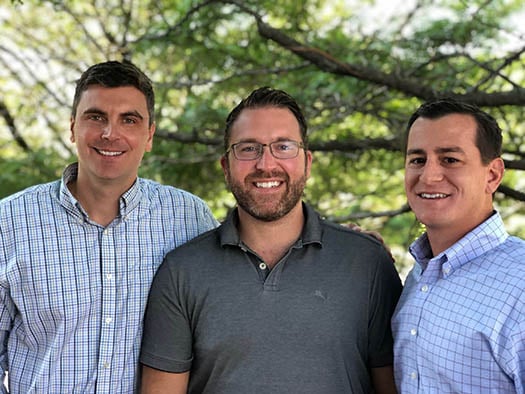
The partnership had survived more demanding conditions than a pitch meeting. On October 20, 2016, York and Raczka signed the letter of intent for Oracle’s acquisition of Dyn. The following morning, Dyn was hit by a major cyberattack, and York and Coughlin were handling the response. Within a short span, the same colleagues had confronted a transaction and a public crisis.
An investor with work to do
York IE’s proposition gives that operating experience a place in the product. It combines capital with practical services for software businesses: development, marketing, financial planning and other work that companies need as they grow. Clients can use its operating platform whether or not the firm invests in them. That creates a relationship beyond the investment decision.
The services practice, announced in June 2020, made the arrangement explicit. A startup could get help with strategy and execution rather than assemble every capability internally. Fuel, the firm’s market-data and analytics platform, supported the work. York was building a business around helping other people build theirs, with its own employees, customers and obligations.
Investment for a company’s stage and plans.
Product, marketing and financial operations.
Market research to inform what gets built.
The research matters to his approach. York IE calls it “market-in”: understanding the customer, competitors and buying conditions before allowing enthusiasm for a product to carry the whole argument. Its analysts examine market size, potential buyers, existing budgets and the alternatives a new company would replace. A clever idea still has to find a buyer with a reason to change.
That is recognizably a retailer’s question, transferred to software. Who needs this? What are they using now? Why would they pay? It also explains the emphasis on founders who understand their industries. Technical ambition and knowledge of a customer’s working day have a better chance together than either has alone.
The family resemblance
Software did not entirely take York away from footwear. He and his four brothers also helped create YORK Athletics MFG., a new family business whose first sneaker reached the market in 2016. Their grandfather’s shoe company and their parents’ sporting-goods store supplied the history. The brothers brought money earned through their own careers and hired footwear expertise from outside the family.
The name of York IE carries a smaller personal history. York secured the Irish domain for his own website years before launching the firm, following business connections in Ireland through Dyn. IE also stands for Investment Enterprise. Even the address became an accumulation of relationships before it became a company identity.
The ambitions now reach beyond that original circle. In June 2026, York discussed AI and the firm’s operating platform on The Lantern. By October, he was describing both seed and early-growth investing. York IE’s early-growth practice focuses on businesses that have established a product and need capital and operating support to expand efficiently.
Manchester remains the base. The NH Tech Alliance named York its 2021 Entrepreneur of the Year, recognizing a career spent growing businesses in the state. His stated aims include jobs, wealth creation and community impact. Those goals give the story a geographical continuity even as the customers and companies extend well beyond New Hampshire.
His parents encouraged their sons to go and build careers of their own. York did. What he carried away was a habit of seeing connected businesses where someone else might see a single shop. The stock has changed considerably. He still wants to know who the customer is, who will do the work and whether the people involved can make a worthwhile living.