Kurt Ekert had been reading about other people's companies. Netflix. Boeing. WeWork. Nissan. By April 2022, he said he had finished 200 books in the preceding two years. He was interested in business stories, including the ones in which the people in charge managed to fall on their faces. There is something reassuring about an executive whose reading list allows for an unhappy ending.
By then, Ekert had joined Sabre as president. He was helping change a business that sits between travel suppliers and the people selling their inventory, a position with an excellent view of everyone else's difficulties. His reading had brought him back to a familiar question: how much of a company's fate comes down to the way its people work together?
That question follows him through a career spent on several sides of the same transaction. He has worked inside an airline, helped sell distribution technology, and run a company buying travel on behalf of corporate customers. Now, as Sabre's president and chief executive, he is trying to make the machinery connecting those businesses ready for another change in how people shop.
A ticket seen from three different desks
Before the travel companies came four years as an active duty U.S. Army officer. Ekert holds a bachelor's degree from the University of Pennsylvania's Wharton School and an MBA from the University of South Carolina. His graduate business school identifies him as a member of its 1996 MBA class. The military service and business education belong to the record; any claim that one neatly explains his leadership would require rather more evidence.
His airline years were at Continental, where he held senior finance positions. Sabre's career chronology places him there from 1996 to 2002, before executive roles at Cendant and its travel businesses, including Orbitz. Finance offered one perspective on travel: an airline's economics. Distribution would offer another: how its seats actually reach a buyer.
In January 2006, Cendant named him senior vice president of supplier services. His remit covered content and supplier relationships across an assortment of brands, including Galileo, Orbitz, CheapTickets and THOR. It was a job at the junction of competing interests. A supplier wants its product displayed attractively. A seller needs a useful selection. A customer would quite like the whole thing to stop being complicated.
Ekert went on to become chief operating officer of Gulliver's Travel Associates, then chief commercial officer at Travelport. That last role stretched across the period leading to Travelport's 2014 public offering. By the time he moved to CWT in 2016, he had spent years dealing with the businesses that connect travel supply to demand. At CWT, he would see the same machinery from a customer's chair.
- 1996-2002ContinentalAirline finance
- 2010-2015TravelportCommercial leadership
- 2016-2021CWTCorporate travel buyer
- 2022 onwardSabreTravel technology
Selected roles, rather than every stop along the way.
The customer gets a vote
At CWT, where he became president and CEO in April 2016, the product had to make sense to people traveling for work. Those travelers could move between a phone, a computer and a conversation with an agent. A digital strategy that looked elegant in a presentation still had to survive those changes of channel.
By 2019, Ekert was describing a rebuilt portal, the myCWT app, hotel content brought together through RoomIt, and data services for corporate customers. He also talked about search relevance, a useful expression in an industry fond of promising personalization. The distinction matters: a traveler may be less interested in being understood than in seeing an option that fits the trip.
His tenure brought approximately $7 billion in new business wins. That figure describes business won, rather than company revenue or profit. It is evidence of commercial traction, with a specific meaning that deserves to survive the trip from financial language into a profile.
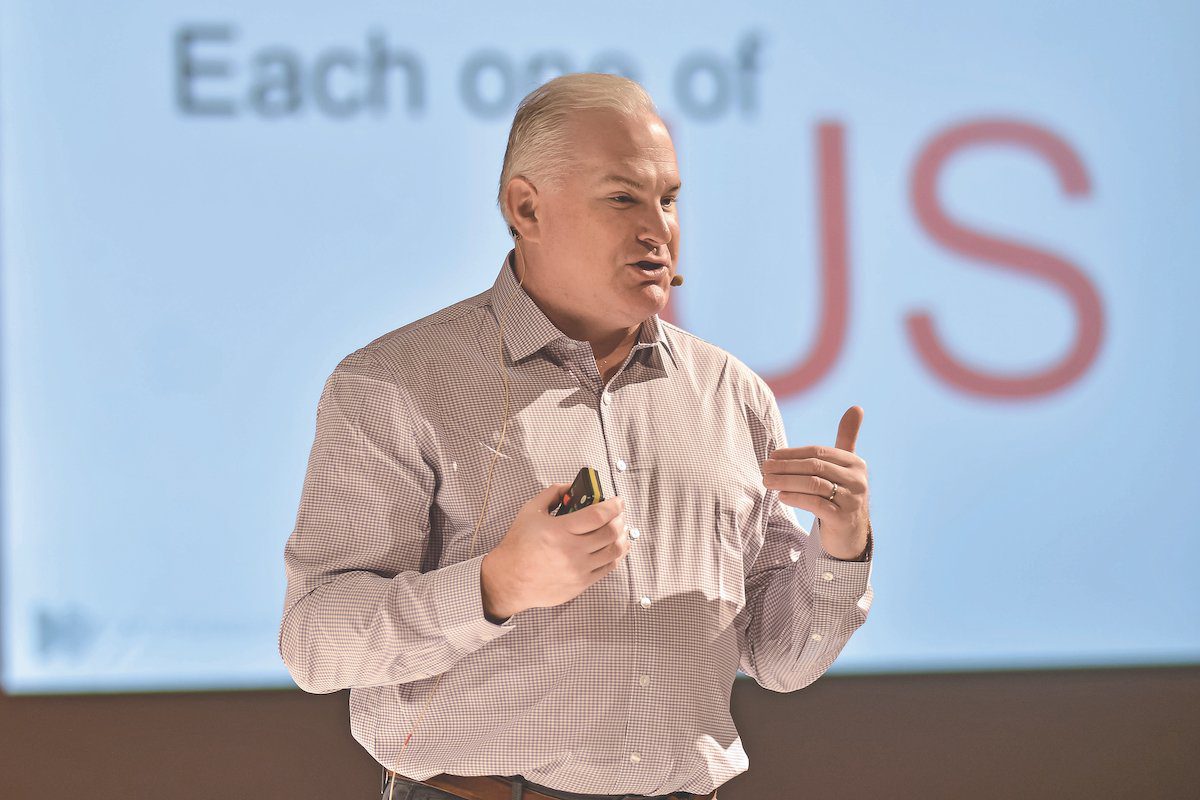
His description of the people he enjoyed working with was less technical. He liked colleagues who would “take business, but not themselves, seriously.” It is a modest distinction with practical consequences. Work can be demanding without requiring everyone involved to behave as if a quarterly presentation were a constitutional convention.
A pause, then the supplier's chair
Ekert stepped down from CWT's chief executive role in May 2021, becoming a senior adviser. Michelle McKinney Frymire succeeded him. After a long stretch at work, he took some time out and continued with board responsibilities. Then a conversation with Sabre's Sean Menke drew him toward another operating job.
Sabre appointed him president effective January 3, 2022. Menke remained CEO, with the two roles separated. Ekert's responsibilities covered business and technology operations, including a transformation already underway. This was an arrival into an existing effort, with existing colleagues and commitments, rather than a blank sheet waiting for a signature.
Fourteen months later, Sabre announced the next step in its succession plan. Ekert would become chief executive on April 27, 2023, while retaining the presidency. During his period as president, he had reorganized the Travel Solutions business and refined the leadership team. The promotion put responsibility for execution and responsibility to the board in the same pair of hands.
His experience at CWT gave the appointment a particular texture. Sabre supplied technology to travel management companies, including CWT. Its new leader had recently run one of those customers. He knew what the software was supposed to accomplish after the sales meeting ended.
“We are the technical plumbing of the travel industry.”
Kurt Ekert, July 2026
Why the shoe shop matters
Asked about the future of travel intermediaries at a 2024 conference, Ekert reached for a pair of sneakers. Nike sells through Amazon because some shoppers choose to shop there. A brand's ability to sell directly does not remove the customer's preference for a particular place to buy.
It was an accessible way of explaining a dispute usually conducted in acronyms. Airlines can develop direct channels while travelers continue to use agencies, corporate booking systems and other sellers. Ekert's argument was that intermediaries would retain a role because customers would continue choosing different routes to a purchase.
That position also leaves room for new entrants. If a conversational interface becomes a place people want to arrange travel, someone still has to connect their request to prices, availability and a booking. A pleasant conversation about a holiday is easy to enjoy. Discovering that the quoted flight cannot be bought is rather harder to forgive.
In his 2024 CEO interview, Ekert discussed the move toward offer and order technology, modular systems and Sabre's Google partnership. These subjects can sound remote from the traveler. Their purpose is concrete: give airlines and sellers more flexibility in assembling and handling what someone buys. The difficult part is carrying that flexibility through the entire transaction.
The balance sheet has its own itinerary
Changing technology costs money. Sabre's financial obligations are part of Ekert's assignment, alongside the product announcements. A company can have an interesting vision and still need to make room for it on the balance sheet. His job requires attention to both.
In July 2025, Sabre announced completion of the sale of its Hospitality Solutions business to TPG for $1.1 billion. Net proceeds were $960 million after taxes and fees, with the vast majority intended for debt repayment. The transaction narrowed the business while providing money to reduce its obligations.
The sale also requires a little care with language. Hospitality software and hotel distribution are different activities. Selling the former did not mean that hotel content vanished from Sabre's travel marketplace. The distinction helps explain how a company can simplify its portfolio while still offering a wide selection to travel sellers.
In its February 2026 prepared remarks on the previous year, Sabre reported paying off more than $1 billion in debt during 2025. Management also said more than 90 percent of its debt matured in 2029 or later. Those measures bought time; the operating business still had to produce results.
Year-over-year growth. Shared scale: 0-20%. EBITDA is an adjusted earnings measure, not net income.
On August 6, 2026, Sabre reported second-quarter revenue growth of 4 percent and Normalized Adjusted EBITDA growth of 19 percent. It also raised its full-year guidance for Pro Forma Adjusted EBITDA and free cash flow. These are progress markers in an ongoing effort, rather than a convenient final chapter.
Someone still has to make the booking work
Ekert's current ambitions put Sabre behind new ways of buying travel. In February 2026, Sabre, PayPal and Mindtrip announced a partnership combining a conversational travel interface, payment capabilities and travel infrastructure. Mindtrip would provide the consumer experience, PayPal the commerce capabilities, and Sabre the underlying shopping, booking and servicing technology.
The division of labor is revealing. A traveler can describe a trip in ordinary language, but the request must eventually become something precise enough to purchase and manage. The partnership's announced design extended beyond discovery to booking and subsequent itinerary changes. That last part is where an attractive demonstration meets the less photogenic demands of an actual journey.
At ITB Berlin in March 2026, Sabre presented its unified Mosaic platform and described the culmination of a multiyear architectural rebuild. Ekert's stated aim was greater stability, faster innovation and more customer value. These are ambitions customers can assess through their everyday work, one search or changed reservation at a time.
There is an appealing continuity here. The executive who once ran a travel management company is now asking new interfaces to rely on his company's infrastructure. His career keeps returning to the handoff: between airline and seller, seller and traveler, promise and delivery.
Back in 2022, asked about a future book on Sabre, he replied: “We are not ready to write the book yet.” For a reader of corporate histories, it was a sensible answer. The interesting pages tend to arrive before anyone knows the ending.
Keep following the story
Explore Sabre and Ekert's LinkedIn profile. Read his 2019 CWT interview, the 2022 conversation about books and leadership, and his July 2026 interview.
Watch: CEO Spotlight with Kurt Ekert Watch: A retailing revolution, Phocuswright 2024