Saturday evenings were for the cafe. In 2017, a group of friends kept meeting at a favourite cafe and working on a project called LottieFiles. The ambition, at that point, included keeping themselves interested. It is an agreeable origin for a software company: something to do with friends, before somebody has to start worrying about payroll.
By May 2022, Kshitij Minglani and his colleagues were describing a business with more than 115 employees and over three million users. The cafe experiment had acquired a $37 million Series B round. Their recollection still made room for food, beach trips and coffee. It also acknowledged projects that had been shelved, rewritten and dusted off. The shorthand inside the company was wonderfully unceremonious: “Motion is hard.”
Minglani, LottieFiles’ co-founder and CEO, has spent much of his career in the space between an attractive idea and its everyday execution. Property, education, animation: the subjects change. The stubborn question keeps returning. How do people get from wanting something to actually using it?
A home account, before the animation account
One early answer came from watching colleagues at Infosys buy apartments. Minglani and his Homebuy360 partners noticed how much of the relationship with a builder depended on calls, office visits and manual updates. Buying a home created a long sequence of questions. The answers were scattered across other people’s desks.
The company they developed in Bengaluru put that relationship online. Builders could manage leads, bookings, documents, payments and handovers. Buyers could sign into an account and follow construction milestones and their payments. A purchase that might stretch across years could have a place where its details lived together.
In 2012, the partners said they had validated the idea through interviews and surveys with buyers and builders. They also described the less technical obstacle: persuading builders to change established habits. Software can tidy a process; getting someone to adopt it is a separate appointment.
His earlier work had included corporate planning, business strategy and mergers and acquisitions. A 2011 introduction also noted his fondness for travel and food, a welcome interruption to a biography otherwise occupied by corporate nouns. Homebuy360 was later acquired by Housing.com in 2015 for a reported $2 million. The lesson visible in that early product was practical: give both sides of a transaction a shared view.
Learning how a company learns
Minglani’s next chapter included co-founding Mindvalley Quests. His responsibilities put him close to the machinery of growth. INSEAD’s 2018 executive MBA class profile described him managing operations and strategy at an education venture with 250 employees representing 42 nationalities. He enrolled to understand systems for scaling companies and to meet people who had faced comparable problems.
There is something appealingly sensible about going back to class while helping run a learning business. He was studying the problem he already had. Growth meant coordinating people with different backgrounds, keeping an eye on the accounts and making an organisation work beyond the founder’s immediate reach.
In a 2019 conversation with Cameron Herold, he described hiring around values, contribution and what an applicant hoped to learn. He also explained how he and Mindvalley founder Vishen Lakhiani divided responsibilities and exchanged short messages or voice notes to stay aligned. The account is revealing in its smallness. A partnership could depend on a message at the end of the day, rather than another impressive meeting.
He introduced himself with an equally economical accommodation: “Everybody calls me Kay and that’s perfect.” The name has since shortened further in his public writing, where he often appears as K Minglani. A CEO discussing simplification can hardly object to saving a few syllables.
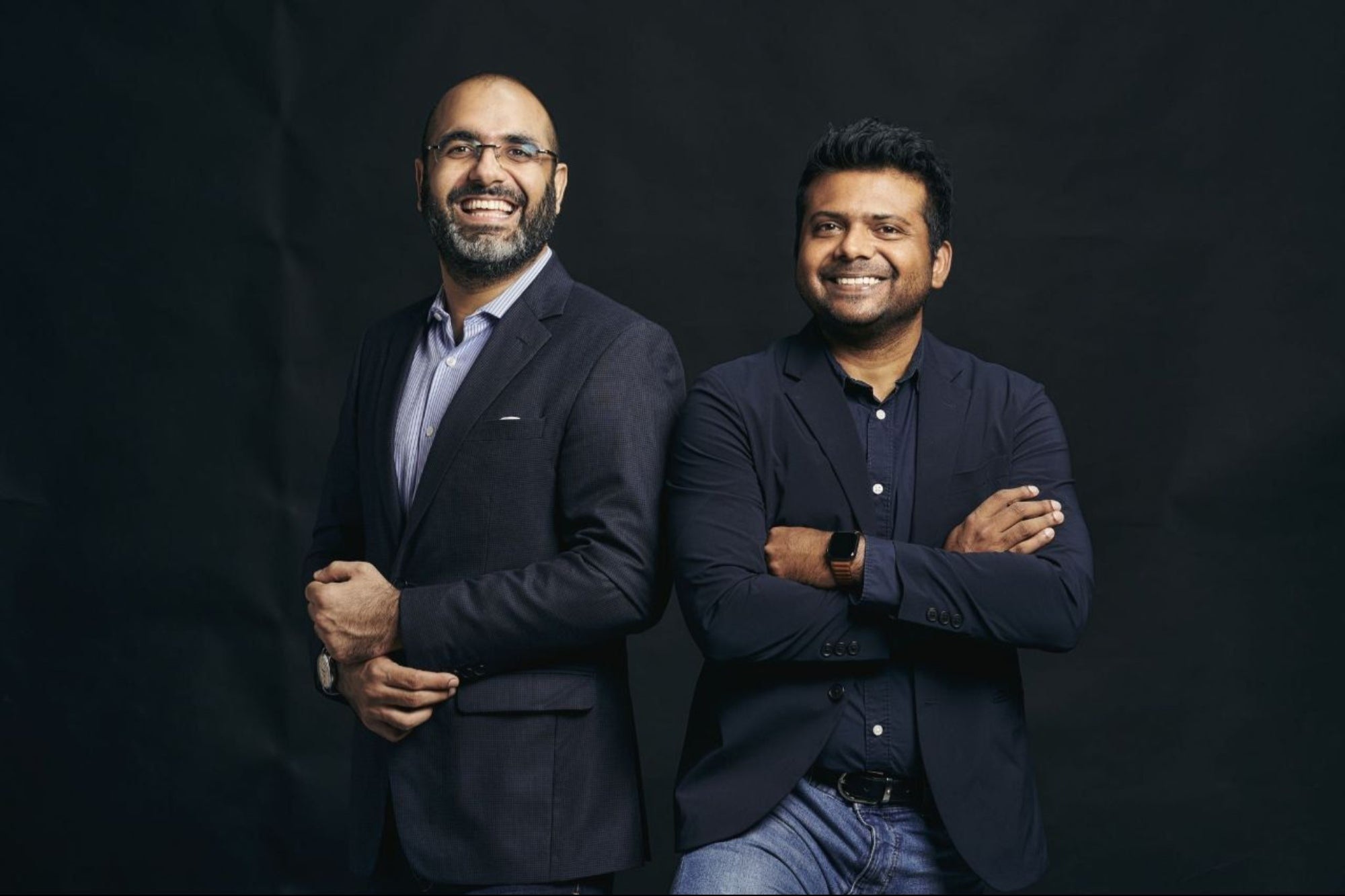
The animation was finished. The work wasn’t.
At LottieFiles, the problem was a different sort of handover. A designer could make an animation, only to discover that getting it into a working app required another round of translation. The movement on the designer’s screen and the movement on the customer’s phone had several opportunities to disagree.
Lottie, the open-source animation format developed through work at Airbnb, offered a way to move vector animation into software. LottieFiles built tools around that journey. Its After Effects plugin let a creator preview how an animation would render across platforms while still inside the design application. That is a fairly precise form of kindness to the next person in the chain.
By April 2020, the business had announced seed investment from Adobe Fund for Design and 500 Startups. Minglani said people from more than 32,000 companies were using the platform. The funding was intended for research, development and the community around the tools. His business already had two constituencies to consider: the person making the movement and the person responsible for shipping it.
That pairing helps explain his particular place in the story. With Nattu Adnan as co-founder and CTO, Minglani was building a company around the work surrounding the file. A useful format creates possibilities. A dependable process gives a team permission to use them on a deadline.
“Motion is hard.”
The recurring refrain at LottieFiles, recalled in 2022
Six months before the handshake
His February 2021 announcement of the Iconscout acquisition offered a glimpse of how he approached bringing another team into the business. The two groups had spent six months working together, drawing on whiteboards and imagining what they could build. Along the way, they established that they shared a sense of humour.
The jokes had a business companion. Iconscout brought a marketplace of icons, illustrations and other design assets. The acquisition widened what LottieFiles users could find and what contributors could sell. Minglani told Iconscout’s community that the platform would continue independently, while promising wider exposure for its sellers.
A marketplace contains people whose livelihoods depend on decisions made elsewhere. His announcement addressed those contributors directly, alongside customers. It made the transaction sound like a set of obligations: improve buying, extend reach, help creators earn. The shared humour was a pleasant qualification for the partnership. The commitments were the part its users could eventually judge.
Capital raised by the company in these rounds.
At the microphone, he talked about friction
The financing grew. A $9 million Series A led by Microsoft’s M12 in January 2021 was followed by the $37 million Series B in May 2022, led by Square Peg Capital. The announced plans included a broader workflow and collaboration product. Money was being raised around the passage from making an animation to getting a team to deliver it.
Onstage at Wild Digital SEA in September 2022, Minglani gave that thinking a more explicit shape. He described mapping the motion-design industry to work out where a business could earn money. His answer centred on the animation workflow. He also urged founders to distinguish repeated use from spending and sustainable economics. A busy product and a viable business have different accounts to settle.
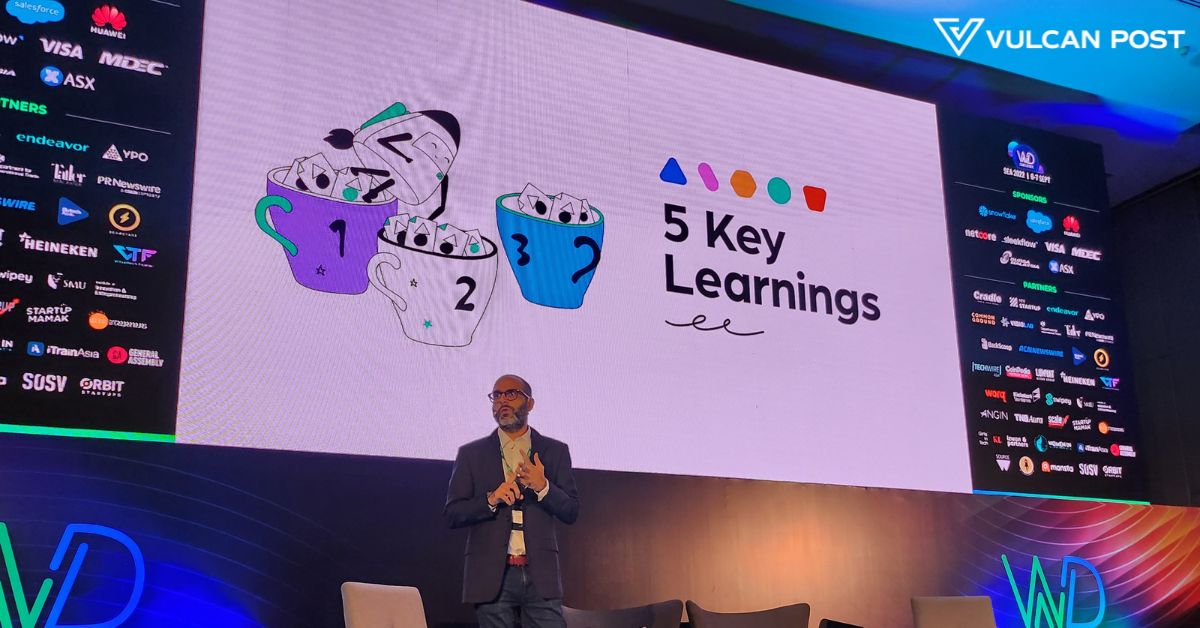
His view of competition was especially useful. LottieFiles had to contend with the difficulty of motion design itself. He also argued that Southeast Asia’s costs, diversity and communities could help founders build for the world. For a business developed in Malaysia, geography was part of the operating argument.
By the start of 2023, the company’s review of 2022 listed private sharing, comments, version history and developer handoff among its additions. It also set out plans to start onboarding users to the browser-based Lottie Creator. These were concrete expressions of the workflow thesis: less searching, fewer lost versions, more ways to finish.
The tools on the next desk
In May 2024, LottieFiles announced strategic investments from Figma Ventures and Webflow Ventures. The company reported more than nine million users and 280,000 teams at that point. Those investors were connected to software its customers already used, making the relationships relevant beyond the funding announcement.
Minglani’s stated objective was to lower the learning curve for creating, collaborating on and shipping animation. The order matters. Someone has to make the asset, other people need to understand it, and eventually it must reach the product. More users bring more chances for a misunderstanding at each step.
His August 2024 writing made the human purpose of all this tooling clearer. Motion could help guide attention, explain information and give an interaction a recognisable character. He discussed designers, marketers, brand teams and developers as participants in the same process. The moving button might look effortless to the person pressing it. Behind it was an unusually well-attended conversation.
When movement needs a filing system
By March 2026, his argument had become more systematic. In a guide to shipping motion, he described three needs: a common format, consistent playback and a way for teams to govern their work. His examples included dotLottie files, shared rendering technology and asset management. The vocabulary had travelled some distance from a Saturday project.
A related LinkedIn post focused on the untidiness of motion decisions: timing in someone’s head, instructions in a conversation, assets difficult to locate. He introduced LottieFiles Motion System as a way to govern those choices within the tools teams use. This was the old communication problem, now measured in frames.
The through-line in Minglani’s career is visible without pretending the industries are identical. A buyer needed an update. A growing team needed alignment. A developer needed an animation that behaved as intended. He keeps returning to the work between people, where a promising idea can lose an afternoon.
That gives his ambition a pleasing tension. The public sees a little more movement; the organisation behind it needs a little less confusion. From cafe gatherings to shared motion systems, Minglani’s undertaking has become increasingly concerned with making room for other people to do their work. Even delight, it turns out, benefits from knowing where the file is.
Keep the conversation moving
Explore his work, writing and conversations.
K Minglani on LinkedIn ↗His writing at LottieFiles ↗LottieFiles website ↗Listen: the 2019 Cameron Herold conversation ↗Watch: LottieFiles’ 2022 company film on YouTube ↗Read: his five lessons at Wild Digital SEA ↗Read: his March 2026 guide to shipping motion ↗