The interesting thing about Kristine Ball's résumé is its width. Finance sits at the center, but the edges keep expanding: audit, administration, strategy, corporate development, commercial planning, people, legal, technology, public markets, private capital, mergers and boards. Read from top to bottom, the document looks less like a ladder than a map of all the rooms a serious company eventually needs someone to enter.
Ball is now President and Chief Executive Officer of Antiva Biosciences, a clinical-stage biopharmaceutical company in the San Francisco Bay Area. She also sits on the board of Oruka Therapeutics and chairs its Audit Committee. Those positions are the clean nouns. The more revealing verbs came earlier: she financed, acquired, launched, recruited, integrated and translated. She learned how an idea becomes an institution, then how an institution survives a change of shape.
That experience began in a place not celebrated for romance: audit. Ball earned a B.S. in Accounting from Babson College in 1993, became a certified public accountant and worked in Ernst & Young's life sciences practice. She has said that a client recruited her into her first finance leadership role. It was an elegant crossing. One day, she was examining companies from the outside. Then she was responsible for making one work from within.
The education inside the job
At Exelixis, where Ball served as Vice President of Finance from 2000 to 2005, the view was already busy. Public filings credit her with involvement in the company's initial public offering, other financings and four acquisitions. That is a considerable education in five years. An IPO asks a company to explain itself with precision. An acquisition asks it to understand another organization with equal precision. Financing asks what the future is worth before the future has arrived.
Her next long chapter, at KAI Pharmaceuticals, made the remit wider. From 2005 to 2011, Ball served as Senior Vice President of Finance and Administration and Chief Financial Officer. She was responsible not only for finance but also administration and strategic planning, with work spanning venture financing, pharmaceutical partnerships and, later as a consultant, KAI's acquisition by Amgen. The title contained “finance.” The job contained the company.
There is a useful career lesson hiding here. Ambitious people are often told to become well rounded, as though range were a tasteful accessory. Ball's path suggests something more practical. Range is what lets a leader recognize the second-order consequence. A financing changes the board. A partnership changes priorities. An acquisition changes jobs, systems and the story employees tell themselves about where they work. The spreadsheet is never merely a spreadsheet. It is a social document wearing numbers.
This is why her path travels beyond one industry. Every growing organization eventually discovers that functions are convenient fictions. Finance touches hiring. Hiring changes pace. Pace alters risk. Risk changes the plan. Following those consequences across departmental borders becomes the job the organization quietly invented.
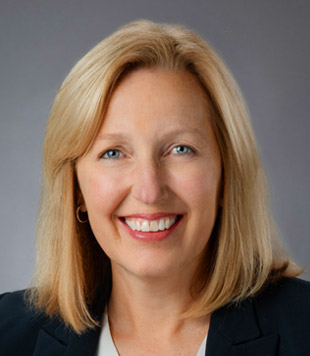
“Seek out roles and projects that push you outside your comfort zone.”Kristine Ball, on building experience and confidence
What the transaction leaves out
After a period advising start-up life sciences companies, Ball joined Relypsa in late 2012 as Senior Vice President and Chief Financial Officer. She led the company's IPO work and the cross-functional team responsible for its eventual acquisition by Vifor Pharma for $1.5 billion. She was also part of the senior group working through the launch and commercialization of its lead product. These facts are often compressed into a line of biography. Compression is useful, but it removes the meetings.
A transaction is announced on one morning. The competence behind it develops over thousands of ordinary afternoons: forecasts revised, risks named, functions aligned, documents checked and disagreements made productive. Ball's career has repeatedly placed her in those unphotogenic hours. This may explain why her public advice emphasizes curiosity and continuous learning rather than charisma. Curiosity scales better. It keeps working after the applause, when somebody has to ask the next accurate question.
At Menlo Therapeutics, which she joined in 2017, Ball's title joined corporate strategy to the CFO role. Her responsibility extended across every non-research function: strategic planning, corporate development, commercial, human resources, legal, finance and information technology. She led Menlo's initial public offering and the cross-functional team that closed its merger with Foamix in March 2020. “Cross-functional” is business language for a human fact: the work only succeeds if people with different incentives can move in the same direction.
By then, the distance between CFO and CEO was narrower than the initials made it seem. Ball had spent years learning the organization around the science. At Soteria Biotherapeutics, where she became chief executive in 2020, she raised the Series A financing, recruited the management team and set the strategic direction. Those are three versions of the same task: deciding what the company needs, persuading people to believe it and assembling the means to proceed.
A seat that changes the view
Board work provided another angle. Ball served as a director of Forty Seven from 2018 until its acquisition by Gilead Sciences in 2020, and on Atreca's board from 2020 to 2024. She joined Oruka's board in 2024 and now serves as Audit Committee chair. The accountant who once inspected systems became the executive who built them, then the director charged with asking whether they deserved confidence.
Board work extends her operating perspective into governance. Management lives inside the sequence of decisions. A director must see the pattern those decisions create. An Audit Committee chair has to be comfortable with precision without mistaking precision for certainty. Numbers can be exact and the future can remain gloriously, expensively undecided.
Ball's advice to younger women is to stay curious, keep learning, find strong peers and mentors, welcome different perspectives and trust that their own experience adds something valuable.
In April 2023, Ball became President and CEO of Antiva as the company announced a $53 million Series E financing. Once again, leadership and capital arrived in the same paragraph. The pairing suits her history. Capital gives a mission time. Strategy decides which work earns that time. A chief executive has to hold both ideas without confusing them.
Ball's description of career development is similarly balanced. She recommends strong peers and mentors, especially people with diverse perspectives. She also tells young women not to be afraid of trusting their own abilities. Listen widely; do not disappear. Learn from the room; contribute to it. The advice avoids the two common traps of leadership, which are believing you know everything and behaving as though you know nothing.
“Be kind. Be yourself. And speak up when something isn't right.”Advice from Ball's mother that she says stayed with her
The whole machine
The most personal line in Ball's public record comes from her mother: “Be kind. Be yourself. And speak up when something isn't right.” It is excellent advice partly because its clauses create tension. Kindness without candor can become avoidance. Candor without kindness can become theatre. Authenticity without judgment is merely a live microphone. Holding all three requires the same balance that her career has demanded from companies: control and adaptability, conviction and evidence, speed and care.
Biotech biographies often treat operations as the scaffolding around the important work. Ball's path makes the scaffolding visible. A company needs the idea, certainly. It also needs a financing plan, a reporting system, a hiring philosophy, contracts, technology, commercial thought, board trust and somebody capable of noticing when these parts tell conflicting stories. Discovery may open the door. An organization still has to walk through it without tripping over its own shoelaces.
That is what happens after the science gets interesting. The company gets complicated. The room fills. Time acquires a price. Every function develops a dialect. Ball has built a career by becoming fluent enough to translate, disciplined enough to count and curious enough to keep asking what she has not yet understood. That fluency stays quiet until a company reaches the moment it needs it.
The progression from auditor to CEO looks tidy only in retrospect. In practice, it was a series of enlargements: a client became an employer, finance became strategy, a transaction became an operating education, and a functional leader became responsible for the whole machine. Useful ways of seeing transfer from one role to the next. Titles announce a role. Range makes the role survivable.