Paul Parker called it “Chapter Three.” In October 2024, after a career in investment banking and a turn inside Thermo Fisher Scientific, he joined Flagship Pioneering. The phrase made a long professional life sound almost portable: close one book, open another, bring the useful bits along. Yet this particular chapter had a preface. Parker had already helped create a partnership between Thermo Fisher and Flagship. Before he changed employers, he had worked with the people who would become his colleagues.
That detail gives the move its interest. Career announcements tend to arrive dressed for a parade, with the adjectives marching three abreast. Parker’s account offered something more practical: familiarity. He had watched Flagship from a distance, then worked alongside its team. When founder and CEO Noubar Afeyan approached him about joining, Parker described the decision as easy. The invitation brought his experience in finance and corporate leadership into an organization built around creating companies.
There is a question running through those three chapters: what happens after an attractive idea meets the obligations of a business? Someone must arrange the capital, agree the terms, understand the organization and decide what comes next. Parker’s career has taken him through several places where those questions get answered. The job titles change. The work keeps returning to the relationship between possibility and execution.
A long apprenticeship in other people’s decisions
Parker studied international studies at the University of North Carolina at Chapel Hill before earning an MBA with distinction at Harvard Business School. His education paired an outward-looking undergraduate subject with professional business training. The combination fits the international scope of his later work, although a degree alone cannot explain the choices that followed. The more revealing evidence is the sequence of institutions through which he moved.
His earlier financial-sector experience included J.P. Morgan. He joined Lehman Brothers in 1995, held a series of leadership positions and became head of global mergers and acquisitions in January 2008. In September that year, he moved into the Barclays chapter of his career. He remained there until July 2014, leading global M&A and, for part of that period, taking responsibility for global corporate finance.
These are positions in which the subject is usually someone else’s company. A management team wants to buy, sell, combine or change direction. The adviser helps translate that intention into a transaction people can examine, negotiate and eventually sign. The attractive headline is the purchase price. Much of the actual work lives in the qualifications underneath it.
In August 2014, Parker joined Goldman Sachs, where he served as co-chairman of the global M&A group through March 2020. He also sat on the firm’s Partnership Committee and Investment Banking Senior Leadership Council. The chronology spans different banks, but the professional thread is unusually consistent: transactions, corporate finance and responsibility for the people doing that work.
A résumé can make a career like this appear frictionless. One institution follows another, each line tidier than the experience it compresses. Here, the dates matter more than the polish. The banking chapter lasted decades. Parker’s subsequent move into a company therefore changed the vantage point from which he encountered familiar questions. He would now participate in the continuing business that a transaction was intended to shape.
When the deal comes home
In April 2020, Parker became senior vice president of strategy and corporate development at Thermo Fisher Scientific. He was a corporate officer and a member of its leadership team. His responsibilities extended across strategy, corporate development, strategic capital, integration management, corporate social responsibility and government relations. The remit reached beyond the moment when an acquisition is announced.
Integration management is a particularly useful phrase in that list. It acknowledges a stubborn feature of corporate life: signing an agreement does not make two organizations operate together. The agreement establishes a destination. People, systems and management decisions determine whether anyone arrives. A deal can have a closing date; its consequences are less considerate about calendars.
A small episode from February 2021 makes Parker’s operating role concrete. On February 25, Thermo Fisher CEO Marc Casper contacted PPD’s chairman and CEO, David Simmons, about a potential acquisition. Parker separately contacted Allen Thorpe, a PPD board member associated with Hellman & Friedman, to advise that an offer letter was coming. The proposed price was $42.25 per share.
A dated moment in the proposed PPD acquisition, rather than a scorecard of an entire career.
The episode shows the division of work behind a proposal. Casper contacted the chief executive. Parker contacted a board member. An offer moved through several relationships before it could become a decision. Parker also signed the merger agreement for Thermo Fisher as senior vice president of strategy and corporate development.
The episode gives an otherwise abstract title a verb: contacted. Corporate development often sounds like a department that exists primarily to produce diagrams. Here it involved a specific person, another specific person and a proposal with a price attached. Large transactions still depend on individual relationships.
There was also Clorox
In November 2020, Parker was elected to the board of The Clorox Company. Lead independent director Pamela Thomas-Graham pointed to his finance, M&A and strategy experience as a useful perspective for the board and its long-term growth ambitions. He served until 2024. The appointment placed his experience inside the governance of a consumer-products business as well as his executive role at Thermo Fisher.
Clorox’s announcement described a Thermo Fisher remit that also included digital marketing and e-commerce. That is an instructive addition to the grander nouns of strategy and acquisitions. Businesses have customers as well as capital structures. Their plans eventually encounter a purchasing decision, a distribution channel or an operating process. Even the most elegant corporate diagram must survive contact with a shopping basket.
Board work adds another perspective to this career. An executive has an operating remit; a director participates in oversight. Parker’s Clorox years overlapped with his Thermo Fisher years, placing those roles beside each other. The resulting picture is broader than a list of transactions. It includes responsibility for how companies are governed and how their plans are carried forward.
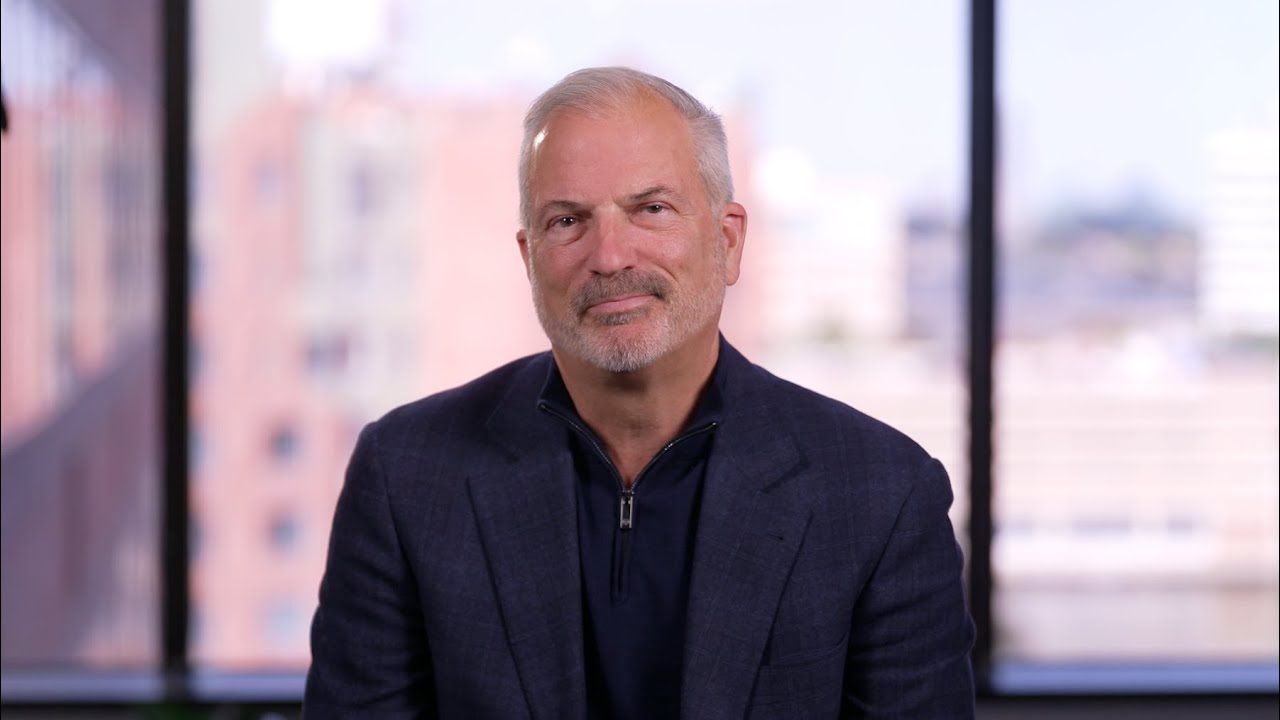 ▶ WATCH THE INTERVIEW
The chapter with a running start
Parker arrived at Flagship as managing partner for capital solutions and value realization. His appointment followed the firm’s July 2024 announcement of a $3.6 billion capital pool. The sequence matters: fundraising had already occurred before his appointment was announced. His arrival belonged to the next stage of deploying and managing an expanded institution, rather than being evidence that he had personally raised that pool.
The original remit included fundraising, relationships with limited partners, and work with strategic and financial investors. It also included helping realize value from the portfolio. Those responsibilities connect the company-building side of the organization with the people providing its capital. A scientific business needs room to develop; its investors need a coherent account of what their commitment is supporting.
Flagship creates companies around scientific platforms. Its model raises a different set of business questions from those surrounding a mature acquisition target. How should a young company be financed? Which relationships could help it develop? When does a partnership make sense? These are questions about the design of a business as much as its valuation. Parker arrived with experience of businesses at several later stages of that journey.
The earlier Thermo Fisher partnership offered a practical bridge. Parker had seen Flagship through actual collaboration, and he had worked with Afeyan and other members of its leadership team over the years. His new colleagues were therefore connected to previous work. For a career transition, that is a useful advantage: the introduction has already happened.
A life beyond the transaction column
There are other entries in Parker’s public record. His LinkedIn profile lists service on Harvard Business School’s Board of Dean’s Advisors from 2016 to 2022 and UNC Chapel Hill’s Board of Visitors from 2015 to 2019. It also lists membership of UNC’s Chancellor’s Global Leadership Council beginning in 2018. These activities take him back to the institutions where he studied.
In May 2018, he was among the honorees at Safe Horizon’s Champion Awards, alongside Tarana Burke, Terry Crews and John Romeo. Parker’s profile identifies his recognition as a Champion Award for Community Leadership. The gathering brought together people whose public work differed considerably. A banking title was one part of the evening, rather than the organizing principle of it.
“We all have a part to play.”
Paul Parker, on joining Flagship in 2024
When explaining his Flagship move, Parker wrote about his concern for the planet, individual rights and obligations to other people. Those commitments sit alongside the university service and community recognition. They give his account of the move a personal dimension without requiring a grand conversion story. He described a chance to put existing skills to work in a setting whose purpose interested him.
Still in chapter three
Parker now serves as Executive Advisor to Flagship’s CEO. That current title follows the managing-partner role with which he arrived in 2024. It places him alongside the leader of an institution he had already encountered as a collaborator, then joined as a colleague. The relationship has continued while his role has changed.
The appeal of his three-chapter description is its simplicity. The first chapter involved advising businesses. The second involved executive responsibility inside one. The third brought that experience into company creation and now advice to the CEO. Each move gave familiar skills a different setting. Parker brought the previous chapters with him. Perhaps that is the useful thing about a long career: a new page need not begin with an empty desk.