Kristian Nylén’s customers had something he wanted them to keep: their own names. They could put those names on the app, choose the colours and cultivate the fans. Behind the screen, Kambi would supply the odds, the trading and the machinery that made the sportsbook work. For a founder, this is a peculiar ambition. Build a business, do much of the complicated work, then let somebody else enjoy the recognition.
It also creates a demanding bargain. Customers must trust the supplier with a central part of their business while remaining free to look different from one another. Nylén spent his years as Kambi’s chief executive working on that arrangement. His career runs from compiling odds at Unibet in 2000 to running a separate supplier, listing it in Stockholm and helping operators enter newly opened American markets. In July 2024, he handed over the chief executive’s job. He kept his seat at the table.
A friendship with a competitive streak
Before the corporate announcements came a Swedish university friendship. Nylén and Anders Ström met in the early 1990s, sharing interests in mathematics, sport and betting. The wider circle included people who would later work at Unibet and Kambi. Their leisure activities offered ample opportunity to discover one another’s temperament. Nylén remembers a heated argument with Ström over Risk. World domination apparently required a discussion.
Nylén completed university and went into finance in Stockholm. Ström took the entrepreneurial route that led to Unibet. Eventually their paths converged again. The story has the pleasing untidiness of real careers: friends disperse, acquire experience and later discover a reason to work together.
The academic grounding was useful. Nylén holds a business administration degree from Karlstad University, with studies in mathematics and statistics. At Unibet he began as an odds compiler. By 2003, he was responsible for the entire sportsbook and had joined the group’s management team. The distance between working out a price and running the operation took him three years.
- 2000Joins Unibet as an odds compiler
- 2010Becomes Kambi’s founding CEO
- 2014Kambi starts trading in Stockholm
- 2024Hands over as CEO; continues on the board
The customer on the other side of the screen
When Kambi was established in 2010, Nylén became its CEO. He had spent a decade inside a consumer betting business. Now he was selling the expertise behind one. The distinction sounds administrative until you consider the relationship. An operator competes for a bettor’s attention. Its supplier has to earn the confidence of the operator, including operators competing with one another.
In a 2012 interview, Nylén described the separation in practical terms. Unibet dealt directly with consumers; Kambi would concentrate on serving businesses. Independence would help customers feel confident that their supplier’s attention belonged to them. It was a commercial argument for keeping a clear boundary between the shop window and the workshop.
He was also watching the product change. Internet access had expanded the number of events people could follow and bet on. In-play betting allowed prices and opportunities to change during a match. Smartphones were making the service portable. Each development added work for the businesses supplying it: more updates, more data and more decisions while the game was still moving.
The formal separation arrived in 2014. Unibet proposed distributing its Kambi shares to its own shareholders, leaving it without a shareholding after the separation. On 2 June, trading began on Nasdaq OMX First North in Stockholm. At the time, Kambi’s coverage extended across 65 sports, with more than 100,000 live events and 200,000 pre-match events a year. An apparently narrow business had acquired a substantial calendar.
A shared technical foundation leaves room for different storefronts. Schematic of the supplier model Nylén described.
America rewards the homework
By 2017, Nylén was making a public case for preparing for a regulated American market. In an essay about the US opportunity, he discussed proposed New York legislation and urged lottery operators to engage with the process. He pointed out a practical omission: the proposal he was discussing contained no online component. Enthusiasm for an opening was accompanied by attention to the wording.
That detail captures the work beneath expansion. A new market requires permission, suitable technology and knowledge of local requirements. A supplier cannot simply arrive with a functioning product and declare itself ready. Nylén’s argument was that experience gained in regulated European markets would be useful in America. Preparation had a commercial purpose, even before the opportunity had a reliable opening date.
On 1 August 2018, the Kambi-powered DraftKings Sportsbook launched in New Jersey. The launch followed preliminary regulatory approval, including scrutiny of product and technology. Resorts Casino was DraftKings’ land-based licensing partner. The result joined a consumer brand, a supplier and a local licensing relationship in one working service. The thing on the phone depended on a rather less photogenic collection of arrangements behind it.
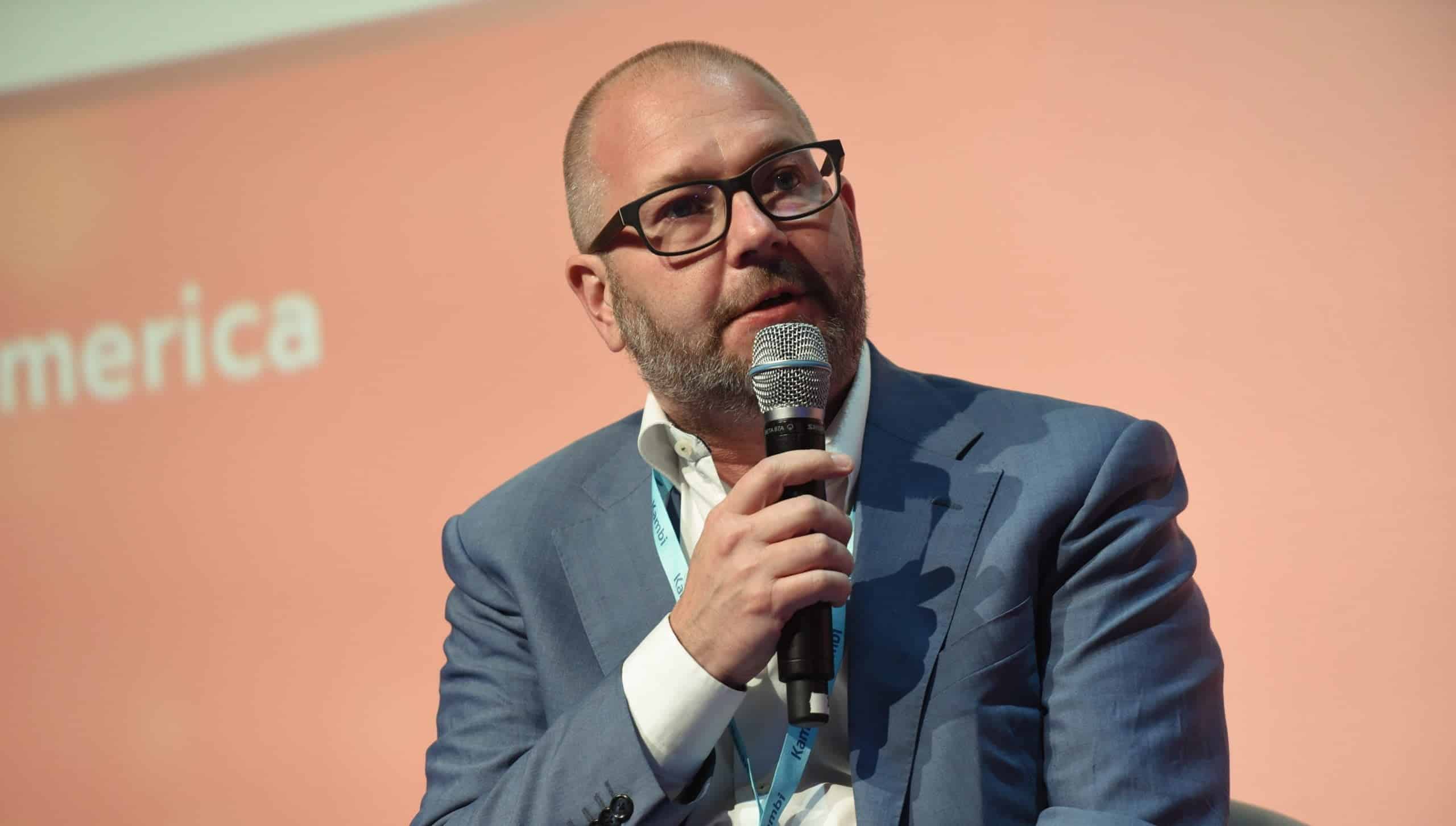
In a 2020 discussion of the US business, he explained how operators could use Kambi’s platform and APIs to create their own experiences. They could also adjust prices to suit their strategies. His example was local: an operator might offer a more attractive price on the Colts in Indiana while keeping a different line elsewhere. The shared supplier did not erase the customer’s judgement.
That same interview returned to regulation and preparation. Nylén connected Kambi’s speed into new states with its experience adapting technology to different rules. In his account, a business built around regulated markets had accumulated useful habits. The early American launches were a visible result of years spent doing work that rarely makes a striking photograph.
Buying expertise, then giving it room
As the business developed, Nylén looked beyond traditional sports. In August 2021, Kambi acquired esports data and odds provider Abios. His explanation focused on the people as well as the products. Abios brought knowledge of a different competitive world, proprietary technology and data capabilities. Computer games had their own expertise; familiarity with football did not automatically confer it.
He also outlined a relatively patient approach to integration. Kambi would initially support Abios’ development rather than hurry into major changes, while pursuing closer alignment where it made sense. The acquisition broadened the business into content and data provision as well as betting services. It offered more ways for a specialist supplier to be useful.
In September 2022 came Shape Games, acquired for an upfront €38.5 million. Its speciality was the front end: the experience a customer actually touches. The deal supported both complete sportsbook packages and separate components. For Nylén, it extended a familiar proposition. Customers wanted control over how their products looked and worked, even when buying substantial technology from outside.
The uncomfortable part of the bargain
Supplying somebody else’s business brings a particular vulnerability. That customer may eventually decide to do more itself. Kambi and PENN Entertainment agreed terms for PENN’s migration to its own sportsbook technology, including transition services and fees. A relationship that had helped a customer operate could become a relationship helping it leave.
The later years of Nylén’s tenure therefore need more than a procession of launch dates. The front-end acquisition, the expansion into esports and the move toward separate technology components were responses to operators with different needs. Selling a complete package was one way to serve them. Offering selected parts could create another route into a customer’s business, though neither approach removed the pressure to turn useful technology into reliable revenue. In February 2024, discussing the previous year’s results, he said: “I’m not satisfied with our financial performance.” Revenue had reached €173.3 million, but he identified weaker-than-expected contributions from Shape Games and major partners, alongside Bally’s measured marketing approach. The results carried both progress and disappointment.
“I’m not satisfied with our financial performance.”
Kristian Nylén, February 2024
In July 2024, Kambi’s board withdrew its 2027 financial targets, explaining that slower regulatory progress in key markets was likely to delay revenue. For a business whose expansion depended partly on markets opening, the timetable remained somebody else’s to write. That complication belongs alongside the early American success. Both came from operating where commercial ambition and permission meet.
Changing seats, keeping an interest
Nylén had announced his intention to step down in January 2024, saying he wanted more time with his young and growing family. He also wanted to remain involved in Kambi’s strategic direction. Shareholders elected him to the board in May. Werner Becher succeeded him as CEO on 25 July. The handover gave the daily operating job to someone else while retaining the founder’s involvement.
The arrangement has continued. At the May 2026 annual general meeting, shareholders re-elected Nylén as a director. He now chairs the strategy committee and sits on the remuneration and nomination committees. Its remit includes evaluating major strategic decisions and potential transactions. The job has changed from running the business to helping judge where it should go.
There is a fitting symmetry to that position. Nylén built much of his career around helping other people take the visible role while supplying experience behind them. He now occupies a different version of that arrangement inside the company he co-founded. The next move belongs to a wider team. He still has a chair close enough to examine the board.