Alfred Wahlforss had acquired the sort of problem founders are supposed to want. An app he had built with Florian Juengermann was attracting thousands of people. BeFake let users turn themselves into AI-generated images; 20,000 arrived on its first day. The founders could count the new users. Understanding them was another matter. The sign-ups raised questions about positioning, use cases, and why so many people left. Success had delivered an audience and withheld the introduction.
So they built something to ask questions. An AI interviewer could talk to the people behind the numbers and help explain why they stayed or disappeared. That internal tool became Listen Labs. There is a pleasing reversal in the origin: two people made software that could manufacture a picture of almost anyone, then discovered how little they knew about the actual people using it.
Wahlforss, Listen's Swedish co-founder and CEO, has since made that gap his business. The company designs studies, recruits participants, conducts conversations, and organizes the answers. Its customers include Microsoft, Anthropic, and Sweetgreen. But the personal story begins before those names arrived, with a student who combined computer science with philosophy and appears to have considered the combination perfectly practical.
A syllabus with room for trouble
His education resists a tidy vocational explanation. He lists a philosophy BA from Stockholm University, a bachelor's degree spanning computing and business at KTH Royal Institute of Technology, and a master's in data science from Harvard. On paper, that is preparation for several different careers. In practice, the subjects converge rather neatly on the question Listen now asks: how do you turn something a person says into something a computer can use?
At Harvard, Wahlforss enjoyed the freedom to move between disciplines. His account of studying there describes statistical optimization, negotiation, and machine learning at MIT. He also took classes at Harvard Business School, where he noticed classmates often favored the least risky answer to a case. His own conclusion was that following the majority could produce decisions that were too small. Even the classroom was becoming a place to examine how people choose.
The experiments escaped the syllabus. He and a German classmate built BeFake, and a holiday in Mexico collided with the app reaching Reddit's front page. The servers crashed. Wahlforss found himself programming from the beach. A laptop beside the sea is an excellent advertisement for remote work until the work refuses to remain remote.
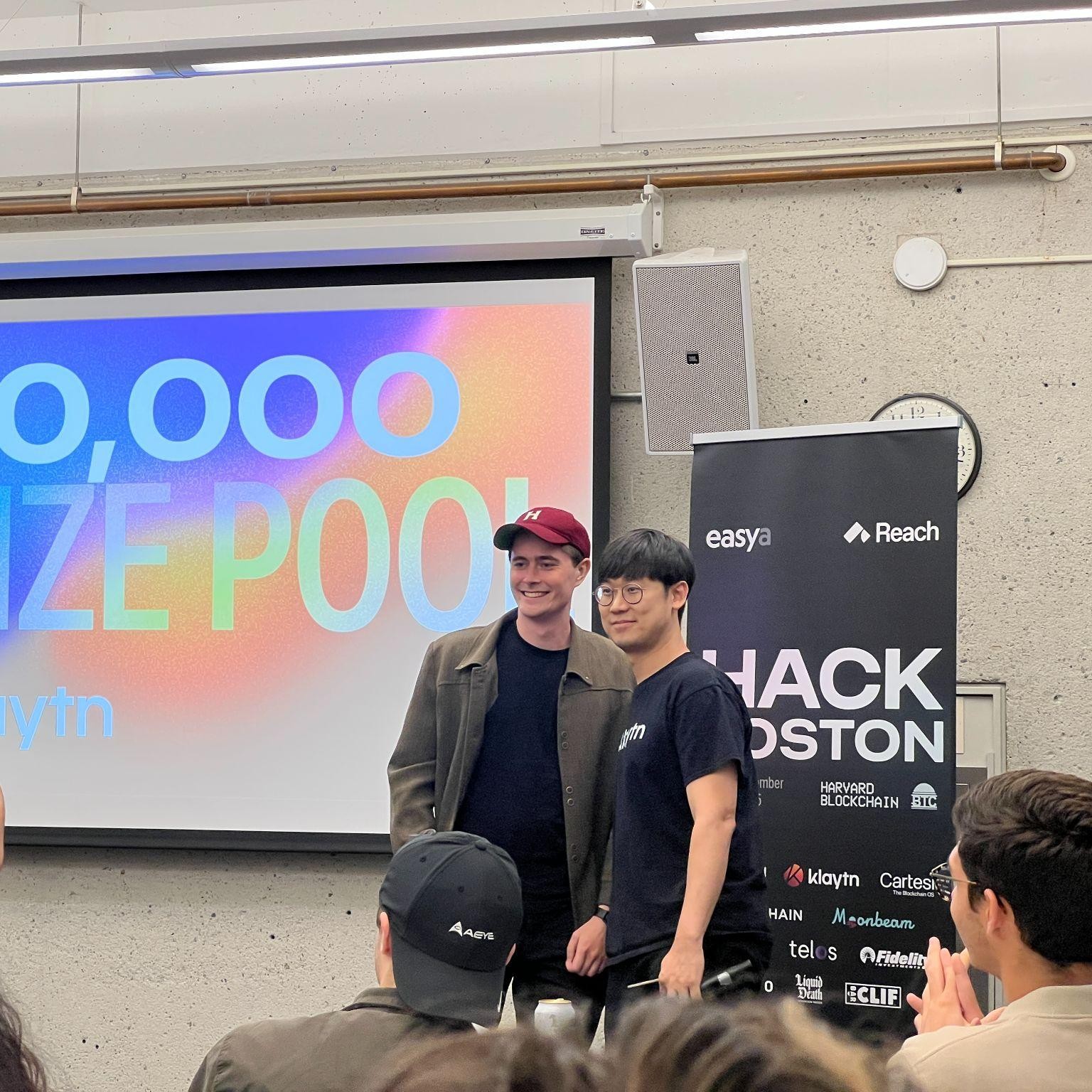
By January 2023, he and Juengermann had moved into a San Francisco hacker house. Living and working alongside other founders made the next experiment easier to attempt. The AI interviewer began as a response to their own confusion about users. A tool built to answer one company's questions was starting to suggest a company of its own.
The person who answers after midnight
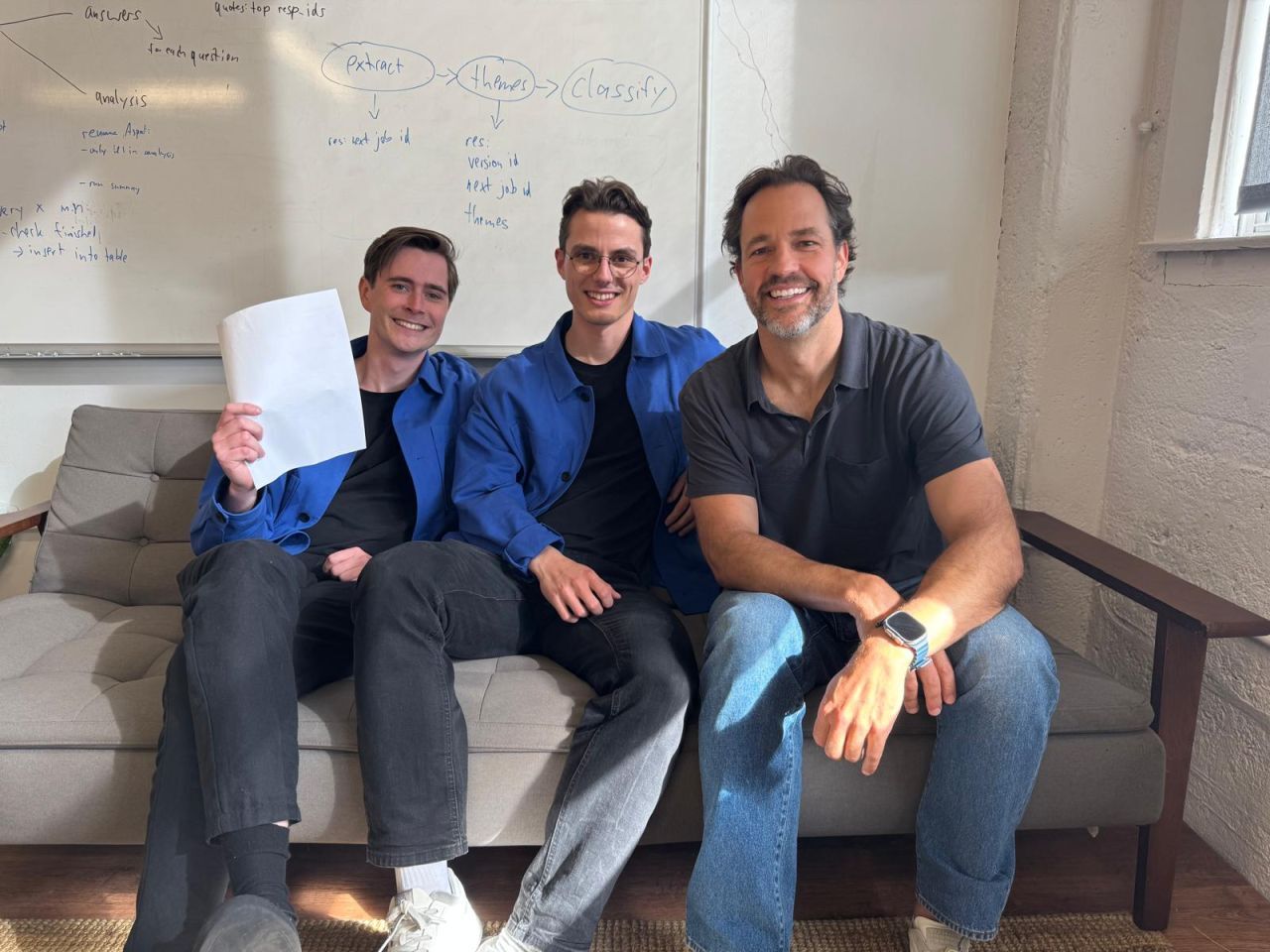
The founders met Sequoia investors at a hackathon and were invited to share a coworking space with another portfolio company. Before Listen became a familiar name to customers, Wahlforss and Juengermann acquired a more domestic distinction: they were the people to call when someone was locked out late at night. They were usually still inside. It is an unusually useful form of networking, provided you are willing to supply the hours.
Sequoia led their seed round in 2023, before they had a demo, and later led the Series A. The firm also became an early customer, using Listen for work including feedback and investment diligence. That relationship gave the founders more than a financier's approval. People close enough to inspect the product were choosing to use it for their own questions.
The public launch came in April 2025. By January 2026, Listen reported more than a million interviews and a fifteenfold increase in annualized revenue since launch. Its Series B announcement brought total funding to $100 million, with Ribbit Capital leading the round. Those are company-reported measures of activity and growth, rather than a score for the quality of every conversation. Still, they describe how far the founders had traveled from interviewing their own app users.
Company-reported milestones · January 2026
The machine needed a better ear
Wahlforss's account of building Listen includes an awkward discovery. An AI could hold a technically competent conversation and still miss the part that mattered. Experienced researchers listened to early interviews and pointed out openings the software had passed over: a hesitation, an answer worth pursuing, a moment that called for a different question. Fluent speech had made the product sound further along than its judgment really was.
He describes learning to keep researchers involved in shaping the studies. Their knowledge influenced the interview approach while the software took on the work of conducting conversations and producing initial analysis. That division gives his story a useful complication. A founder building automation had to learn which parts of human expertise deserved a larger role in the product.
“The real skill in research is knowing how to listen”
Alfred Wahlforss
For a customer, the practical test is whether an answer changes a decision. At Sweetgreen, research leader Brian Davia describes receiving a question in a Monday executive meeting and having findings back by Thursday. Customer testing helped shape wraps that expanded into 67 restaurants. Questions about construction, pricing, and naming could feed into the launch while there was still time to act on them.
Brian Davia's example at Sweetgreen. An individual customer account, rather than a universal turnaround promise.
There is a recognizable preference here for work that arrives in time to be used. A beautifully organized account of yesterday's problem has limited appeal to someone making tomorrow's menu. Wahlforss's business depends on shortening that interval without flattening what people actually mean.
A job interview outside Berghain
Recruiting supplied another problem of audience selection. Wahlforss and Juengermann put up a San Francisco billboard with no logo and little help for the bewildered passerby. It displayed a sequence of numbers. Engineers who recognized them as AI tokens could decode a web address and reach a programming challenge. The billboard demanded effort before it supplied an explanation, an approach most advertisers would find impolite.
The challenge was to build an algorithmic bouncer for Berghain, the Berlin nightclub. Applicants had to fill a club with 1,000 people while meeting constraints, including proportions of Berlin locals and people dressed in black, and rejecting as few people as possible. Solving it earned an interview; the winner received a trip to Berlin. At last, a recruiting exercise with a plausible dress code.
Wahlforss reported roughly five million impressions and 10,000 submissions. More revealing than the traffic was his explanation of the test: selecting people from a large pool, under constraints, with incomplete information resembled the work at Listen. The puzzle was a small demonstration of the company, offered to precisely the people who might enjoy building it.
He is quite willing to call himself competitive. “I'm naturally competitive,” he says of his experience in Sequoia's Arc program. There is no need to turn the billboard into a grand theory of his character. It does show an appetite for making a practical task entertaining, and letting the entertainment do some of the practical work.
The conversation, and the slippers
His personal website has a less corporate reading list: novels, locally run language models, and an ambition to climb a V8 bouldering problem. The films he names include Toni Erdmann, Sátántangó, The Conversation, and Stalker. He puts these films beside his technical interests without supplying a business lesson for each title. The list makes room for cinema without trying to turn every recommendation into advice about running a company.
In conversation with Turner Novak, Wahlforss offers a more literal account of office culture. Listen supplies branded slippers, and shoes come off. He traces the custom to his Swedish high school, where students also went without shoes. The school gave students considerable say over its rules; he recalls that the arrangement encountered difficulties when they voted to abolish homework. Participatory design had found a very enthusiastic customer base.
He has also helped create a route to San Francisco for people who have yet to find their circle. With Wilhelm Bolin, he co-founded the nonprofit Velocity Fellows, formerly Snabbt. The program offers up to ten young people from Sweden a funded week working on their projects and meeting founders and investors. Eligibility centers on Swedish citizenship or permanent residency and being under thirty; a finished company is unnecessary.
The 2026 program is scheduled for October 26 to November 2. Its promise is access: conversations, shared work, and a chance to see an ambitious project at closer range. The founder who moved into a hacker house is helping other people arrange their own introductions.
Another room to enter
On September 29, 2026, Salesforce announced a definitive agreement to acquire Listen Labs. The announced closing is expected in the fourth quarter of Salesforce's fiscal 2027, subject to regulatory clearance and other customary conditions. Wahlforss has said he will remain CEO and Juengermann CTO, with the team continuing inside Salesforce AI Labs.
For Wahlforss, the connection is personal as well as commercial. He names Marc Benioff as a hero and says he has borrowed ideas from Behind the Cloud. His stated ambition is to bring Listen to companies around the world more quickly. The product now includes simulations grounded in customer behavior alongside interviews with real participants, extending the questions a team can explore before making a decision.
That ambition takes him some distance from the beach, the broken servers, and the unfamiliar people arriving at BeFake. Yet the founding problem remains easy to recognize. Build something, and people will surprise you. Wahlforss has made a career out of trying to arrange the next conversation before the surprise becomes expensive.
Keep the conversation going
Find Wahlforss, watch the interviews, and explore the work.
Photographs: Sequoia Capital; Alfred Wahlforss / Sverige-Amerika Stiftelsen.