Person / Operator / Builder
Raj Gajwani
He sold your grocery store's spare Wi-Fi to your phone carrier. Quietly. At scale. These days he runs the business of AI art.
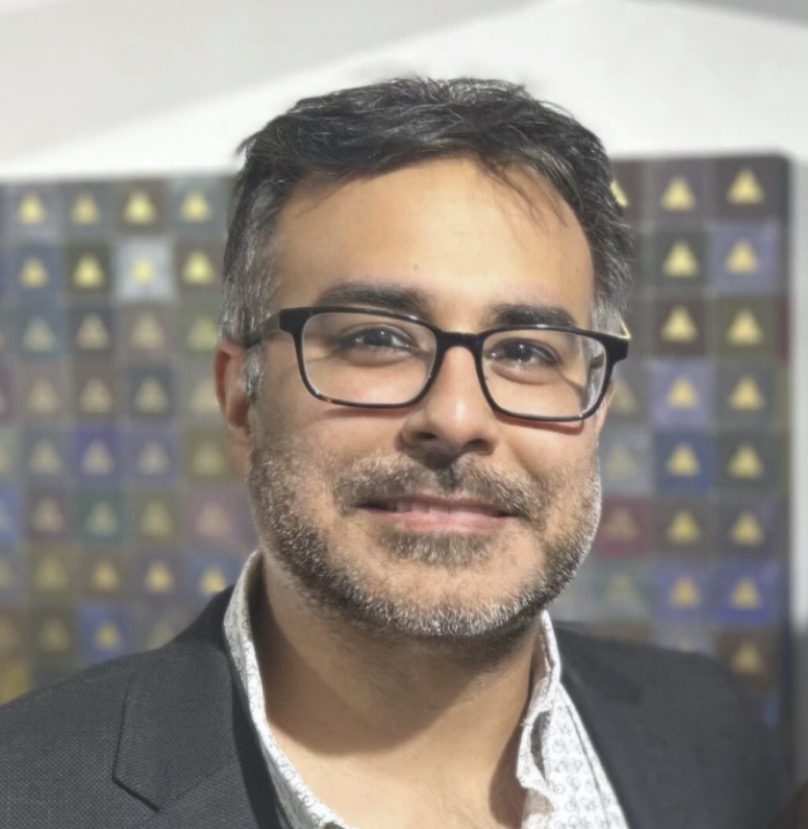
He sold your grocery store's spare Wi-Fi to your phone carrier. Quietly. At scale. These days he runs the business of AI art.
Open OpenArt today and you can hand a sentence to a machine and get back a film teaser, a character with a consistent face across forty frames, or a product shot good enough to ship to a storefront. Somewhere behind the magic trick is the unglamorous question of who pays for it, and how it grows. That is Raj Gajwani's department.
Gajwani is Chief Business Officer at OpenArt AI, the San Francisco generative-AI studio that pulls together image, video, audio, and a roster of frontier models - Google Veo, Kling, Nano Banana Pro, Seedance - into a single creator suite. The product is the kind of thing that looks like it sprang fully formed from a research lab. The business of turning a research toy into a company that 110 people work at is a different craft, and it is the one Gajwani has spent a career practicing.
He has a habit of arriving just before the rest of us notice the room has changed. Display advertising, when it was still being invented. Carrier-grade Wi-Fi, before anyone thought their phone should silently hop networks. And now generative AI, while the term still means twelve different things depending on who you ask. The pattern is not luck. It is a method: find the frontier technology, then go find the money it is hiding.
Most of Gajwani's reputation was built inside Google, and most of that inside DoubleClick, the ad-tech machine Google swallowed and scaled. He built the business development, strategy and partnerships team there, then grew DoubleClick's channel program into a $1.3 billion business at 80% annual growth. Alongside it he ran enterprise sales teams that pushed past $100 million in revenue at growth rates north of 100%. These are the kinds of numbers that get printed on a slide and then quietly define how a chunk of the internet gets paid for.
Then he did the harder thing for a successful executive: he started something small. Inside Area 120, Google's in-house incubator for experiments that might die, Gajwani founded and ran Orion Wifi. The problem was unsexy and enormous - Wi-Fi roaming. When you walk into a grocery store, a clinic, or a mall, your phone clings to a weak cellular signal while a perfectly good Wi-Fi network sits unused a few feet away. Orion built the plumbing so a venue could sell that spare capacity to your carrier, and your phone could connect automatically and securely, without you ever tapping a thing.
We don't know where the technology is going. There are good arguments that we're going to see a plateau, or that what we see today is the door cracked open a little bit.Raj Gajwani, on the future of AI
Orion Wifi launched publicly in 2020 and became one of Area 120's genuine hits. By 2022 Google's Devices & Services group had absorbed it; the technology now lives inside Android and is used by cellular carriers to patch over coverage gaps. Gajwani joined the board of the Wireless Broadband Alliance around the same time, lending the industry a voice that had actually shipped the thing it was talking about.
After Google he founded Day 0, an enterprise AI strategy consultancy where he serves as Managing Partner. The work is exactly what you would expect from someone allergic to hand-waving: strategy, technology evaluation, prototyping, and data-science initiatives for companies trying to figure out which AI promises are real. Gajwani has become a steady public voice on agentic AI and on the unglamorous reality of deploying it - the part where the demo works and production does not.
Quality control becomes a huge issue because of the compounding-errors problem. These are elbow grease problems, not Nobel Prize problems.Raj Gajwani, on enterprise AI
That line is the whole man in one sentence. He is not waiting for a breakthrough to save the project. He thinks most of the value in AI is sitting in the boring middle, waiting for someone willing to do the work. It is also why his definition of an AI agent is refreshingly deflated: "Software that has the authority to go and do something on its own. I tell it to go do something, and it starts deciding what to do." No mysticism. Just a tool with a longer leash.
Across all of it, Gajwani has played the quieter roles too - board member, advisor, and angel investor to startups including OpenArt.ai, Couchsurfing, MultiView, and the Wireless Broadband Alliance, plus a strategic-advisor seat at Mercurius Media Capital. The thread is consistency rather than spread: enterprise software, go-to-market, and the scaling problems that look easy on a whiteboard and break in the field.
He is, by training, more generalist than specialist. He graduated with honors from Harvard and studied at the London School of Economics, which is a slightly unusual on-ramp for someone who would spend decades inside deeply technical products. But that may be the point. Gajwani's edge is not building the model. It is seeing the model clearly enough to ask what it is worth, who will pay, and what has to be true for the business to compound.
OpenArt is the natural destination for someone with this resume. The models are dazzling and improving weekly; the harder questions are the Gajwani questions. Who is the creator that pays? How does a platform built on borrowed frontier models build something durable of its own? When does a tool stop being a novelty and start being infrastructure? He has answered versions of these before - for ad tech, for telecom - and now he is answering them for the strange new economy of AI-made images and video.
His read on the technology stays deliberately unsettled. He talks about cost, speed, and privacy pushing companies toward smaller, more controllable models even as the headline systems get bigger. He resists the urge to call the ending. The door, in his telling, has only cracked open. He has simply made a career out of being the first one through it, looking for the part nobody else wants to build.
"Software that has the authority to go and do something on its own. I tell it to go do something, and it starts deciding what to do."
"These are tools for human agents - to make them better and faster and more efficient."
"There's cost, there's speed, and there's more control or privacy. These three things are beginning to drive people to small models."
"We don't know where the technology is going... the technology we see today is like the door cracked open a little bit."
"Quality control becomes a huge issue because of the compounding-errors problem - these are elbow grease problems and not Nobel Prize problems."
"That kind of AI agent will be better in the same way that ChatGPT is a better way for me to find out what people are saying versus reading 20 pages."
That seamless Wi-Fi handoff inside Android? He helped build the system behind it - Orion Wifi.
His career spans three distinct tech eras: display ads, wireless networking, and generative AI.
Harvard and the London School of Economics - a generalist's on-ramp into deeply technical products.
He calls the hardest parts of enterprise AI "elbow grease problems, not Nobel Prize problems."