Kris Marszalek had arranged for a very large audience to visit a very short web address. On Super Bowl Sunday in February 2026, AI.com made its public entrance. The domain had reportedly cost him $70 million. Then visitors ran into trouble getting through the door. For an entrepreneur whose businesses depend on bringing unfamiliar technology to ordinary people, it was an unusually public reminder that an invitation and an experience are different products.
The episode offers a useful way into Marszalek's career. Again and again, he has sought a name that can travel farther than an explanation. Monaco became Crypto.com. An arena in Los Angeles acquired the same address. Now two letters were supposed to introduce personal AI agents to people watching football. Each move bought attention. The work waiting on the other side of the advertisement was considerably less glamorous.
There is something almost old-fashioned about this approach to new technology: find a good location, put your name above the door, persuade people to come inside. Marszalek's locations happen to include the address bar of the internet and the home of the Lakers. The rent, one imagines, is discouraging.
A business education with actual businesses
Born in Poland, Marszalek began selling computer hardware and software at 15. He attended university without completing his degree and moved to Hong Kong in 2003. Long before cryptocurrency, he was learning how to sell things people could hold.
His earlier ventures included consumer electronics company Starline Polska and location-based platform Yiyi. Then came Beecrazy, a Hong Kong deals business in the Groupon mould. Restaurants and other merchants offered discounts; customers bought vouchers. The internet made the introduction, but the meal still had to arrive. It was a practical education in the distance between customer acquisition and customer satisfaction.
Beecrazy sold to iBuy Group in 2013 for a reported $21 million. Marszalek subsequently became chief executive of Ensogo in 2014. The record contains a sale worth celebrating and a later failure that cannot be tidied into a motivational anecdote: Ensogo's regional operations closed in 2016, leaving merchants and staff with unpaid debts. His tenure ended that year.
These were consequential rehearsals for a business that would eventually ask customers to entrust it with money. They also complicate the familiar founder biography in which every previous company exists merely to prepare the hero for success. A failed marketplace has other protagonists, including the people waiting to be paid. Marszalek's career deserves to be read with those people still in the frame.
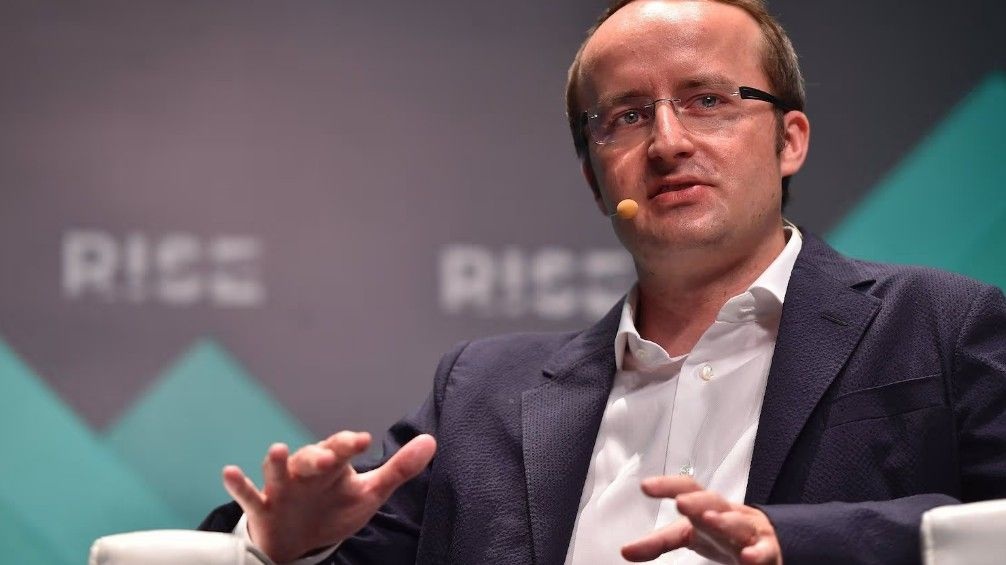
The address became the ambition
In 2016, Marszalek co-founded Monaco with Rafael Melo, Gary Or and Bobby Bao. Its early proposition involved cryptocurrency and a Visa-branded payment card: a bridge between digital assets and everyday spending. The idea gave a novel financial product a familiar physical form. A card was something a customer already knew how to use.
On July 6, 2018, Monaco announced its new identity: Crypto.com. Its announcement retained the MCO token and described a collection of financial products, rather than suggesting that the name change had magically rebuilt the business. That distinction matters. A domain can alter how a company is encountered without altering what a customer actually receives.
Marszalek put the ambition plainly: “CRYPTO.com gives us a powerful new identity”. The address seemed to answer a search before anyone had typed it. Monaco could have been a travel company, a casino or a particularly expensive moisturiser. Crypto.com required less introduction. Owning the category's name gave a comparatively young operator a conspicuous place in the conversation.
The co-founders brought overlapping commercial experience. Melo had been Ensogo's finance chief; Bao had worked in its corporate development operation. The connections suggest continuity across ventures, with people carrying their experience into the next business. For all the futuristic language surrounding cryptocurrency, the company was also built from a recognisable entrepreneurial material: colleagues who had worked together before.
A payment card business broadened. A second company opened another front.
Christmas came with naming rights
The arena agreement announced in November 2021 extended the same reasoning into physical space. AEG and Crypto.com signed a 20-year naming partnership, with the new name arriving on Christmas Day. An exchange's address would become part of the language of basketball, concerts and the evening commute. People could learn the name without having any interest in opening a trading account.
The deal also included connections across the Lakers, the Kings and the surrounding entertainment district. This was a network of recurring encounters. A single advertisement asks for a moment of attention; a venue name keeps turning up on tickets, broadcasts and conversations about where to meet. Marszalek was buying repetition on a timetable longer than the next cryptocurrency rally.
That helps explain the strategic appeal without settling whether the price was justified. Recognition is easy to notice. Its precise contribution to a business is harder to isolate. Customers arrive for many reasons, and a name on a building cannot tell you which reason brought them. Sports partnerships made Crypto.com visible; the quality of the financial service still had to justify the visit.
“There were no shortcuts to this milestone.”
Kris Marszalek, on reaching 100 million users, May 2024
The quieter numbers
The test became more severe when FTX collapsed in November 2022. Crypto.com faced questions about its own position, and Marszalek publicly defended its balance sheet. Customers had an immediate reason to look past advertising: they wanted to know whether the assets recorded in their accounts were there.
On December 9, Crypto.com released a proof-of-reserves report involving Mazars. The exercise compared specified assets controlled by the company with corresponding customer balances at a particular moment on December 7. Bitcoin's reported reserve ratio was 102%; ether's was 101%. Customers could check whether their balances were included through a cryptographic verification process.
The boundaries of that exercise matter as much as the percentages. These were agreed-upon procedures for nine assets at a dated snapshot. The report did not express an audit opinion or an assurance conclusion. Reading it as a permanent certificate of corporate safety would ask it to do a job it had not undertaken. Here was another lesson in names: even a reassuring financial label needs its small print.
Growth continued. Crypto.com announced 100 million global users in May 2024, double the figure it cited for May 2022. Its current company page puts the total at 150 million across 90 countries. Those are company-reported user counts, rather than a measure of how many people trade every day. They nonetheless describe a reach far beyond the original payment-card proposition.
There was institutional work behind that reach, too. In January 2025, the company's Malta entity received a MiCA licence, allowing it to passport crypto services across the European Economic Area. This side of expansion produces less entertaining television than an arena deal. It also determines where a business can actually serve customers.
Two letters, another large audience
AI.com returned Marszalek to the business of introducing a complicated idea through an uncomplicated address. The February 2026 launch announcement identified him as founder and said he would lead both AI.com and Crypto.com. He had acquired the domain in 2025. A new team was pursuing a consumer product in another crowded technology market.
The proposed service was a personal agent able to act across applications, organise tasks and help complete projects. The company's stated ambition went further: agents would develop capabilities and share improvements across a network. These were promises about the service and its direction. A launch announcement alone could not establish how reliably all those capabilities would work.
During the Super Bowl launch, users encountered access problems. Marszalek attributed difficulties to exceptionally heavy demand and later to Google rate limits. A short address had done its introductory work rather well; the path from curiosity to use proved more awkward. Anyone who has ever wrestled with a login screen may recognise the comedy, although most login screens arrive with a smaller advertising bill.
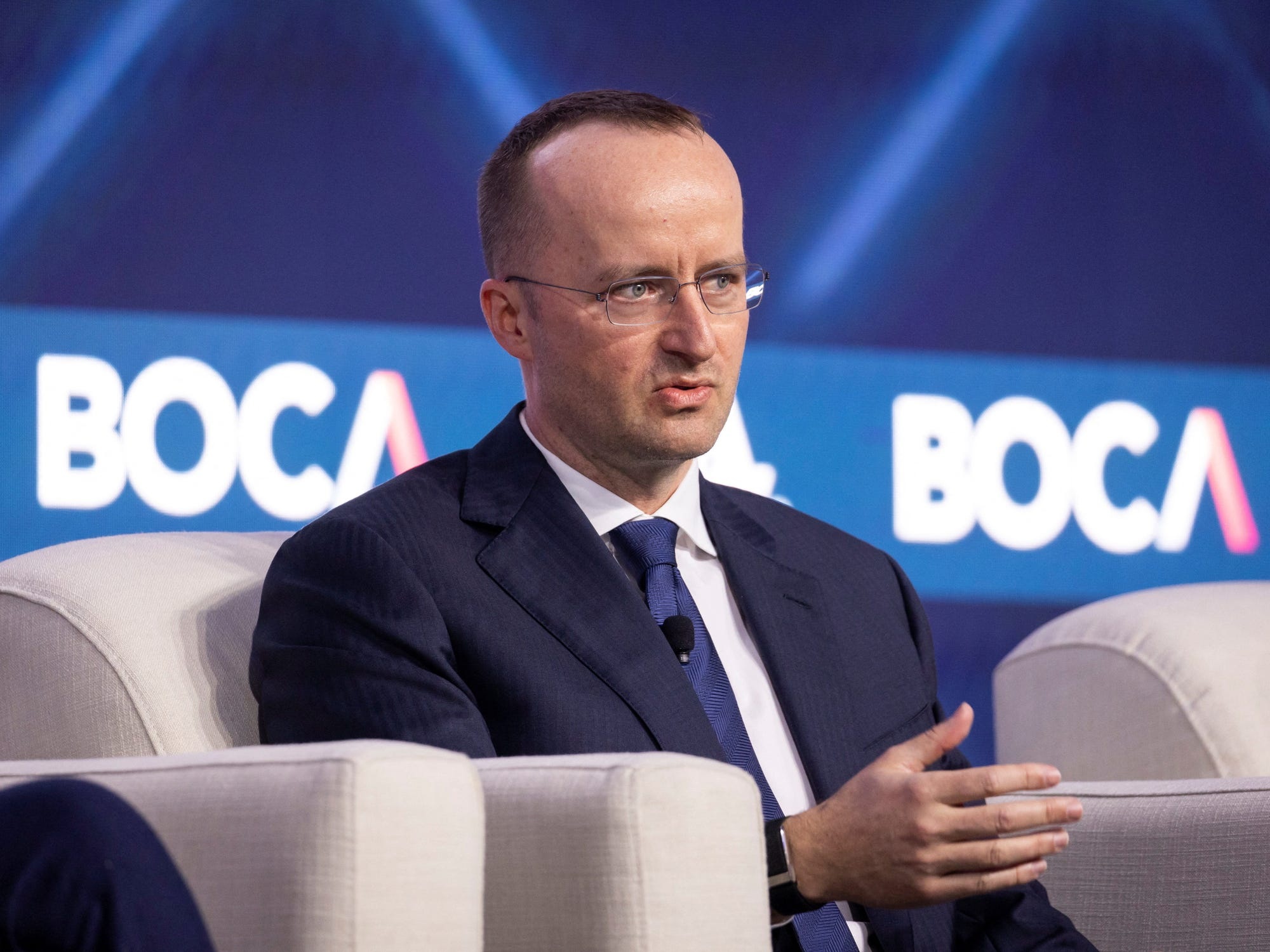
His commitment to AI also carried consequences inside Crypto.com. In March 2026, he announced a 12% workforce reduction alongside a move toward company-wide AI adoption. The decision placed his enthusiasm for new tools beside the cost borne by employees. A founder's aspiration can be expansive while the organisation underneath it is becoming smaller.
The name on somebody else's screen
By September, another route to customers was taking shape. Robinhood announced a partnership with Crypto.com and OG.com, beginning with selected football event contracts routed through the CFTC-regulated exchange and clearinghouse. It also said it would hold equity stakes in both businesses following OG.com's spin-off. Here, distribution came through another company's app.
Marszalek described an ambition to expand OG.com beyond prediction markets into futures and perpetuals. The arrangement offers a different view of his work from the one visible above a Los Angeles arena: a company can acquire reach by supplying the machinery behind someone else's customer experience. A memorable name remains useful, but another business must also want the service underneath it.
That is where his next chapters will be judged. A customer needs the card to work, the balance to be available, the agent to complete the task. Marszalek has repeatedly found ways to get people to the door. After the letters have done their job, the person arriving has an entirely reasonable request: let me in, and make this useful.
Follow the next chapter
COMPANIES · CONVERSATIONS · FURTHER READING
- Crypto.com
- AI.com
- OG.com
- Kris on X
- Kris on LinkedIn
- 2018 rebrand announcement
- 2022 reserve report
- 100 million user announcement
- European licensing announcement
- Robinhood partnership
- AI.com launch film on YouTube
- TBPN interview transcript
- Earlier career profile
- March 2026 restructuring
- August 2026 treasury deal cancellation