Krea is for the person who has six visual AI tabs open and cannot remember which one still has credits. More specifically, it is for designers, art directors, photographers, architects, filmmakers and marketers who want to test an idea quickly, then keep their hands on it. A rough triangle can become a mountain while you move it. A product photo can branch into campaign variations, get cleaned up, resized and pushed toward video. The point is less “type a wish and wait” than “make a mess, notice something good and steer.”
That distinction matters. Many generators behave like slot machines with excellent lighting. Krea behaves more like a studio desk covered in tracing paper, reference books and adapters. Its own Krea 2 model sits beside outside models for images and video. Realtime canvases, region edits, upscaling, custom LoRAs, 3D, audio and reusable node graphs share the same account. You can ignore most of it on day one. You will probably appreciate that it is there on day thirty.
Who should actually use it?
Krea fits visual generalists unusually well. If a normal Tuesday moves from a moodboard to packaging mockups, then to a social cut and an upscale for print, one subscription can replace several small ones. Agencies gain shared tools and a common model shelf. Architects can turn massing sketches into atmosphere studies. Fashion teams can explore samples and campaign concepts before committing to a shoot. Small ecommerce teams can place a product into scenes without assembling a miniature production company.
It is less compelling for someone who only wants one repeatable task. A dedicated desktop upscaler can offer tighter control. A local ComfyUI setup can be cheaper at high volume if you own the hardware and enjoy maintaining graphs. Midjourney still has a particular visual personality. Krea’s advantage is breadth tied together by an interface, not victory in every individual lane.
The trick is not picking one model
Krea began in 2022 with Victor Perez and Diego Rodriguez, friends from an audiovisual systems engineering program in Barcelona. Both became AI researchers. Both received fellowships to study at Cornell. Perez arrived and left after one day to build the company with Rodriguez. It is an absurdly efficient origin story, though their product took the opposite path: Krea kept expanding.
The early hook was realtime generation. Draw a crude form, point a webcam or change a prompt and the image shifts immediately. It feels closer to blocking out a composition than filing a request. That interface spread quickly on social media, and the company built outward from it. By April 2025, Krea said an eight-person team had shipped more than 50 major updates in 14 months, reached 20 million users and increased revenue twentyfold. Bain Capital Ventures led a $47 million Series B, part of $83 million in disclosed funding.
“Why isn’t it possible to go on an AI-generated image, and click and drag and drop something in or take something out?”Diego Rodriguez, co-founder and CTO, speaking to TechCrunch
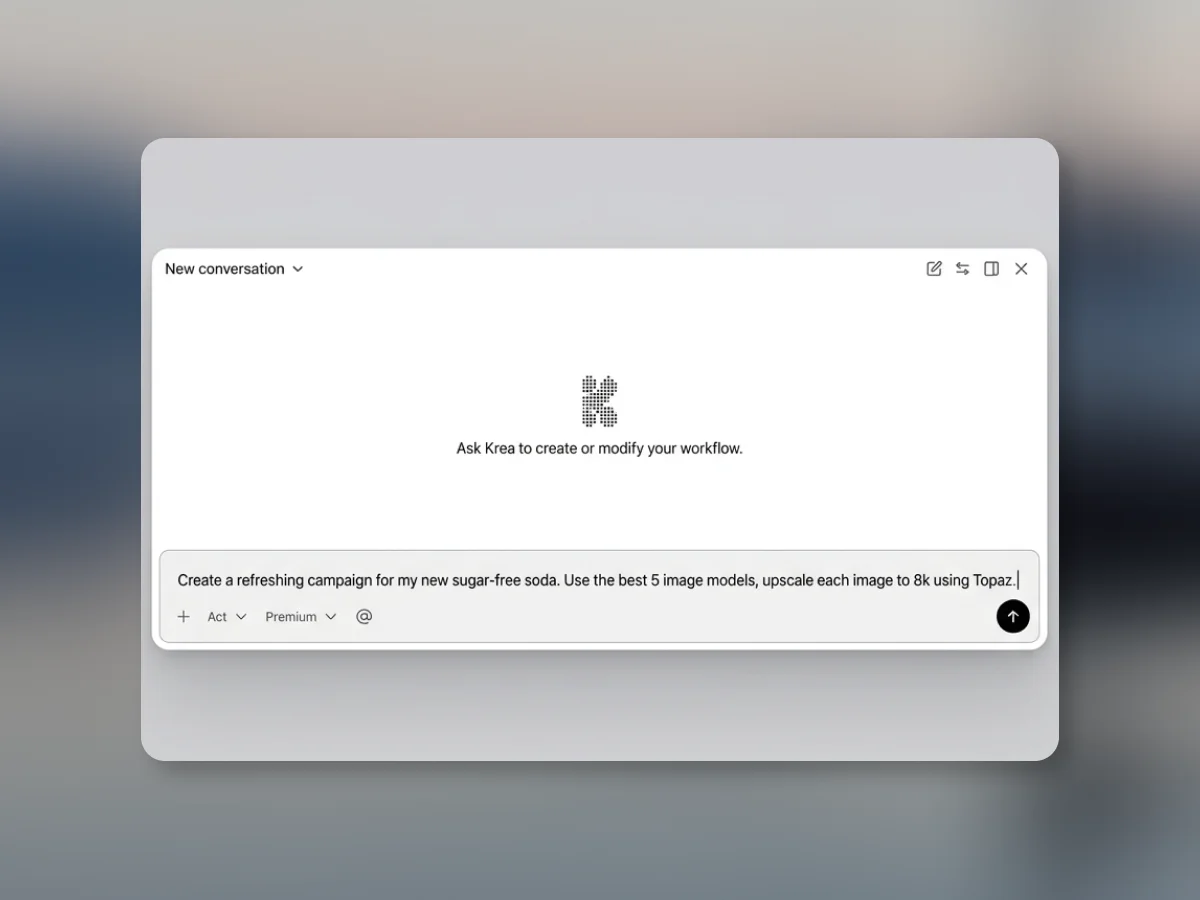
That painterly question still explains Krea better than its long menu. Generate is only the first verb. The platform lets you annotate regions with separate instructions, restyle video, transfer motion, train a character or brand look, build 3D objects and pass assets between stages. Krea Nodes makes the plumbing visible on an infinite canvas. The Node Agent can read that canvas, propose a pipeline, connect compatible steps and show the compute cost before anything runs.
Type, draw, move shapes or feed a webcam. The output changes while you direct it, which makes composition playful and quick.
Use style references, moodboards and sliders to explore a look. Custom LoRAs can keep a character, object or brand vocabulary consistent.
Chain generation, edits, enhancement and video. The agent can build a first graph from a plain-language brief and preserve cached steps.
Move among Krea and third-party image, video, audio and enhancement models without opening a fresh account for every release.
Krea 2 has its own point of view
For years Krea was mainly the interface on top of other labs’ models. Krea 2 changes the center of gravity. Released in 2026, it is the company’s first foundation image model trained from scratch, built around aesthetic range and control. A prompt expander turns sparse language into visual directions. A style-reference system mixes the mood of several images while trying not to copy their subject matter. Generative sliders adjust intensity, complexity, movement and prompt creativity.
The technical work is substantial. Krea describes a diffusion transformer using a Qwen 3 VL text encoder, PyTorch distributed training, FSDP2 and tensor parallelism. Research and production shared a Kubernetes GPU cluster designed to move inference elsewhere when training needed the full pool. Krea released Raw and Turbo weights with inference code in June 2026. Its community license is permissive for many uses but is not a blank cheque, so companies should read the revenue and distribution terms.
Krea 2 Turbo produces images in roughly two seconds, according to the company. Raw favors control and training. The model’s stated goal is exploration rather than one glossy default, and the official examples bear that out: odd camera angles, grain, graphic illustration and quieter photography coexist comfortably. Prompt following and precise poses can still wobble, a criticism also raised by early open-weight users.
The bill arrives in compute units
Krea is freemium. The current free account gets 100 units a day. Basic costs $9 per month for 5,000 units, Pro $35 for 20,000, and Max begins at $70 for 40,000. Business begins at $200 for 80,000 units and covers up to 50 seats. Annual billing lowers the effective rate. The API is a separate prepaid balance charged by successful generation.
Units make unlike models fit one wallet, but they also make budgeting abstract. A still-image experiment is cheap; a long, high-resolution video is not. The safest habit is to rough out direction with faster models and low-cost settings, lock references and composition, then move to expensive video or enhancement. Nodes helps because cached upstream results do not rerun when only a later step changes.
| Product | Choose it when | Watch for |
|---|---|---|
| Krea | You move between images, video, edits, enhancement and reusable workflows. | Unit costs vary sharply by model; breadth can feel busy. |
| Midjourney | You mainly want image ideation and like its visual character. | Less of an end-to-end production workbench and no public API. |
| Runway | Video generation and filmmaking tools dominate your work. | Fewer reasons to choose it for broad still-image exploration. |
| ComfyUI | You want local control, deep graph customization and can maintain the setup. | Hardware, installation and model management are your job. |
What working users say
The cleanest success story comes from Superside. Group Creative Director Anthony Higgins said around 80 percent of its AI-generated work in 2025 ran through Krea. A production process that once took five days dropped to one. Fashion consultant Taskin Goec describes using Krea to rethink costly, repetitive sampling and campaign steps. Those are workflow endorsements, not beauty-contest votes, which makes them more useful.
“What used to take five days, we now do in one. Krea gives us the other four back.”Anthony Higgins, Superside, in a Krea customer story
Public reviews are more mixed, as they should be. Product Hunt shows a 4.2 rating from 13 reviews, with praise clustered around speed, the approachable interface and upscaling. Trustpilot showed 3.6 from 147 reviews when checked, with complaints involving renewals, refunds, support and unpredictable results. Reddit’s architecture and AI-art communities are split on enhancement: some value its texture work and model choice, while others report blurred details, warped lines or a “washed out” finish.
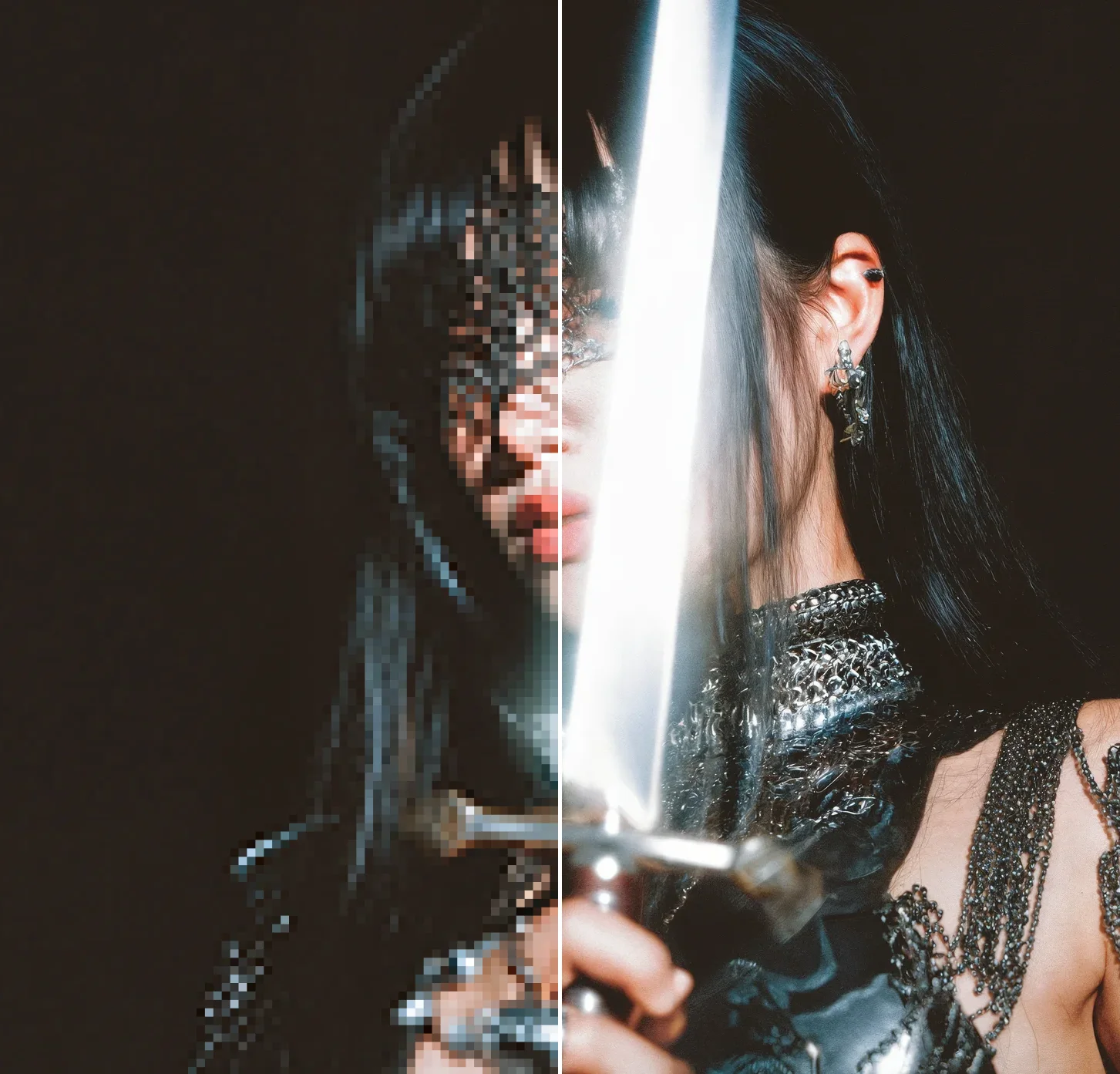
The lesson is simple. Enhancement is generative, not forensic. It can make fabric, foliage and surfaces feel finished because it invents plausible micro-detail. That same instinct can mangle signage, tiny objects, faces or structural geometry. Keep the original, compare at full resolution and mask or brush back the parts that matter. For client work, run a representative batch during the free tier before buying a large allowance.
The verdict
Krea earns its place when visual work refuses to stay in one format. Its realtime canvas changes the rhythm from prompt-and-pray to continuous direction. Krea 2 adds a house model with enough range to be interesting, while Nodes turns experiments into processes a team can repeat.
The compromises are real: compute math, uneven enhancement and a product surface that grows every month. Start free. Build one actual job from rough idea to delivery. If fewer tabs and faster iteration save more time than the units cost, Krea is doing precisely what it was made to do.