Kota Nozaki found his company’s first problem in a place where problems are supposed to be solved. At Waseda University, he studied life science and medical bioscience. By day, he joined an internship that drew him toward business. By evening, with his professor’s permission, he returned to the laboratory and worked deep into the night. The interesting education happened in the overlap.
Around him were postdoctoral researchers and working doctoral students, people with a formidable command of narrow and difficult subjects. They told him about the employment market waiting outside the lab. Their expertise was substantial. The number of places able to recognize and use it was not. Nozaki remembers wondering why people so logical and capable had so few environments that matched their abilities.
He did not answer the question by remaining in the lab. After graduating in 2017, Nozaki joined Crosspoint Advisors and worked in investment banking. He then moved to Pacifico Energy, where his official biography credits him with leading project finance and fund formation involving more than ¥100 billion in cumulative financing. Science had taught him to look closely. Finance taught him that value and a functioning market are very different things.
An outsider learns how markets behave
Nozaki describes himself plainly: “I am an outsider in the R&D market.” The sentence is useful because it carries no costume. He is not a professor claiming to have perfected academic life from within. His route runs through a biomedical degree, M&A work, renewable-energy funds, and a company formed to make scientific expertise easier to find. The outsider’s advantage is not automatic wisdom. It is the permission to notice customs insiders have learned to tolerate.
One such custom was the résumé as a weak proxy for research skill. A scientist’s real work may sit in a paper, a patent, a method, an experiment, or a technical vocabulary that a general recruiter cannot parse. A conventional job profile can flatten all of that into a broad label. “Chemist” is accurate in the same way that “musician” is accurate: technically true and almost useless when choosing the quartet.
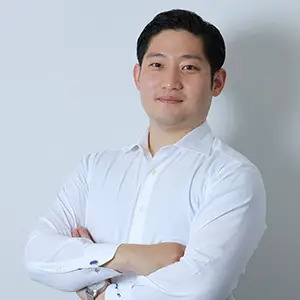
In September 2020, Nozaki founded Srust, the company renamed CoA Nexus in 2023. The early proposition was a skill-sharing platform for research and development talent. Its products have evolved, but the operating thesis has stayed recognizable: papers and patents contain signals about what people actually know; software can help organize those signals; organizations can use the result to discover people they would otherwise miss.
“We believed in the potential of scientists more than the scientists themselves.”Kota Nozaki, speaking during the Srust era
There is an awkward tenderness in that claim. It could sound presumptuous if the product merely handed researchers another profile to maintain. The company instead tries to make work that already exists more legible. A publication is not a personal brand exercise. A patent is not networking content. Both are evidence. CoA Nexus treats them as clues in a search problem.
The CoA Nexus matching logic
From a candidate list to an R&D map
The company now operates across several layers. CoA Career supports recruiting for specialized R&D roles. CoA Accel works on commercialization, university-industry partnerships, and deep-tech startup formation. CoA Study publishes interviews and reports about research careers. CoA Atlas, launched in beta with Hakuhodo participating as a business-design partner, is the broadest expression of the idea.
Atlas draws on more than 30 million papers and over one million patents, with access to data on approximately three million R&D professionals in Japan and abroad. Companies can use technical terms to search for relevant people. The intended uses extend beyond recruitment to adviser selection, outsourced work, business partnerships, joint research, and research-trend analysis. This is less like a job board and more like an atlas in the old sense: a negotiated picture of a world too large to see at once.
The scale grew quickly on paper. A 2024 profile described access to more than 300,000 researchers. A 2025 event biography put the database above 400,000. By February 2026, the Atlas announcement cited roughly three million. The figures refer to evolving products and datasets, so the neatest conclusion is not a victory lap. It is that CoA Nexus has moved from assembling a pool of candidates toward mapping a much wider research landscape.
At twelve, Nozaki moved alone to China. He later graduated first in his class from a local school.
Life-sciences study, laboratory nights, and an early encounter with the career constraints facing researchers.
M&A advisory at Crosspoint Advisors, followed by renewable-energy project finance at Pacifico Energy.
Srust becomes CoA Nexus; recruiting expands into a broader platform for R&D discovery and collaboration.
The border habit
Nozaki’s biography has been crossing borders since childhood. Born in 1994 to Japanese and Korean parents, he left for Dalian at twelve, returned to Japan for university, and now lists professional proficiency across Japanese, Chinese, English, and Korean at varying levels. CoA Nexus lists addresses in Tokyo and Menlo Park. Its company language is correspondingly global: Japanese research talent should be discoverable abroad, and overseas researchers should be reachable by Japanese organizations.
The global ambition has required practice, not just adjectives. In a New York-focused X-HUB Tokyo program, Nozaki delivered weekly English elevator pitches to guests with different backgrounds. He later said the repetition lowered the communication barrier and helped him explain the business more concisely. It is a modest founder anecdote, refreshingly free of epiphany. Clarity arrived by doing the same difficult thing again, each time for a new listener.
By 2025, he was moderating a TECHNIUM conference discussion about the obstacles Japanese founders face when approaching U.S. venture networks. CoA Nexus is also part of the organizing group behind TECHNIUM 2026, a Tokyo gathering designed to connect researchers, founders, investors, corporate leaders, and government officials. The conference and the software share a belief: useful networks are built through specific encounters, not through the ceremonial exchange of business cards.
What the finance years left behind
It is tempting to tell Nozaki’s story as a return from money to meaning. That would be too tidy. Finance did not interrupt the scientific story; it supplied its mechanics. In project finance, a solar development becomes fundable when risk, ownership, contracts, and future cash flows are made comprehensible to different parties. In a talent market, specialized expertise becomes usable when a company can identify it, evaluate its relevance, and create a role or project around it.
The parallel has limits. People are not assets, and a paper count cannot contain a career. Matching algorithms inherit the blind spots of their data and their designers. Nozaki’s company therefore sits in a productive tension. It wants to make researchers machine-discoverable without reducing them to machines. The final match still has to work for a human being with ambitions, constraints, and a life beyond their publication record.
The institutional work matters too. In 2024, Nozaki served on a Japanese Ministry of Economy, Trade and Industry study group examining routes for doctoral talent into industry. In October 2025, CoA Nexus announced approximately ¥300 million in equity financing and loans, alongside a capital and business alliance with Hakuhodo. The company said the money would support hiring, marketing, product development, and international expansion. By the following February, Hakuhodo was working with CoA Atlas on business design and the creation of connections between companies and researchers.
A talent shortage can also be a failure of sight: the expert exists, but the institution has no practical way to recognize them.
Nozaki’s aspiration is expressed in the language of a “research revolution.” The day-to-day work is less theatrical. It involves cleaning data, interpreting technical vocabulary, persuading companies to search differently, and giving researchers options beyond the familiar full-time funnel. A side project may become a collaboration. An adviser may become a co-founder. A paper may reveal the person who knows how to unstick an industrial problem. Revolutions, inconveniently for the poster designer, are often a sequence of good introductions.
The question from the late-night lab remains intact: why should capable scientists have so few environments in which to use their abilities? Nozaki has spent his career since finance building one answer. It is a market with more doors, a better map, and enough translation between the people doing the research and the organizations that need it. Science supplies the discovery. His work is to improve the chance that discovery finds somewhere to go.