Grace Chia used to sell underwater robots. The awkward part was everything that came with them. There was the vehicle itself, then the vessel, the equipment and the people needed to make the whole arrangement work. Somewhere inside this elaborate operation sat a simple customer requirement: find out what was happening underwater. The bill, unfortunately, had rather more moving parts.
Chia understood that arrangement from the sales side. Before becoming CEO and co-founder of BeeX, she worked in subsea business development, selling human-operated underwater vehicles. She could see the usefulness of the machines. She could also see how much infrastructure their usefulness demanded.
“Robots were supposed to help make our lives better,” she says. It is an almost embarrassingly reasonable expectation. In underwater inspections, she had encountered equipment whose operating costs made the promise harder to keep. Her eventual company would tackle the relationship between a robot and the expensive operation surrounding it.
The expensive thing above the water
A tether connects a remotely operated underwater vehicle to the world above. It also connects the job to an operating model: people on a vessel controlling equipment below. For Chia, the opportunity lay in giving the vehicle more ability to make decisions for itself.
BeeX designs, builds and operates autonomous underwater drones for work around energy infrastructure, coastal assets and defence applications. Its central proposition is practical. An inspection should require fewer supporting resources, with more of the intelligence carried inside the machine.
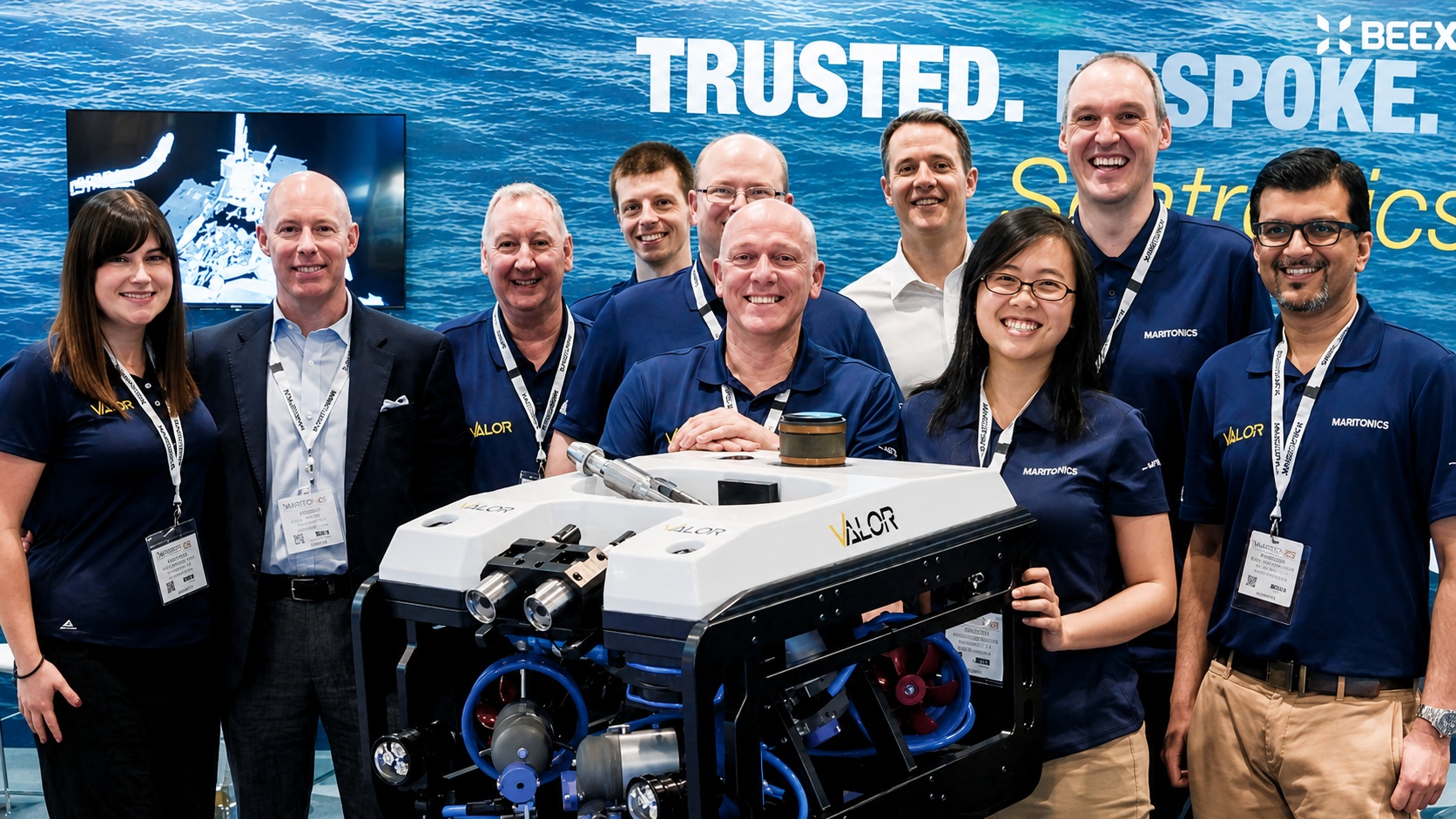
The distinction matters because the object being inspected may be a port structure, a cable or an offshore installation. These are working assets with recurring inspection needs. A machine that makes the job easier to organise can change the economics of checking them. That was the opening Chia pursued with her co-founder, Goh Eng Wei.
Before the company, a club
Their partnership began at the National University of Singapore. Chia studied mechanical engineering; Goh studied computer engineering. She founded the Bumblebee robotics club, where the two met. Hardware and software had found a reasonably convenient place to argue with each other.
In 2013, their team won the Best New Entry award at RoboSub, an international autonomous maritime robotics competition in the United States. Chia graduated in 2014. The competition result offered encouragement, but a company did not immediately follow. Both founders first went into the workforce.
There was already a business education alongside the engineering. Through NUS Overseas Colleges, Chia spent a year studying and interning in Beijing. Running an organisation, finding support and getting other people interested in a project belonged to the work too.
A small entry on her personal blog supplies a more intimate view. In November 2015, she wrote about a technical exchange with an SUTD robotics team. Her colleagues had openly shared what they had learned. She was proud of them, while acknowledging the fear that another team might overtake them.
“Building this community based on trust will have long term positive impacts.”
Grace Chia, 2015
The discussion included replaceable motor-controller modules, bicycle cables for manipulation and cooling. These are pleasingly specific details. They place her enthusiasm in a room full of engineering questions, where education happens through the exchange of things someone has actually tried.
Her blog biography also described volunteering with NUS BumbleBee out of a love for engineering and education. The commercial founder and the volunteer teacher share some useful territory: both need to make complicated knowledge useful to somebody else.
The prize and the practical education
Chia and Goh established BeeX in 2018, with her as CEO and him as CTO. Their student work became a foundation for a commercial product. NUS’s Graduate Research Innovation Programme helped with the business side of translating research into something customers could use.
That translation involved more than making the vehicle work. Product and market validation, business modelling, strategy and intellectual property all entered the picture. The university’s technology-commercialisation support and the maritime network around PIER71 gave the founders access to people who understood different parts of the problem.
In November 2020, BeeX won PIER71’s Smart Port Challenge. Chia received the award from Chee Hong Tat, then Senior Minister of State for Transport and Foreign Affairs. The competition had attracted 187 applications from around the world; 16 companies entered its accelerator programme.
Chia credited the programme with helping refine BeeX’s value proposition for maritime companies. It is a revealing phrase in a story full of machinery. Even a working robot needs a persuasive answer to the question of why a customer should change an established routine.
The customer wanted the inspection
Then came a harder commercial lesson. Prospective buyers had signed letters of intent to buy BeeX’s vehicles. In 2022, those intentions failed to become the orders Chia expected. Inspection services, meanwhile, began generating revenue. A vehicle sitting idle could earn its keep by doing a job.
Moving toward services created questions about people, fleet investment, production and management. It also meant explaining a changed plan to supporters. Chia has said that concern about reputation bothered her most: others had made decisions on the basis of the old business model.
In 2024, BeeX publicly repositioned itself as a technology company offering services. Chia reported more than five times as many enquiries, shorter sales cycles and faster revenue growth. Field experience also moved closer to engineering, bringing customer problems into the development process.
Her account is unusually candid about the emotional cost of a commercial decision. She worried about letting people down. The argument for change had to survive that feeling. Being responsible for a company included revising a promise about how it would work.
An anchovy with a job to do
One BeeX drone bears the name A.IKANBILIS. Ikan bilis are anchovies; the prefix A stands for autonomy. For an industry accustomed to substantial machinery, the naming committee displayed an agreeable sense of proportion. Small fry, substantial assignment.
Its work is easier to understand through the inspection than through the acronym. The vehicle gathers information about structures beneath the water. Autonomous operation reduces dependence on continuous human control, while a compact system can reduce the supporting equipment needed for a mission.
Chia has described specialising in low visibility, strong currents and complicated situations that require smarter mission plans. Singapore’s waters provide demanding conditions in which to develop those behaviours. The environment makes a rather exacting product manager.
The environmental argument follows the operating one. Requiring less vessel support can lower the emissions associated with an inspection. BeeX’s case for autonomy therefore combines operating costs, the resources needed to reach an asset and the ability to collect useful data once there.
Those relationships are central to Chia’s work. The drone is the visible product. The system around its deployment determines how often, how economically and how widely customers can put it to use.
Learning to be heard
Chia has also made a public project of explaining the business. In a LinkedIn post announcing a commitment to share her founder journey, she worried that engineering-led teams could concentrate on technology while neglecting communication. She wanted people to understand the change BeeX was trying to make.
There is something appealingly workmanlike about that admission. Communication appears as another job to learn and execute, with its own possibility of failure. A product’s existence does not guarantee that anyone understands why it matters.
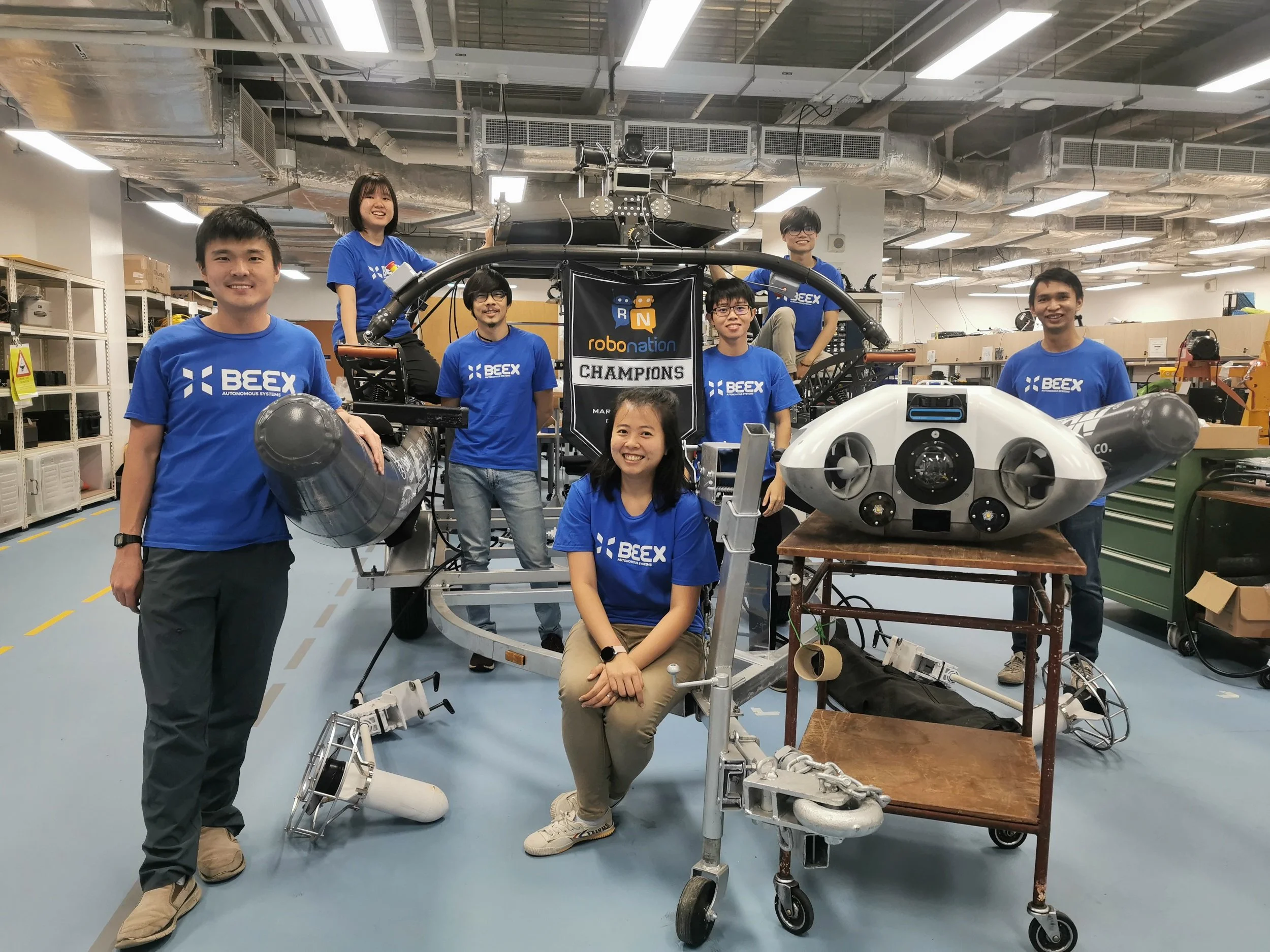
Her recruitment posts offer a related glimpse of her priorities. She has emphasised the ability to learn, grow and contribute, alongside relevant projects and interests beyond formal qualifications. She describes valuing a team whose members support one another. Building autonomous machines remains a conspicuously collective occupation.
In 2026, she received Tatler’s Front & Female Innovation Award. Her aspirations include encouraging more young people to consider engineering and robotics, particularly in fields where women remain underrepresented.
More machines, more proof
On 29 June 2026, BeeX announced a US$7.7 million Series A led by Monk’s Hill Ventures, with participation from SEEDS, ShipsFocus, OCTAVE Capital and NUS Technology Holdings. The company said the money would expand its fleet and operational reach across commercial and defence markets.
NUSX’s account of the business describes more than 18,000 hours of commercial and defence deployments since its drones became operational in 2023. It also records the June 2026 launch of BETTA and an ambition to expand the fleet to 21 drones within a year. That is a plan for more work in the water, with the accompanying demands of production and delivery.
Chia has proposed a Singapore autonomous underwater testing zone, where customers could see the robots’ capabilities demonstrated in real time. The wish fits her career: trust grows when a technical claim survives contact with an actual job.
She began by learning the machinery an industry already bought. She helped build an alternative, then changed how her company offered it. Each step required attention to what happened around the robot. Even underwater, an invention has to find its way through a thoroughly human world.