The trouble announced itself at lunch. Kirill Bigai had learned English at school in Kyiv, collected the grades and reached the sort of proficiency that behaves beautifully on paper. Then, on an early trip to the United States, he opened a restaurant menu. Potato made sense. Tomato, too. Much of the rest looked as if the kitchen had composed it in code.
It was a small humiliation with excellent timing. Bigai wanted to build a global company, and a global founder who could not confidently order lunch had discovered a practical defect in his plans. He found a native English speaker in Texas and began taking lessons over Skype. The screen was grainy, the connection belonged to another technological age, but the arrangement felt larger than either. Geography had stopped deciding who could teach him.
An ordinary customer might have enjoyed the lesson and moved on. Bigai began wondering why the useful accident required so much searching. If a learner in Ukraine could study with a teacher in Texas, there ought to be a proper place for the two to meet. The question would survive one failed company, an expensive American detour and a winter when nobody on the founding team knew quite what to build next.
“We saw a massive opportunity.”Kirill Bigai on connecting learners with tutors worldwide
First, build the wrong thing
Bigai had been trained to admire systems. He studied engineering at Kyiv Polytechnic Institute, then business management at Kyiv National Economic University. While still at university, he worked on intelligent telecom networks at Vodafone and Nokia Siemens Networks. The grand title concealed practical machinery: servers, billing logic, voicemail and the invisible decisions that make a phone service behave. At Creatio, then known as Terrasoft, he moved closer to product work and learned to interview customers before automating their business processes.
In 2011, he took a startup course and began imagining software of his own. The first attempt was FindGuru, a marketplace for local group classes. It collected $20,000 from an accelerator and expired four months later. Bigai later blamed an unbalanced team, competing visions and the absence of a designer who could turn an idea into a quick prototype. It was a concise education. Universities give degrees; failed startups give invoices.
Preply began in 2012 with Dmytro Voloshyn and Serge Lukyanov. The team raised early angel money, built for the American test-preparation market and went to Boston. They spent aggressively on paid acquisition before the product deserved the attention. By the end of the year, much of the money was gone. The founders returned to Kyiv. The American dream had produced a useful result, though not the one advertised: it had proved that their model was wrong.
Bigai develops FindGuru, a broad marketplace for local classes.
FindGuru fails; Preply launches and tests the US market.
Funding runs low. The team returns to Kyiv and searches for a narrower problem.
Preply relaunches around English tutoring after the team spots real search demand.
The winter without a north star
Bigai has called the winter of 2013 Preply's hardest period. The original technical co-founder left for Google in New York. The remaining team brainstormed, tested business models and watched the runway shorten. Then their designer noticed search demand in Ukraine for English tutoring. It was not a triumphant vision. It was a signal, modest enough to test cheaply.
The rebuilt Preply started as a landing page. Prospective tutors entered their details into a Google Form. Bigai phoned customers, listened to what they needed and matched them manually. The first three weeks brought 100 tutors. Payments and messaging followed. English lessons attracted requests for other subjects, and the marketplace began to look like an actual marketplace rather than three people performing one behind a curtain.
Money remained comic in the bleak way only startup money can be. After the remaining capital ran out, the founders stopped paying themselves. Bigai took SEO consulting work. They did support, acquisition and product work, often for 60 hours a week. Salaries returned at $100 a month, then $200. Around the same time, the Maidan revolution was unfolding in central Kyiv. Bigai has described working during the day and joining demonstrations in the evening. A startup's weekly metrics can feel terribly small beside history, yet Monday still arrives asking for both.
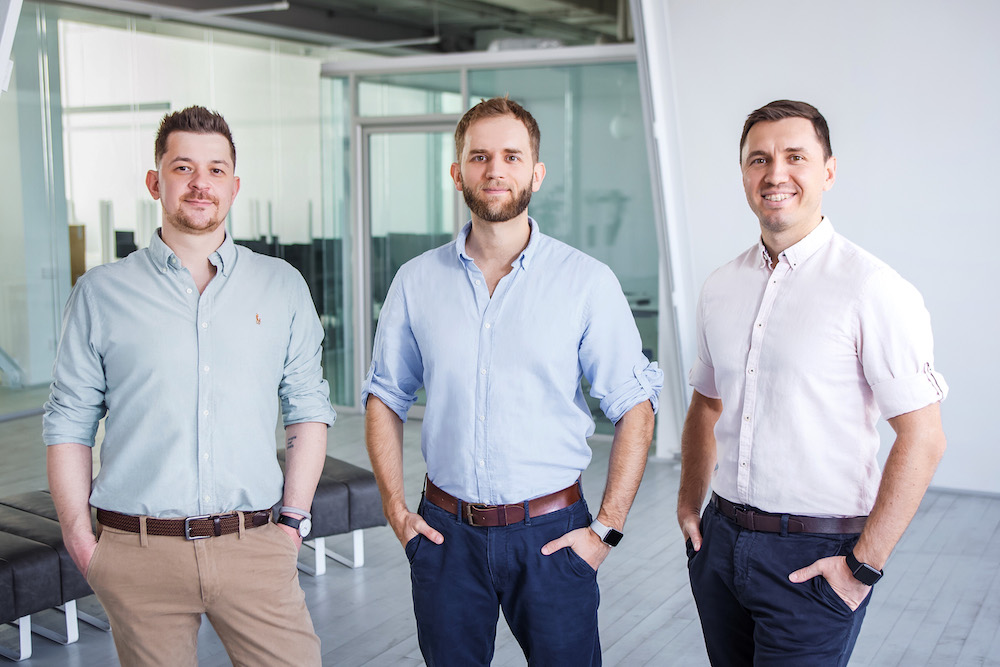
This is the portion of the story that valuation announcements compress into a clause. Yet it explains Bigai better than the round numbers do. He describes himself as direct and impatient with unstructured talk. His early career required translating complicated networks into dependable services. Preply survived when its founders treated uncertainty in much the same way: locate a signal, make the next part work, measure it, repeat.
The little switch that opened the world
Techstars Berlin accepted Preply in 2015. The company was still regional, but its users offered another quiet clue. People living in countries where English was not the official language often searched for lessons in English. The team changed the website's default language from Ukrainian to English and invested heavily in search optimization. That small product choice allowed one marketplace to catch demand from many countries at once.
The effect compounded. Preply added scheduling, calendar booking and its own video classroom. Barcelona opened as a hub in 2019, followed by New York and London. By 2020, the company had 125 employees from more than 30 nationalities. Bigai's earlier conviction that an international product needed an international team was becoming visible in the payroll.
The change was not merely geographical. A directory became a learning product. Matching algorithms helped students find suitable teachers. The classroom gathered scheduling, exercises, content and progress in one place. Preply's website now operates in 19 languages, and the company says revenue grew tenfold over the five years through 2025. In January 2026, a $150 million Series D led by WestCap valued it at $1.2 billion.
A machine with a person in the middle
The fashionable version of education technology asks how much of the teacher can be removed. Bigai's answer runs in the opposite direction. Preply uses artificial intelligence to match tutors and learners, track progress, generate targeted exercises and relieve teachers of administrative work. The point is not an empty classroom with excellent software. It is a teacher with better instruments.
That position contains both commercial logic and autobiography. Bigai did not need another workbook when he was struggling with English. He needed a Texan on Skype who could hear what he meant, notice what he missed and adjust the next hour accordingly. Preply's 2025 learning study reported that 96 percent of participants regarded learning with a human tutor and having real conversations as essential to progress. One in three advanced a full CEFR level in 12 weeks.
“Learning changes lives when it is built around people.”Kirill Bigai, January 2026
There is tension in the formula, naturally. A marketplace must standardize enough to work across 180 countries while preserving the peculiar chemistry between two people. Algorithms can recommend a tutor; they cannot manufacture trust. Bigai's bet is that AI can handle the repeatable layer and leave tutors more time for judgment, motivation and cultural understanding. In a sector eager to automate, restraint becomes a product decision.
The correction is the company
The $1.2 billion valuation offers a tidy ending, which is exactly why it should be distrusted. Bigai did not arrive there by protecting the original plan. FindGuru vanished. The US test-prep model was abandoned. Operations moved back to Kyiv. The marketplace narrowed, then expanded. Its default language changed. A directory acquired a classroom. Human lessons gained an AI layer without surrendering the human.
In April 2026, Bigai was named a finalist for EY's Entrepreneur Of The Year award in New England. A month later, Preply completed its first employee tender offer, allowing eligible staff to sell some equity. Those are respectable corporate milestones. The more revealing achievement is less ceremonial: the company has lasted long enough to teach nearly 100 million lessons while repeatedly changing how it works.
Bigai once said soccer taught him to process the ball, his teammates and his opponents at speed. Strategy games trained a related pleasure. The pattern is easy to spot in his career. He likes systems, but he does not confuse a system with a fixed answer. A menu exposed the gap between knowing and doing. A failed startup exposed the gap between an idea and a team. A depleted bank account exposed the gap between attention and demand.
Each gap asked the same question: what will you change now? Preply's answer has been delivered in many languages, usually by one person speaking to another. Bigai's own answer is shorter. Again.