The house was already there. So was the grief. Ian Tuason had written a horror film rooted in the Toronto home where he had cared for his parents. What he needed was money. In the account he gave The Canadian Press, earlier rejection by public film funders helped send him looking elsewhere. He joined producers Dan Slater and Cody Calahan and Los Angeles financier KINO Studios. They began shooting with a small crew in February 2025.
- KINO sells the machinery around the movie: review, approvals, secure screeners and branded viewing.
- ScreenKey is the professional product. Its pitch joins tasks that often live in separate tools.
- KINO Studios also finances films. The company helped back undertone, later acquired by A24.
- The bill has layers. Published ScreenKey terms price DRM and forensic watermarks separately from the base subscription.
The movie that found another way in
undertone arrived at Montreal’s Fantasia festival, then attracted a distribution bidding war won by A24. In March 2026, the film opened to roughly $9.3 million at the North American box office against a reported $500,000 production budget. A small film had found a very large megaphone.
That comparison is arresting, and needs handling with care. Ticket sales pass through exhibitors and distributors. Marketing costs money. The production budget does not describe the whole investment, and KINO’s individual return cannot be read from the weekend gross. The useful fact is the scale of the creative undertaking: a contained film found an audience without beginning as a vast production.
Different measures. Neither is KINO’s profit.
KINO occupies an unusual position in that story. It helps finance the thing being made, while its technology business sells tools for the people making and sharing it. That gives its software proposition a practical setting: there are cuts to review, recipients to authorize and decisions to record long before anybody buys a ticket.
Before the red carpet, the review link
ScreenKey is KINO’s secure workflow platform for film and television. Dailies review, stills approvals, screening rooms, focus groups and branded streaming sit within its advertised scope. The intended buyers are studios, distributors, production companies and other teams whose work depends on moving sensitive media between people.
Consider a hypothetical producer reviewing a new cut. She wants to see the film on a television, leave a precise comment and know that the next recipient receives the right version. Each task sounds modest. Joined together, they become a question about how a production organizes its work. The director’s memory should not have to serve as the project database.
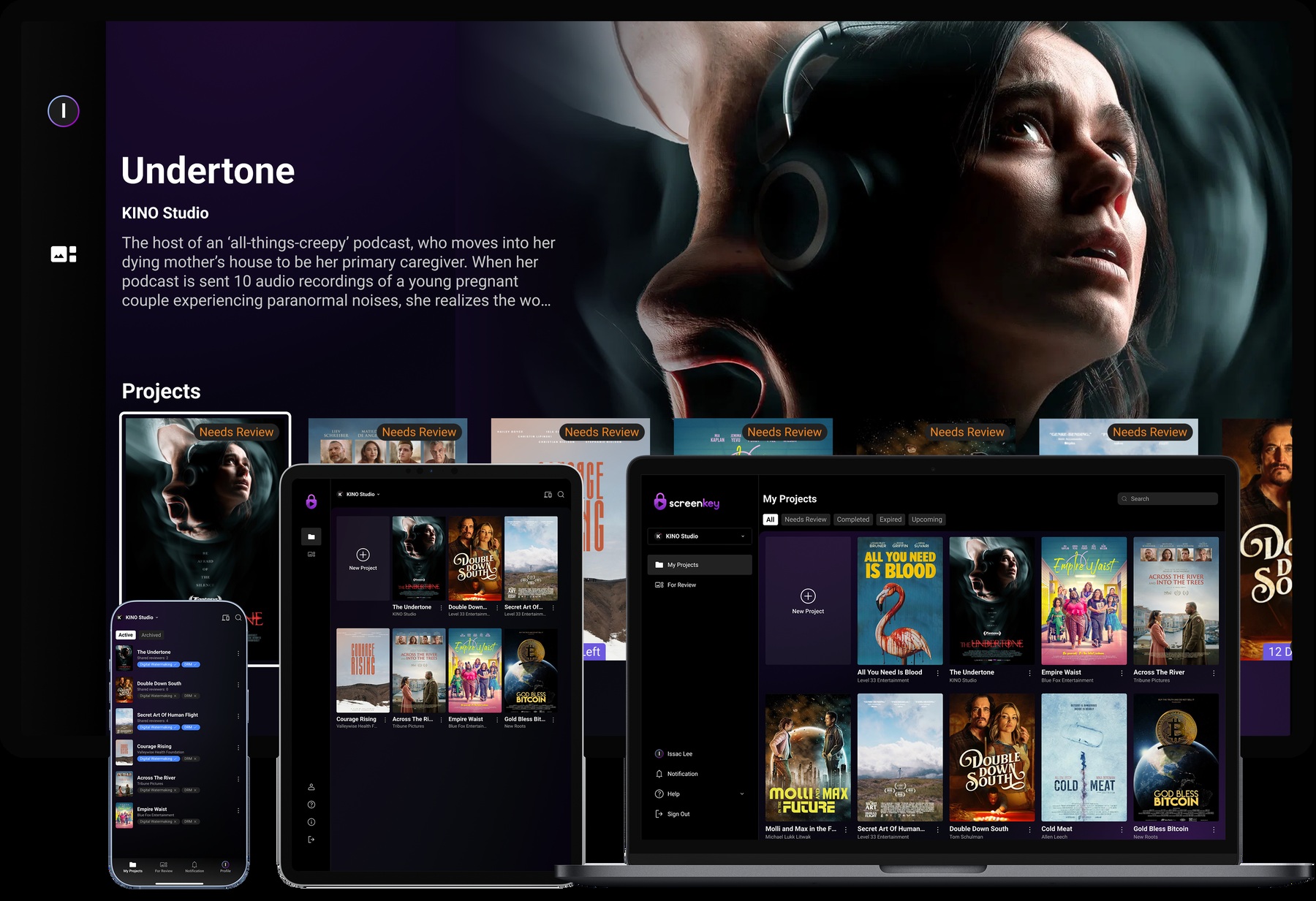
ScreenKey’s download page connects Mac and Windows workstations with TV and mobile viewing. It lists Apple TV, Roku, Fire TV and Google TV alongside phone and tablet options. Its advertised reach exceeds 19,000 device types, a compatibility claim rather than a count of customers. The attraction is easy to understand: reviewers can watch on familiar screens while the project retains controlled access.
- 01Organize the cut
- 02Grant access
- 03Watch + comment
- 04Approve + share
Adobe’s Frame.io already occupies the review and collaboration market. KINO’s pitch therefore needs to do more than discover that editors have colleagues. ScreenKey emphasizes connected viewing and a span of workflows extending into screenings and branded delivery. For a buyer, the distinction lives in the actual job: who needs to watch, on which device, with which permissions?
The audience came first
KINO’s earlier public language was more concerned with the people outside the production. Its October 2023 fundraising announcement described tools to build, engage and monetize a film’s target audience before distribution. By May 2024, the company was promoting interactive screenings, livestream events and social activations. Named premieres included Cold Meat, Double Down South and Molli and Max in the Future.
The current company site leads with production infrastructure. That is a meaningful change in emphasis. A premiere platform asks how viewers discover a film; workflow software asks how the film reaches a condition in which someone can show it. KINO now presents both professional tools and a financing business. The public record supports that broader remit without requiring a tidy tale in which an earlier idea conveniently failed.
Its white-label offering joins the two ends. A distributor or festival can present a branded viewing experience on KINO’s infrastructure. The customer supplies the identity and content; KINO supplies the backend. This puts the company in the business of enabling other viewing destinations as well as operating technology under its own product name.
The price of keeping a secret
A pricing document is often more revealing than a slogan. ScreenKey’s published terms, updated September 4, 2025, list a base fee of $29.99 per project per month. DRM encryption costs another $24.99 per project per month. Forensic watermarking costs $0.99 per screener link per month.
The standard terms also limit a project to 30 uploads over its lifetime, including new versions, and 200 active screener links at once. More than ten active projects calls for an enterprise discussion. Those limits matter to an episodic production or an editor making frequent revisions. A sensible evaluation counts the versions and recipients, then asks how they fit the contract.
Security has several jobs here. Access controls decide who enters; DRM protects playback; watermarking ties a viewing copy to a recipient. Their separate prices make the purchase more specific than simply buying something described as secure. The team must decide which protections its material requires and budget for those choices.
Three kinds of expertise, one awkward industry
KINO’s current technology founders cover three disciplines. CEO Daril Fannin brings production and writing experience, CTO David Fannin builds secure systems, and CMO Brit MacRae brings marketing experience. Anthony Eu is identified separately as the film fund’s co-founder. Early fundraising announcements also name Austin Worrell as co-founder and COO.
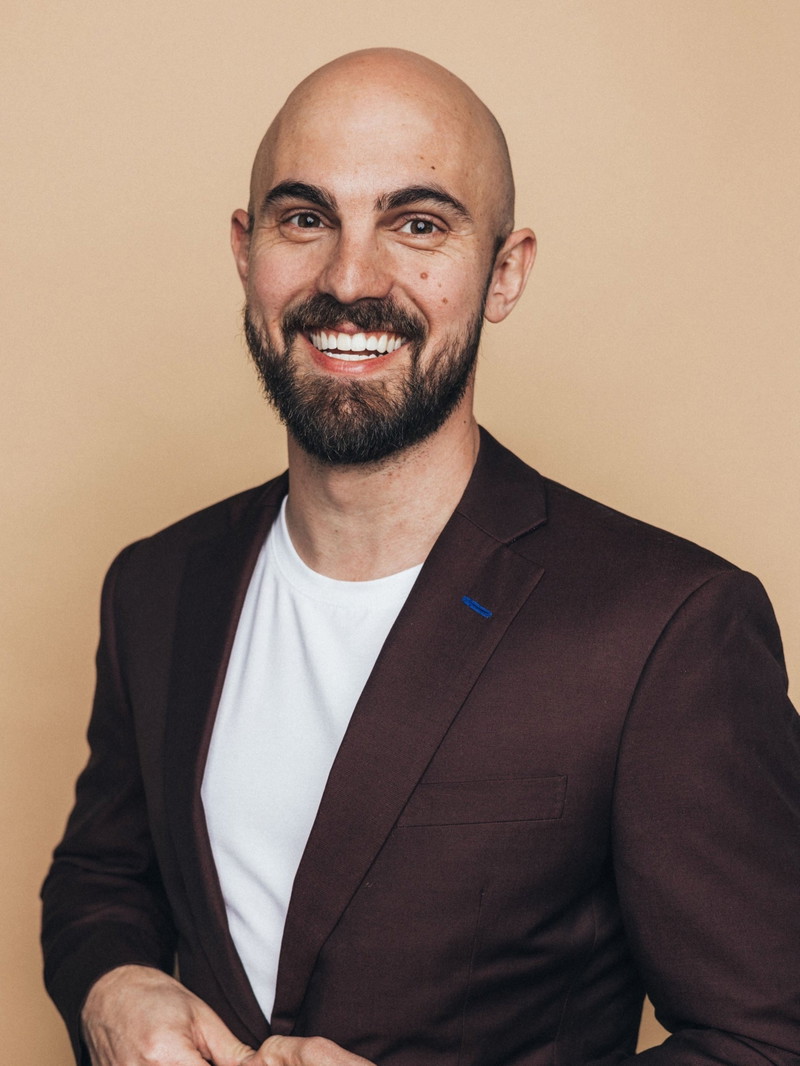
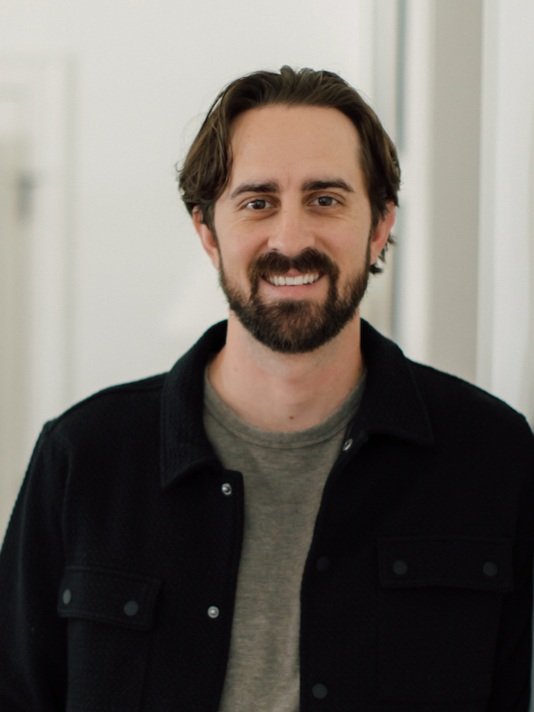

Daril’s own route into entertainment supplies the irony. In his Film Threat interview, he describes a religious upbringing that treated television as dangerous. At 17, he secretly rented The Matrix. “I saw my own self on screen,” he recalled. Army service came before film school and television work. The forbidden screen eventually became his livelihood.
A smaller film needs a smaller idea
“The concept needs to be small, and it needs to be executably small.”
Daril Fannin, speaking to Film Threat
That is the lesson a filmmaker can use without access to KINO’s investors. Start with a concept whose locations, cast and production demands fit the available money. Audience interest belongs in the discussion early. Keeping a budget low helps only if the film can still deliver the experience it promises.
The software lesson is similarly concrete. Choose one difficult handoff, keep comments attached to the material and test the recipient’s actual viewing device. A team with a functioning review system should weigh the work of changing it. A film requiring elaborate effects, travel or a large cast cannot copy the economics of a contained horror story merely by wishing for its budget.
Follow the film, follow the money
KINO announced more than $2 million in pre-seed backing in October 2023, including participation from Sequoia Capital’s Scout program and Slow Ventures. An ARK Venture Fund-led extension added $2.35 million in May 2024. In August 2026, KINO announced another $4 million financing led by Staircase Ventures.
Its July 2026 SEC amendment separately reports about $8.02 million sold in an offering whose first sale dates to March 2022. A cumulative filing and a round announcement count money differently. They should stay separate.
The interesting business is between those funding headlines and the finished films. KINO wants to earn its place wherever a production needs another person to watch, respond or approve. Hollywood will always manufacture suspense. Whether the right person received the right cut is a less entertaining place to keep it.