A film set has its own language. Someone calls for a lockup. A walkie crackles with a code. The production assistant who knows what those words mean can move without stopping the work. The newcomer who has only seen a camera in a classroom may know how to make a beautiful image and still have no idea where to stand.
That gap became the central problem for Continuity, a St. Louis nonprofit founded in 2014 by Kyle J. Montgomery and Dan Parris. Its stated purpose is to expand diversity in media production through skills-based training, mentorship, and opportunities for overlooked talent. The organization began with an earnest answer to a familiar problem: teach people the craft. Its original media training program lasted 36 weeks. Then its graduates told it what the course could not do.
The short cut
- Continuity trains emerging media workers in St. Louis and Kansas City.
- Graduate feedback moved the organization from a long introductory course toward practical CREW workshops, labs, and production assistant apprenticeships.
- With the Regional Arts Commission, it helped turn $500,000 into grants for five St. Louis filmmakers.
The course that taught them to ask for more
Continuity says more than half the participants in its former 36-week program wanted advanced training and development. Nearly 30 filmmakers and creators had been trained, but the nonprofit could not give those graduates deeper support while also running another long cohort. Its own account is unusually candid: some alumni felt lost, and some were not doing the thing they had come to do - create.
This was less a failure of teaching than a collision with the labor market. Film crews hire people they believe can survive the pace of a set. That confidence often comes from a previous credit, an internship, or a personal introduction. For a newcomer without those advantages, "entry level" can look suspiciously like a locked door. Continuity's answer was to change the unit of instruction: start with a day, then get closer to the work.
Roles, etiquette, call sheets, walkie codes, and the pace of a shoot.
Focused work in areas such as locations and post-production.
Production assistant experience with professional crews.
A first credit is a small piece of infrastructure
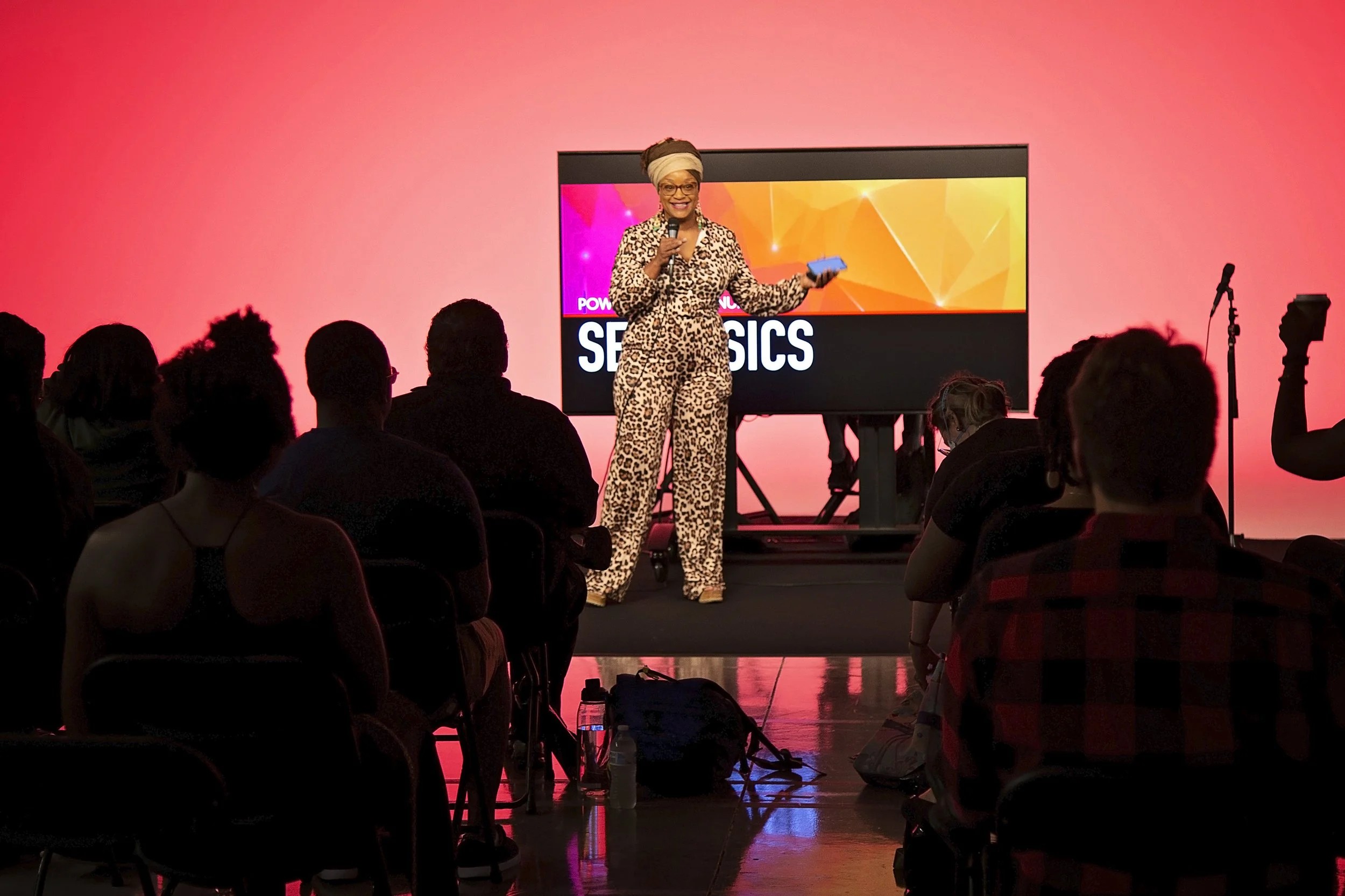
CREW, launched in 2022, begins with a daylong Set Basics workshop taught by working professionals. Attendees learn production hierarchy, radio language, and set etiquette. Other workshops move into preproduction and production; CREW Labs offer deeper practice in subjects such as locations and editing. The sessions also put participants in the same room as people who already work in the industry. That last detail can matter as much as the syllabus.
The apprenticeship program asks production companies to bring trained participants onto professional sets as production assistants. The Missouri Film Office has helped connect this pathway to registered apprenticeship opportunities; Continuity apprentices worked on the feature On Fire when it filmed in St. Louis. A workshop cannot promise a career. A paid or professional set day can, however, give a participant something concrete to tell the next hiring manager.
“I felt ready and equipped thanks to Continuity CREW.”Terry Kendrick Jr., workshop participant
The model is unusually specific about whom it serves. Aspiring crew members get a way to learn and meet employers. Productions get local people who have rehearsed the job's ordinary demands. The wider region gets a deeper bench of crew, which matters if it wants more productions to shoot there. Continuity is therefore closer to a workforce connector than a traditional school, although teaching remains the first step.
The city became part of the curriculum
Continuity's work widened after the classroom pivot. Its first Kansas City Set Basics workshop took place in 2023. The organization now teaches across Missouri while keeping its roots in St. Louis, where local productions, arts groups, and film offices form the network around its trainees. It has partnered with Bad Dog Pictures on a Set Basics lab, with the St. Louis Film Office on a locations lab, and with Bruton Stroube and Outpost on post-production training.
In 2024, it joined the Regional Arts Commission of St. Louis on a more ambitious experiment: the St. Louis Film Project. The partners set aside $500,000 for local creators. Five filmmakers ultimately received grants of up to $100,000 each to complete documentaries and features. The rules required 75 percent of each grant to be spent in St. Louis City and called for filmmakers to create opportunities for Continuity CREW participants during production. The money funded films; the production process also became a place where new crew could work.
The films screened at Alamo Drafthouse St. Louis in May 2026. That outcome made the design visible. A grant could pay to finish a story, circulate money locally, and help a beginner acquire the experience that the old 36-week program could not manufacture on its own. The $500,000 was project funding distributed through a partnership, not venture financing for Continuity.
The useful lesson is in the handoff
Continuity survives through the ordinary, unglamorous mechanics of a nonprofit: donations, sponsors, public arts support, and partners willing to share expertise or open their sets. It does not sell a film school credential, and its public material does not support a neat price tag for the whole operation. A sponsor can back a workshop; a working professional can teach one; a production company can ask for a trained apprentice. For an aspiring filmmaker, the practical entry point is the next CREW workshop.
There is a limit to what this model can export. It depends on actual productions nearby, employers willing to hire beginners, mentors with time, and enough support to keep workshops going. A town with no shoots cannot solve that problem with better radio etiquette alone. But the part others can borrow is clear: ask graduates where the path breaks, then design the next program around that exact step. Continuity's first answer was a course. Its more interesting answer was the handoff after the course.