At Providence Home Care of Florida, buying laptops had not settled the paperwork problem. Clinicians still submitted notes late. Some disliked bringing a computer into a patient’s home; even the youngest struggled to find somewhere to put it. Missing internet connections meant writing on paper, then typing everything again later. The agency had acquired technology and kept the homework.
- Kinnser connected home health visits with the office work required to manage and bill for them.
- Its offline documentation tool addressed the conditions clinicians actually encountered.
- Acquired in 2017, its home health product continues under the WellSky name.
The laptop had nowhere to go
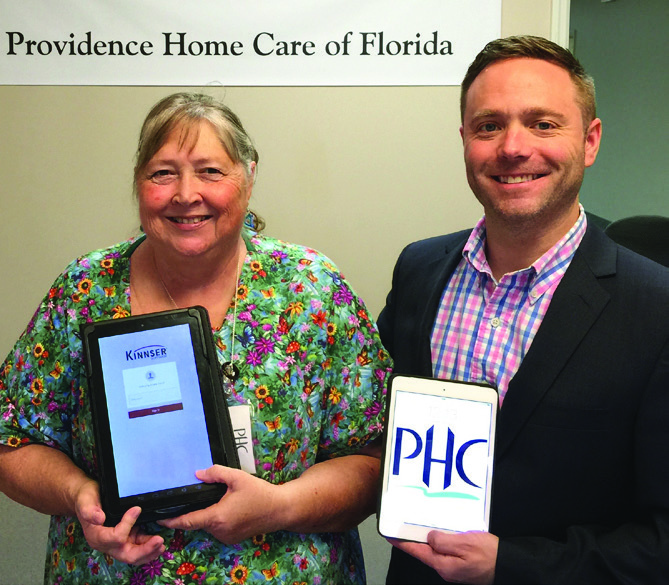
Providence turned to Kinnser Link, which let clinicians chart on tablets without a live connection. In Kinnser’s 2016 customer account, nurse Arlene Davis went from taking a week or longer to submit notes to doing so within 48 hours. That is an agency-reported result, but an unusually revealing one: the obstacle had been sitting between the care and its record.
The case suggests a useful question for software buyers: what happens between a task being done and the business knowing it is done? A polished screen can conceal that interval. A house call makes it visible.
The business waiting behind the visit
Kinnser supplied the administrative machinery behind home health: electronic records, scheduling, quality assurance, financial reporting, and billing. Its buyers were care providers, including home health agencies, hospices, therapy businesses, and private duty operators. Patients received the care; clinicians and office staff used the software. That distinction explains much of the product.
Agency Manager joined clinical and business work in a web-based platform. A scheduler could coordinate visits, a clinician could document care, and office staff could review the resulting record and prepare billing. Each person needed something different from the same patient information. Kinnser’s proposition was to keep those handoffs inside a shared system.
- 01Schedule
the visit - 02Document
the care - 03Review
the record - 04Prepare
the bill
The handoff is part of the job.
Kinnser Link extended that system into places the web could not reach. It loaded scheduled documents onto an iPad or Android tablet, allowed offline charting, then sent saved documents to Agency Manager or Kinnser Hospice when a connection returned. The product description said notes were removed from the device after upload. The cloud, in this arrangement, could wait its turn.
The portfolio grew around adjacent work. Therapy Manager served therapy providers. Kinnser Hospice, launched in November 2013, brought hospice-specific charting, scheduling, and billing. The 2014 acquisition of ADLware created a private duty product line, Kinnser ADL. These were distinct operating environments with distinct demands, even when all the care happened at home.
Forty million dollars for the unglamorous work
Chris Hester founded Kinnser in Austin in 2003. By its March 2012 financing announcement, the company reported more than 55,000 users across more than 900 home health agencies and therapy providers. Insight Venture Partners invested $40 million in a Series A intended to expand development, organizational capacity, and national sales.
“There is no industry that is better served by a SaaS application than home health.”Chris Hester / financing announcement, 2012
The business model fitted the work: software delivered as a service to organizations with recurring administrative obligations. Historical customer materials describe included maintenance, implementation, and online training. The economic question for a buyer is the full contract cost alongside devices, staff training, and the time spent completing records. Faster paperwork has value only when those savings survive implementation.
Kinnser also moved from storing records toward interpreting them. It acquired clinical analysis and benchmarking provider PPS Plus in 2015. In 2016, Business Insights introduced Tableau-powered reporting with more than thirty prepared reports, organized around admissions, census, diagnoses, financials, episodes, tasks, and referrals. RiskPoint addressed hospitalization risk. Once an agency’s activity lived in software, it became material for management decisions.
Axxess offers an alternative in cloud-based home health software. Web access alone therefore does not distinguish the Kinnser lineage today. Its particular appeal is the combination of home health operations, documentation, billing, and an established product history. Buyers should test their own payer requirements, field routines, and integrations rather than award points for the longest feature list.
Software needs a human introduction
At Best Home Health & Hospice, the owners considered onboarding essential because their clinicians had no EMR experience. Kinnser’s published account describes online training, weekly webinars, and Austin-based support available into the evening. The purchase included learning how to work differently, which is an easy expense to overlook when comparing software.
Saved each month preparing CAHPS reports at Best Home Health & Hospice. A customer account, not a guaranteed result.
Kinnser’s interest in the people doing the work extended beyond customer support. Hester established a nursing scholarship program at Austin Community College with a $225,000 gift in 2011. By 2014, the fund totaled $1 million, intended to cover tuition, fees, and program expenses for 400 nursing students through 2027. Software could help a nurse use time better. Someone still had to become a nurse.
A new name, the same unfinished note
In May 2017, TPG-backed Mediware announced its agreement to acquire Kinnser from Insight. In September 2018, Mediware, Kinnser, and more than thirty brands united under WellSky. Agency Manager became WellSky Home Health. The corporate story changed; the daily journey from referral to care to payment remained central.
The successor platform now includes WellSky Scribe, announced in October 2025, with ambient listening and transcription inside the home health record. WellSky’s development team describes ride-alongs and observation that exposed inconsistent connectivity, cramped spaces, and clinicians’ differing device preferences. It also observed that some clinical assessments are never spoken aloud. A recording cannot contain what nobody says.
In May 2026, WellSky announced a Point of Care mobile app connected to the full patient record. An August company analysis associated Scribe use with 22% less after-hours documentation. That comparison does not establish causation, but it measures the same stubborn delay Kinnser once addressed with tablets. WellSky also said enrolled Home Health EHR clients received its SkySense AI suite at no additional cost. The subscription and the work of adoption still belong in the buying decision.
That leaves a practical lesson to copy: observe a real visit, trace one record through review and billing, and measure the delays at each handoff. Offline tools still need eventual synchronization; documentation tools still need a workable review process. Kinnser’s story rewards attention to these conditions. The glamorous part of a house call is the care. The agency must make the rest work, too.