The most useful piece of marketing Surgical Information Systems has published begins with an admission. Michigan Surgical Center bought the company’s cloud software in 2021 and still struggled. Staff and surgeons resisted electronic charting. Automation sat unused. The center had data but no working habit of looking at it. Its profit margin stalled near 12 percent while collections and supply costs drifted in the wrong direction. The first thing to fail was not the code. It was adoption.
That is a revealing way into SIS, a private healthcare technology company in Alpharetta, Georgia. For 30 years it has built software for the operating room - first for hospitals, then increasingly for ambulatory surgery centers, the freestanding facilities that perform same-day procedures. These centers look compact from the waiting room. Behind the doors, they are a relay race among physician offices, schedulers, nurses, anesthesia teams, surgeons, coders, billers, patients, payers and regulators. Every handoff can lose time, information or money.
A company that followed the procedure
SIS started in 1996 with anesthesia and surgery documentation products for hospitals. The strategic insight came later: procedures were migrating to outpatient settings, and the smaller facilities needed software designed around their pace and economics. A general hospital record could document care, but an ASC also needed to fill block time, collect forms before the patient arrived, turn a finished operative note into a clean claim, know the supply cost of each case and stay ready for an accreditation survey.
Private equity helped finance that narrowing. Norwest Equity Partners acquired SIS in 2010 and says it supported the pivot into ASCs, including the acquisitions of AmkaiSolutions in 2014 and SourceMed in 2017. Amkai brought an ASC electronic medical record and business management system. SourceMed added a larger installed base and familiar products such as AdvantX and Vision. In 2020, Accel-KKR led a recapitalization while Norwest kept a minority stake; the price was not disclosed.

The company’s center of gravity is now SIS Complete, launched in 2019. The name is literal. SIS Office handles scheduling, registration, billing and inventory. SIS Charts covers nursing, physician and anesthesia documentation. SIS Link gives surgeon offices a way to request cases without the fax-and-phone shuffle. SIS Exchange collects patient questionnaires and sends instructions. SIS Insights turns operational and clinical data into reports. The suite is sold as software as a service, with implementation, integrations and support. SIS also sells or hosts hospital perioperative products and offers outsourced billing, coding and transcription.
The dashboard was not the turnaround
Back in Michigan, the software alone had not changed the operating model. The surgery center had lost several key surgeons and 30 percent of its case volume, then shifted from multiple specialties to ophthalmology. Its old habits no longer fit. In 2024, new leadership brought in VMG Health for an operational assessment and began the unglamorous repair work: daily and monthly reconciliation, clearer reports, a redesigned block schedule, named functional leads, super-users, mandatory digital documents and a cleaned-up inventory master file.
That last job produced the headline number. Once item names, prices and units of measure were accurate, SIS Complete could calculate cost by surgeon. The center discovered that one doctor was consuming $800 too much in supplies on each case. Management stopped the pattern. The lesson is wonderfully portable: data becomes useful only after someone makes it trustworthy enough to start an argument.
“I’ve been waiting for this for 10 years.”A Michigan Surgical Center board member, on finally seeing surgeon-level case costs
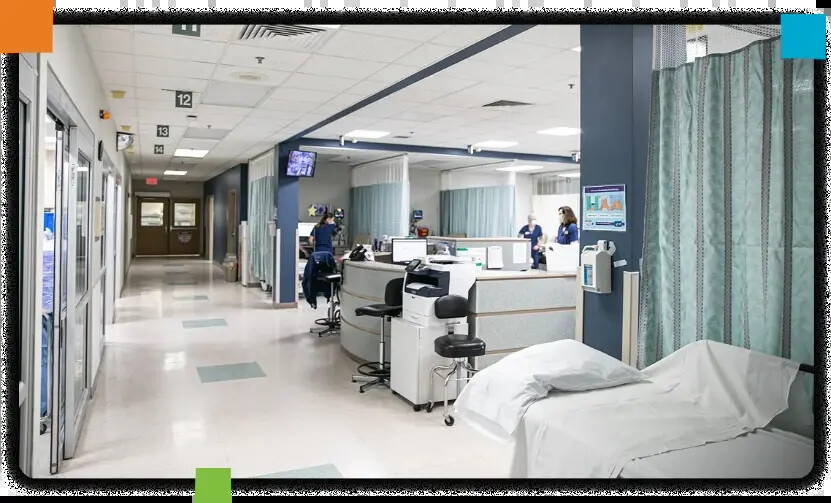
Over one year, the center reported that its operating margin moved from 12 percent to 28 percent, collections as a share of net charges rose from 88 percent to 98 percent, and the supply-cost ratio fell from 30 percent to 22 percent. It also reduced its pre-admissions staffing burden and made daily use of three operating rooms more consistent. Those results came from SIS and VMG in a vendor case study, so they are not a controlled experiment. Still, the before-and-after account is specific about the mechanism - and unusually frank about the false start.
What the buyer is actually buying
SIS is not merely competing for the EHR line in a budget. It is competing to become the operating layer around a surgical case. That breadth is its distinction. An ASC can buy point products for scheduling, documentation, patient messages, compliance and billing, then pay to connect them. Or it can buy a suite and accept the trade-off that a broad platform may not be the deepest tool for every specialty. HST Pathways is a prominent ASC-native alternative. Provation is strong in specialty procedure documentation. ModMed and hospital platforms from Oracle and others enter from adjacent workflows.
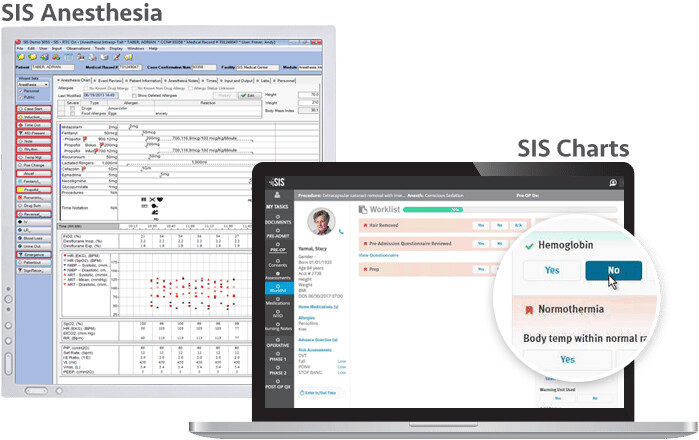
SIS has kept expanding the suite around the money trail. The 2024 acquisition of Surgical Notes added ASC-specific billing, coding, transcription and document management. SIS said its existing revenue-cycle business had grown at an average annual rate of nearly 20 percent over five years. The 2025 acquisition of ASC Logs added digital compliance logs, credentialing, policy management and staff training. In 2026 came SIS Scribe, an AI-assisted dictation product for operative notes.
Scribe is a sensible, narrow AI bet. A surgeon who moves to the next case without finishing the note creates a queue for coders and billers. Speech recognition that understands medical terminology can compress that delay. The company argues notes can be completed in minutes. The real test will be accuracy, physician editing time and whether the finished document arrives cleanly in the revenue-cycle workflow. AI is useful here not because it sounds futuristic, but because the stopwatch starts when the case ends.
Independent or multi-site ASCs that want ASC-specific scheduling, EHR, analytics, compliance and billing under one vendor, plus hospitals needing perioperative or anesthesia depth.
A team unwilling to retire paper workarounds, clean master data, train super-users or redesign responsibilities. A narrow specialty may also prefer a specialist tool and integrations.
The playbook another operator can copy
- Price the old system honestly. Include paper storage, servers, duplicate entry, overtime, delayed claims and the people hired to chase missing information.
- Name champions before go-live. Cataract & Laser Center West used a materials manager and surgical technologist as peer support and reached full adoption within a month.
- Fix the master data. Case costing cannot expose waste if item names, units and prices are unreliable.
- Design for the reluctant user. The cataract center configured a two-click physician workflow. Gramercy reported some surgeons completing documentation in 30 seconds.
- Turn reports into routines. Daily reconciliation, a short list of priority reports and visible board review made the numbers operational.
This approach will not work everywhere. Cloud software depends on reliable connectivity and careful integration with clearinghouses, monitors, medication networks and existing systems. The economics change with facility size, specialty mix and module count. A center that keeps shadow spreadsheets or lets each surgeon ignore the new workflow will produce two versions of reality. Most importantly, software cannot substitute for an administrator willing to tell a board that a popular physician is wasting $800 per case.
Thirty years later, the boring work wins
SIS entered its fourth decade with new leadership. Tim O’Brien, previously CEO of healthcare payments company Finvi and a longtime athenahealth executive, became chief executive in June 2026 as Tom Stampiglia moved to chairman. Rob Duffy joined as technology chief in July after roles at HealthEdge, Drizly, Expedia, Salesforce and Amazon. Their stated direction is more AI and more proactive workflows, layered onto a company that already claims more than 2,900 ASC customers and 90,000 physician users.
The temptation will be to describe the next chapter in the language of agents and intelligence. The durable advantage is less glamorous. SIS knows where information stalls between the surgeon’s office and the claim. It knows that a missing note is not just a clinical inconvenience; it is cash waiting in a hallway. And its best evidence suggests the winning product is not a magic dashboard. It is a system that gives a disciplined operator one trustworthy number, early enough to do something about it.