Consider the shopping trip nobody puts on a bucket list. Milk. A prescription. Maybe a haircut before the weekend. The shops can change, but the reasons for going survive. Kimco Realty Corporation owns the setting for that routine: open-air shopping centers where an ordinary household can cross several things off its list. The useful question about this business is how often somebody needs to come back.
- Lease space to national retailers, local shops and services.
- Use essential shopping to give people recurring reasons to visit.
- Improve existing properties, sometimes adding homes above or beside retail.
01 / The anchor earns its name
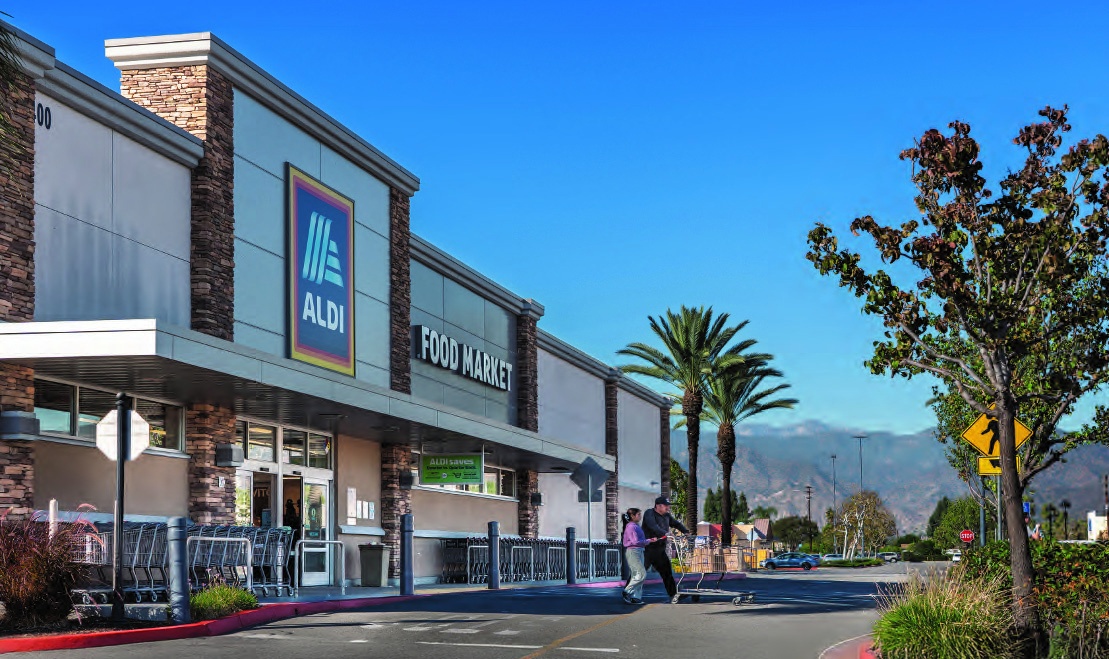
A grocery store gives a shopping center a recurring appointment with its neighborhood. Smaller businesses can benefit from those visits. The pairing explains why Kimco emphasizes necessity-based tenants and first-ring suburbs around major metropolitan areas, including coastal and Sun Belt markets. The location needs enough nearby households, useful access and reasons for retailers to want the address.
Kimco’s direct customers are tenants. Its 2025 roster included TJX, Ross, Burlington, Amazon/Whole Foods and Albertsons, alongside smaller operators. The landlord supplies space and runs the property; retailers supply the merchandise, services and reasons to enter. Rent, expense reimbursements and management fees turn that arrangement into revenue. Consolidated revenue reached $2.14 billion in 2025.
Among shopping-center owners such as Regency Centers, Brixmor and Federal Realty, groceries are familiar territory. Kimco’s proposition combines national leasing relationships, property operations, redevelopment expertise and selected mixed-use projects. A merchant choosing a storefront still has to judge the particular center. A national portfolio cannot make every corner equally useful. The distinction is especially important for a small operator committing much of its available capital to one address.
02 / First, stop owning everything
Milton Cooper and Martin Kimmel founded Kimco’s predecessor in 1960. The company went public in 1991. Over time, acquisitions produced a sprawling collection of properties. Its 2013 annual report described shopping centers of uneven quality and an effort, underway since 2010, to sell assets outside its preferred markets and shed non-retail investments.
The international retreat had specific reasons. In South America, Kimco cited insufficient scale and inefficient tax structures. In a 2017 interview, CEO Conor Flynn described another problem with the former international footprint: insufficient operating control. A property could be an investment without giving Kimco the platform to manage its outcome.

“we lacked an operating platform that would allow us to control our own destiny.”
That history makes the subsequent acquisitions more interesting. Kimco bought Weingarten in 2021 and closed its RPT purchase in January 2024, adding 56 centers. At RPT’s closing, it projected approximately $34 million in initial cost savings. Concentration did not mean refusing to grow. It meant buying properties that could fit the operating business it wanted.
03 / The empty store is where the work starts
Even a useful address can house a retailer that fails. In the third quarter of 2023, departures from 16 Bed Bath & Beyond leases and one each for Tuesday Morning and Christmas Tree Shops reduced Kimco’s portfolio occupancy by roughly 45 basis points. The building remained. Its income needed repair.
Replacement takes more than changing a sign. An owner may have to divide space, fund improvements and carry costs before a new tenant opens. During 2025, Kimco completed 21 redevelopment and repositioning projects with a gross cost of $79.4 million. That included $57.2 million for nine anchor repositionings and $22.2 million for 12 redevelopment and outparcel projects.
Gross cost of 21 completed projects, 2025
$57.2M · 9 projects Redevelopment + outparcels
$22.2M · 12 projects
The company reported a stabilized blended yield of 13.4% on those completed projects. That measure describes expected stabilized property income relative to project cost; it is not a shareholder return. The timing matters, too. A signed lease can lift leased occupancy before rent starts. Kimco’s separate tracking of that gap is a reminder that securing a customer and collecting cash are different events.
At June 30, 2026, pro-rata leased occupancy stood at 96.4%, with small shops at 92.9%. In that quarter, new comparable leases carried cash rents 40.4% above previous rents. That last number applies to new leases on comparable spaces, not the entire portfolio. It shows why replacing a tenant can be attractive, while leaving the costs and waiting period very much in the picture.
04 / The next customer may live upstairs
Shopping centers also contain land whose use can change. In 2025, Kimco began construction on The Chester, a 214-unit residential project at Westlake Shopping Center in Daly City. Its broader approach is to secure permission for housing at selected properties and decide where development makes economic sense.
The attraction is straightforward: residents can bring additional activity to retail, while housing creates another use for a valuable location. The permission is valuable, but it is not a finished apartment. Zoning, construction costs, financing and local housing demand still decide whether the idea deserves a building. In June 2026, Flynn highlighted redevelopment as a long-term opportunity in a sector with limited new shopping-center supply.
05 / Choose the neighbors, then do the sums
For a business owner, Kimco offers several practical entry points. Portfolio Review helps match a concept with properties. FastTRACK Franchise serves franchise operators. Clicks to Bricks offers incentives for online retailers opening physical locations, while the Pop-Up Program offers flexible terms. Property management, tenant coordination and designated curbside pickup support the work after signing.
Some support is decidedly unglamorous. Kimco offers a round-the-clock customer service center and tenant discounts on supplies and services. Its work with the EPA’s ENERGY STAR program produced practical guidance on energy, waste and water. These details matter because the relationship continues for years after a lease negotiation. A landlord and a tenant share an interest in keeping the location usable and the operating bills manageable, even when their immediate priorities differ.
The transferable lesson is to investigate the whole trip: who visits the anchor, what else they need and whether the proposed shop belongs in that routine. Then price the less picturesque details: fit-out costs, time before opening and the sales needed to pay rent. Repeat visits help only when a viable business can serve them.
Kimco’s scale gives it resources to do this repeatedly. The underlying judgment remains local. Somewhere, a customer has three errands and limited patience. A useful shopping center lets that person finish the list.