Before Khaled Naim built software that could tell a business where its drivers were, he grew up around a more basic difficulty: explaining where anybody ought to go. In Dubai, a destination could require a conversation. Street addresses were not always available or useful. The gap between knowing a place and communicating that place was something he had experienced long before it became a product idea.
There is an agreeable modesty to this starting point. No grand theory of retail was required. A person wanted something delivered; another person needed to find the door. Between them lay an opportunity for misunderstanding. Naim would eventually help turn that everyday inconvenience into Onfleet, a company whose work happens behind the deliveries people tend to notice only when something goes wrong.
In February 2026, he moved from CEO to executive chairman, placing daily leadership with Andrew Travis, the company's longtime chief operating officer and second employee. The change gives his story an unusually clear vantage point. The founder who began by trying to communicate a location now has to decide where his own attention belongs.
Naim grew up between London and Dubai, studied computer engineering at the University of Michigan, and spent a couple of years in Washington, DC, before moving to California for an MBA at Stanford. His collaborators came from different chapters of that journey. Mikel Cármenes Cavia was a friend from high school in Dubai. David Vetrano was studying computer science at Stanford when they connected.
The three started experimenting with projects. One became Addy, a web application that let someone assign a URL to a physical location. A link could carry the destination without requiring a long explanation. It was the sort of idea that makes particular sense to someone who has already endured the explanation.
The useful failure called Addy
Addy addressed a recognizable irritation. Turning that irritation into a business proved harder. Naim later described spending a year on the first product before the team concluded that the market was missing. The next version of their business, Onfleet, took six weeks to build. It was rough, drew complaints, and gave them something more useful than an elegant hypothesis: behavior they could observe.
That experience makes the pivot interesting. They had started with the destination. Delivery businesses led them toward the work surrounding it. Knowing the coordinates would not, by itself, organize a fleet, assign the next stop, tell a dispatcher what was happening, or reassure the person waiting at home. A usable address answered one question in a day full of questions.
The founders went through StartX, Stanford's accelerator, while the business was taking shape. They were entering a period when consumer services were becoming increasingly delivery dependent. Food, flowers and laundry were moving through apps, while the businesses fulfilling those orders often coordinated the actual journeys through spreadsheets, phone calls and text messages. The customer had a smartphone. The operation behind the smartphone could still look remarkably improvised.
Onfleet emerged as software those businesses could use rather than build from scratch. Its public launch came on April 21, 2015. By then, beta customers had already used it for hundreds of thousands of deliveries in 26 countries. Those early users gave the founding team a reason to listen closely. A delivery product earns its place during somebody else's working day, when mistakes have consequences and the next order is already waiting.
Naim's lesson from the failed first product was practical: release something people can use, then learn from what happens. An interview can tell you what a customer hopes to do. A working product can reveal what the customer actually does. There is sometimes an expensive distance between the two.
“We built our second product, Onfleet, in six weeks.”
Khaled Naim · 2015
Three people, one delivery
Naim has described approaching the business from the recipient's experience and then working backward into operations. The design problem therefore had three participants: the dispatcher organizing the work, the driver carrying it out, and the customer trying to decide whether there was time to do something else before the doorbell rang.
For dispatchers, Onfleet offered a web dashboard with a view of the fleet and tools for routing and assigning deliveries. Drivers used a smartphone application. Recipients received updates and could follow a delivery in real time. Proof of delivery completed the sequence. A delivery is a small transaction with an unexpectedly large supporting cast; the software's job was to let them share the same account of events.
The distinction mattered to Naim's commercial argument. Businesses that wanted to manage delivery themselves needed access to tools associated with much larger operations. Onfleet could sell that infrastructure across different kinds of retailers. The recurring problem was coordination, whether a driver carried groceries, prepared food, flowers or an auto part.
There is a human point inside this technical arrangement. An accurate arrival estimate helps the recipient plan. A clear assignment helps the driver keep moving. A dispatcher who can see progress has less need to interrupt everyone for updates. Naim's product thinking follows these connections. Each small improvement travels through the whole delivery, even if the customer only sees a dot approaching on a map.
A business paid for by its customers
By April 2019, Onfleet had powered 40 million deliveries, and Naim described it as profitable. The company had chosen to reach a point where customers could finance the operation. Venture investment had helped it begin, but customer revenue provided a different kind of permission: the ability to keep building without making the next funding round the answer to every question.
The hiring sequence reflected that attention to specific gaps. The founders had engineering ability; their first hire was a designer. They then added sales experience the team lacked. It is a less cinematic account of company building than the lone founder with every answer, and considerably more plausible. A good engineer can still need someone else to explain why a buyer should care.
In 2020, Onfleet announced a $14 million Series A led by Kennet Partners. Naim said the business had already operated profitably for more than two years. The money would let it grow the team and expand its platform faster. That sequence is revealing: establish a business customers will support, then decide how additional capital might change its pace.
A $23 million Series B followed in June 2022, led by Kayne Partners. At that point, Onfleet reported more than 150 million deliveries and roughly half a billion miles tracked. Kroger and Total Wine & More were among its customers. Numbers on that scale can become decorative in founder stories. Here they describe repeated obligations: another route, another recipient, another business expecting the system to work.
The milestones also show how far the founders had traveled from Addy. A product conceived around a single location had become a way to organize the movement between many locations. The original question remained recognizable. It had acquired employees, customers, investors and a rather larger map.
The designer who learned aquaponics
Naim's interest in music festivals, photography, film and writing sits comfortably beside his engineering background. In a 2015 interview, he named Burning Man as his ideal creative setting. He associated the event with ideas about participation and collective effort that influenced how he thought about company culture. Logistics, it turns out, can leave room for a little dust.
Inside Onfleet, curiosity became a budget item. In 2019, Naim described an annual $1,000 learning allowance for each employee. The company had removed the requirement that the subject connect directly to the person's job. A designer could study aquaponics. Other employees pursued subjects including investing, cryptography and machine learning. The immediate usefulness of a course was no longer the only test.
TED Talk Tuesdays supplied another ritual: lunch, a talk selected by a team member, and a discussion afterward. In hiring, Naim looked for evidence that candidates enjoyed learning, including side projects and how they responded to failure. Some applicants were asked to explore the product themselves. Preparation was observable; enthusiasm did not have to remain a pleasant adjective on a résumé.
He applied the same expectation to his own work. Losing an early employee to another company made him recognize that technical concentration could crowd out the responsibility to develop people. He had been absorbed in immediate tasks. He began spending more time checking in with colleagues, learning skills that did not arrive automatically with the ability to build software.
His shorthand for the team's disposition was “strong opinions, loosely held.” It is a useful description for a company that survived by changing its mind about its first product. A founder who asks employees to learn has to allow what they learn to complicate his own conclusions. Otherwise, the allowance pays for knowledge that nobody is permitted to use.
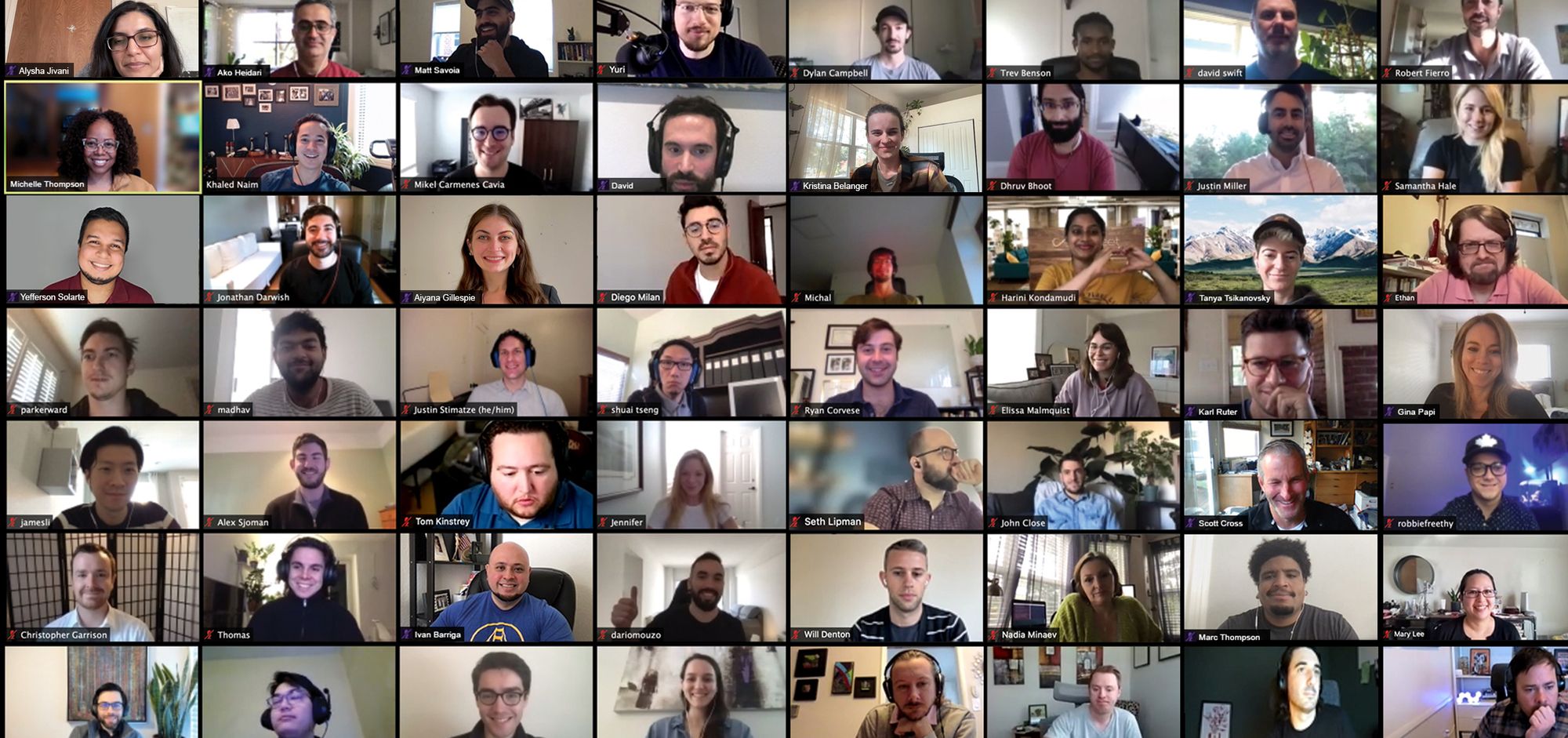
Annual learning allowance per employee, with the subject left to their curiosity.
Passing the controls to employee number two
When Naim announced his move to executive chairman in February 2026, Travis had already spent years alongside him. Naim recalled their early surroundings: cardboard boxes and a ping-pong table. Travis had joined as the second employee and become COO. The next stage, Naim said, called for a leader focused on operational scale. He would stay involved in broader strategy.
That handoff fits a pattern visible in the earlier hiring decisions. Find the capability the business needs, then make room for it. At the beginning, that meant design and sales. A decade later, it meant placing daily responsibility for the whole company with a colleague who had grown up inside its operations. Familiarity had become an asset with a long record behind it.
By October 2026, Onfleet's company page listed more than 400 million deliveries powered, over a billion miles tracked, and operations spanning more than 90 countries. Those are company totals, accumulated across years and many people's work. Naim's new role keeps him attached to that continuing enterprise while changing the work he personally does each day.
The announcement's most telling detail was smaller. Naim described a review from a driver who called Onfleet a favorite app because it helped support a family. He returned to the people behind the tasks: drivers earning a living and business owners trying to make their operations succeed. After years of measuring delivery volume, he chose a single user's explanation of why the software mattered.
His career has been a series of adjustments to where the problem actually lives. An address became a delivery operation. An engineering task became a responsibility to employees. A CEO's daily work became a chairman's longer view. The next door still has to be found. Naim has helped build a company that can keep finding it while he takes a different seat.