Alvin Ea’s first response to the idea that would become Haulio was a refusal. Sebastian Shen had pitched a different future for container trucking, and Ea, who had spent years operating trucks, was unconvinced. “No, it would never work,” he recalled. It is a promising opening for a business partnership: one person supplies the vision, the other supplies a bucket of cold water.
Ea had good reason to be cautious. A platform promising to reorganise haulage was entering the industry in which he already made his living. If it worked, his own trucking business would face the consequences. The difficulty was personal as well as commercial. Familiarity gave him insight into the problem and something to lose by fixing it.
He eventually joined Shen. On 30 March 2017, Ea formally became Haulio’s co-founder, having first met him less than three months earlier. Years later, he would describe Shen with the warmth usually reserved for family. Somewhere between the first objection and that anniversary, a threat to the old business had become a reason to build a new one.
The eldest son, and the exit cheque
Born and raised in Singapore, Ea grew up wanting to become a policeman or a footballer. He also accompanied his father to the warehouse and helped unload goods. Being the eldest of three children brought another expectation: returning to the family business. Hub Logistics offered both responsibility and a place to learn how the work actually got done.
His father, Alex, was often occupied with the company when the boys were growing up. Working together gave father and son more time with each other, and more occasions to disagree. Ea later recognised the imbalance in their arguments. He was proposing a fresh start; his father was weighing changes against decades of work. Enthusiasm can look rather different from opposite ends of the same desk.
When Ea left to build Haulio, Alex gave him a S$50,000 cheque. Ea remembered it as a gesture of confidence in him and the company. Running his own venture also helped him understand his father’s decisions. In 2022, he described himself as outspoken, his father as sparing with words, and their relationship as better than ever. The cheque had been an eloquent contribution from the quieter party.
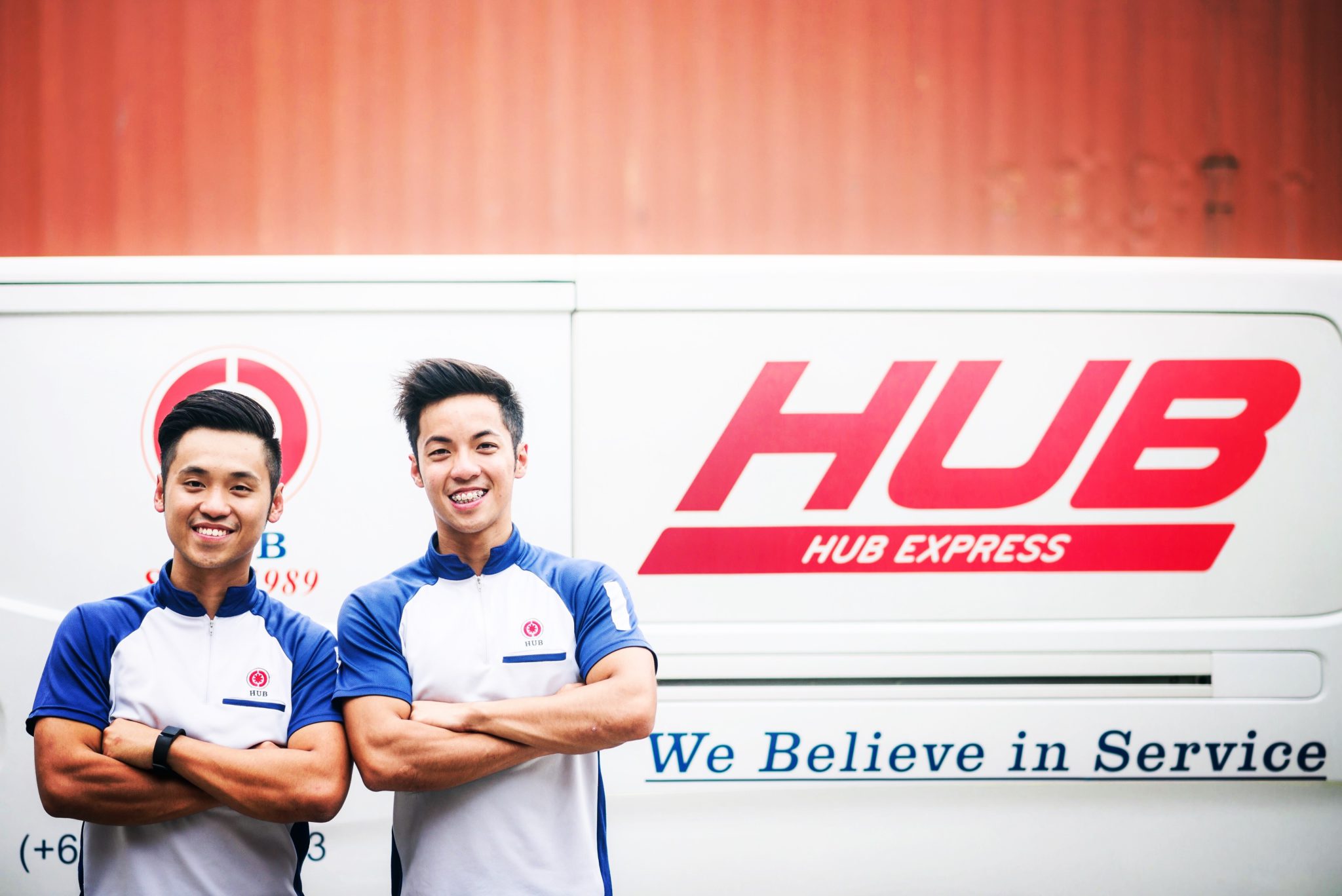
“We don’t have to step on others to climb.”
Alvin Ea, on a lesson from his father
A rival with a spare truck
Haulio’s premise begins with a practical embarrassment. A trucking company can win more work than its own fleet can handle. Another company may have spare capacity. Buying another truck for a temporary spike is an expensive response; calling a rival may be the sensible one. Ea’s experience had shown him that the resources needed to solve a problem often belonged to a competitor.
The platform connects container haulage demand with trucking resources. For an operator, sharing capacity changes the useful question from how many trucks the company owns to which available trucks can complete the work. The physical journey remains between ports, depots and customers. The change sits in the coordination between businesses that previously organised much of it separately.
A 2019 engagement session at Singapore’s Airport Logistics Park made the problem tangible. Containers travelled from the port in the west towards Changi in the east, but a truck might lack a suitable return job. Depots were often back towards the west. Haulio explained how matching work across that geography could reduce an expensive empty journey. A map can make cooperation look considerably less philosophical.
Ea’s regional ambitions also required attention to local attitudes. During Haulio’s early work in Thailand, he observed that its larger market made trucking companies less anxious about competition from their peers. Singapore’s smaller market encouraged a more defensive response. A platform may travel across a border faster than the habits of the businesses expected to use it.
A job meets a truck
The coffee came before the code could count
In the early push to recruit hauliers, the team sometimes held four coffee sessions in a day. Introducing software to established businesses meant returning to conversations, listening to objections and asking people to try a different way of working. The sales process had rather more cups and saucers than a diagram of a digital marketplace usually admits.
Ea even traced a change in his coffee order to time spent with the industry’s towkays. Kopi-si gave way to kopi-o and then kopi-o kosong, the black coffee without sugar favoured by those operators. Earning trust had a small, measurable effect on the founder’s taste buds. His account of those meetings captures something a product demo cannot: the time it takes for a familiar face to become a credible partner.
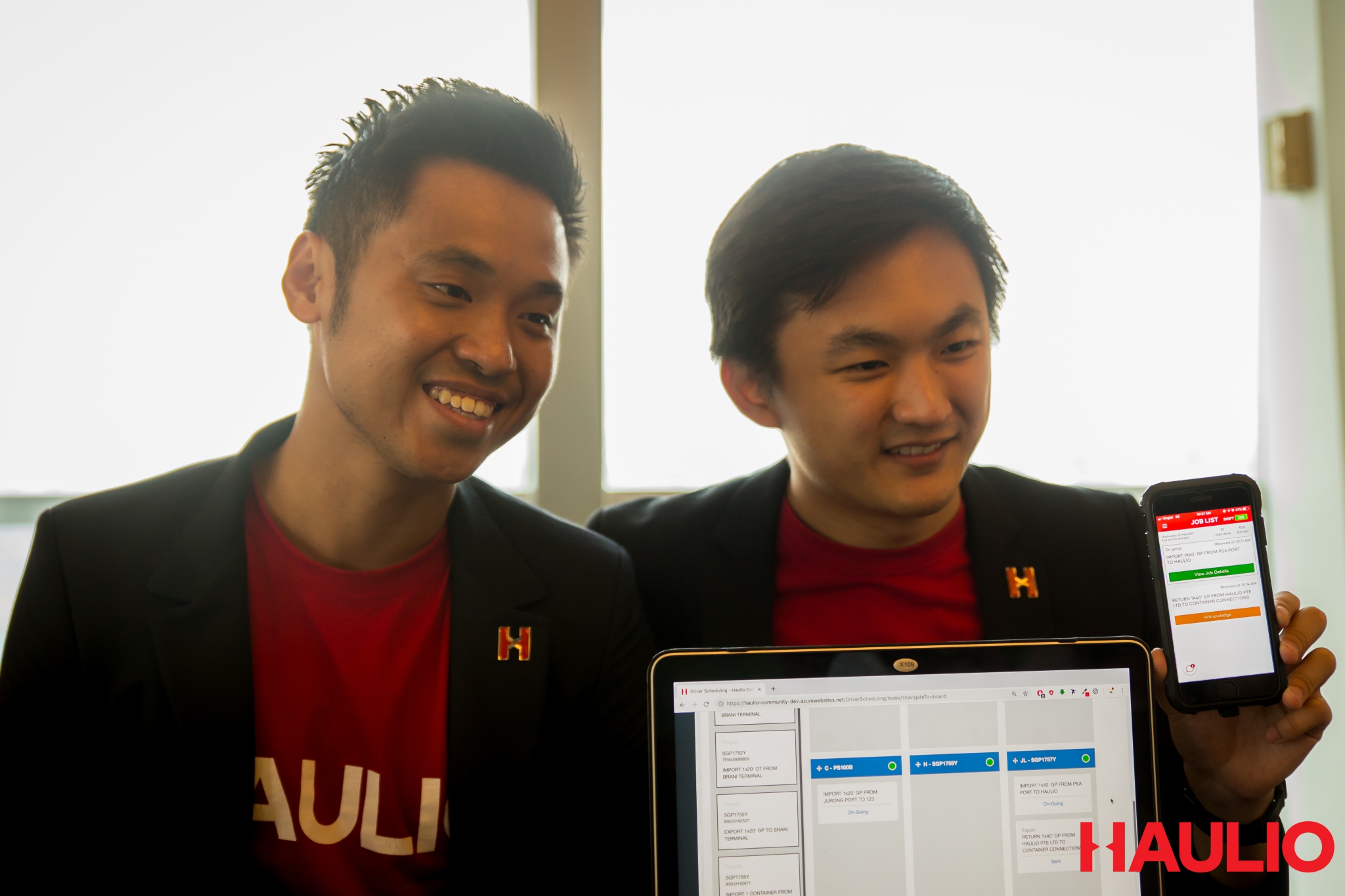
On 20 February 2019, Haulio formally launched its Connectivity System, pairing a driver’s mobile interface with tools for the operator. Ea and Shen demonstrated it together. The event also included an agreement with Yang Kee Logistics to connect Haulio’s portal with Yang Kee’s LITE system. The ambition extended beyond putting a screen in a driver’s hand; information had to move between organisations.
Infiniti Marine director Terence Wong later described using the system to manage his fleet rather than take marketplace jobs. Drivers could photograph completed work for electronic proof of delivery, while trip histories helped with checking remuneration. He valued the team’s responsiveness to feedback. That account gives Ea’s project a useful scale: sometimes an industry change arrives as fewer forms to check at the end of a working day.
Containers get their moment in Hong Kong
In July 2019, Haulio won PITCH at the RISE technology conference in Hong Kong. Sixty startups had been selected to present from a much larger pool of applicants. Ea was taking a business about trucks and containers into a room built for startup pitches. The subject needed translating before the opportunity could be understood.
He called the win validation for the business. Containers, he pointed out, were enormous objects that people nevertheless failed to notice. The competition offered a way to bring the work behind everyday trade into view. For a founder whose working knowledge came from the sector itself, explaining that hidden world was part of the job.
The numbers eventually gave him another way to explain it. Haulio announced a US$7 million Series A round in January 2022, led by Heliconia Capital. Its release reported more than two million containers transacted since 2017, equivalent to 2.5 million twenty-foot equivalent units. TEUs describe standardised container capacity; they are a different measure from the number of individual containers.
The money was earmarked for service, engineering, hiring and regional growth. Haulio had also moved beyond job matching into financing and truck leasing partnerships. Ea was building around the constraints of small operators as well as the software they used. A booking is useful, but access to equipment and cash flow can determine whether that booking becomes a completed journey.
Led by Heliconia Capital
2.5 million TEUs
A founder’s job keeps changing
Ea has described the demands of starting with two people, growing to twenty and managing a regional team of more than a hundred as different jobs requiring different abilities. The title stays in place while the work underneath it changes. Knowing an industry supplies a starting advantage; it does not supply every skill needed to run a growing company.
His experience in Iterative’s first 2020 cohort included reorganising, downsizing and returning to the basics. He valued the weekly partner meetings and the chance to discuss weaknesses openly. This is a less polished account than the victory photograph, and a more revealing one. A founder can understand the customer’s problem very well and still need help deciding what to do next.
One operator’s account shows what Ea’s support could mean outside Haulio. Mr Bai of B&S Services said he consulted Ea before setting up his own trucking company. With support including leasing, financing and a pool of work, the business grew to five trucks in a year. The reported experience matters because the platform’s purpose depends on independent hauliers being able to operate and grow.
Ea has also spent time on the other side of the advice table. At HyperHack in November 2019, he mentored participants and shared failures from his own startup journey. His interest in reducing empty mileage connected the economics of trucking with less wasted fuel. The useful lesson travelled in both directions: a young company needs experienced backers, and its founder can still have something to offer someone just beginning.
The future still needs someone who knows the road
At Haulio’s fifth-anniversary dinner in December 2022, the company signed an agreement with the National University of Singapore to develop a smart haulage scheduler. Haulio would contribute operational experience; the university’s Centre of Excellence in Modelling and Simulation for Next Generation Ports would contribute algorithm research. The pairing gave Ea’s earlier ambition a concrete research programme.
In September 2026, Haulio announced that Ea would speak at AI Salon Singapore, a StartupX and SGInnovate event examining where AI could create lasting value and how adoption could work at scale. The subject fits a long-running interest. Ea had been discussing automation and predictive tools years before the current enthusiasm for AI; container movements gave those ideas a specific job to perform.
His tastes away from work are less complicated. Football is a subject he can discuss for hours. He likes Marvel films and dark chocolate ice cream. Asked what might surprise people about him, he said he could drive a prime mover. It is an agreeable detail in a technology founder’s biography: the person explaining the software can also operate the machine at the other end of it.
By Haulio’s seventh anniversary, Ea’s advice had settled on purpose, carefully chosen partners and character in hiring. He placed attitude above aptitude and expressed gratitude to people who had helped him along the way. Read alongside the coffee meetings and the support for independent operators, those priorities make sense. His business asks rivals to trust a common platform. Its founder has spent much of his career learning how trust is earned.