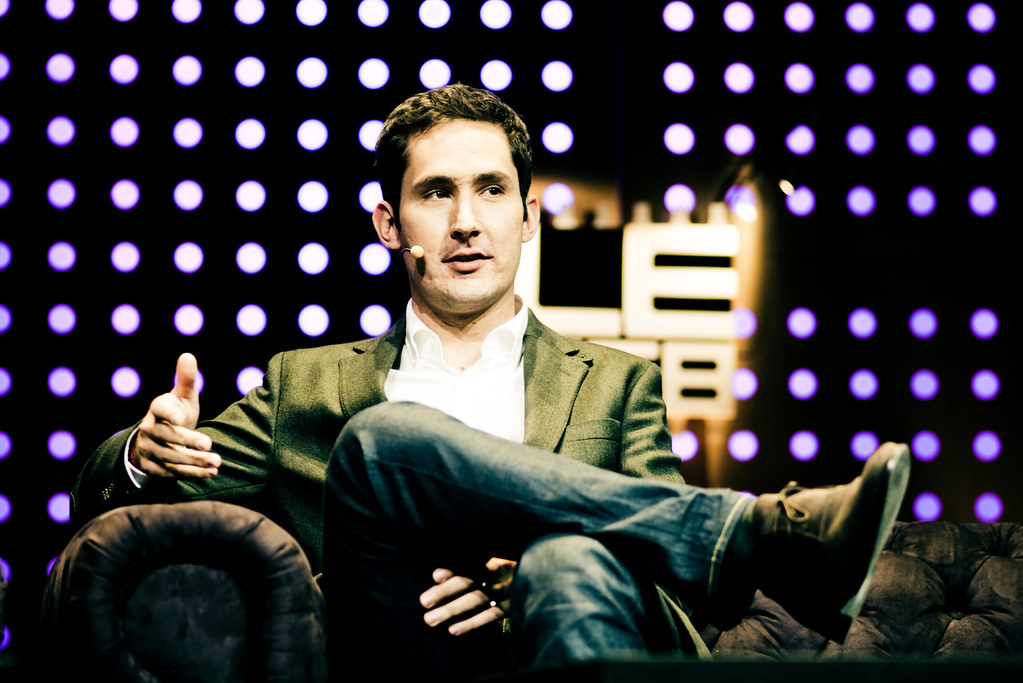
Mexico, 2010. Kevin Systrom's girlfriend Nicole stared at her iPhone 4 photos and refused to share them. The camera was fine. The lighting wasn't. Systrom, a Stanford-trained tinkerer who'd already spent two years at Google building products nobody remembers, saw the real problem - phones couldn't make mediocre photos look deliberate. That night, he started coding filters. Instagram launched 8 weeks later.
The story sounds clean in retrospect. Reality was messier. Systrom had been building Burbn, a location check-in app nobody wanted, when he noticed users only cared about one feature: photo sharing. He stripped everything else, added filters to hide iPhone 4's terrible low-light performance, and renamed it Instagram. One month after launch: 1 million users. Two years later: Facebook wrote a check for $1 billion. Systrom was 28. His team was 13 people. They had zero revenue.
But start earlier. Holliston, Massachusetts, 1983. Systrom was the kid developing custom Doom 2 levels and running an illegal radio station from his bedroom. At Stanford, he studied management science and engineering because he thought he'd restore art for a living, traveling Europe with a magnifying glass and cotton swabs. Computer science was just a tool. Then Mark Zuckerberg tried to recruit him. Systrom said no - he was going to Florence to study photography with a Holga plastic camera.
That Holga changed everything. A cheap plastic toy that leaked light and distorted images in ways that felt authentic. Systrom wandered Florence shooting architecture and street scenes, learning that imperfection could be a feature, not a bug. The photos looked amateur and honest. He filed the lesson away.
The best feature is less features.
- Kevin Systrom on product design
After Stanford, Google hired him to work on Gmail, Calendar, Docs, Spreadsheets - the infrastructure of modern work. He was good at it. But when he applied for the Associate Product Manager program, Google said no. He quit. That rejection became Instagram.
Between Google and Instagram came Nextstop, a travel startup where Systrom learned to ship fast and kill features ruthlessly. He also learned he wanted to be a founder, not employee number 47. In his spare time, he started building Burbn while bartending on weekends to understand what people actually wanted. Turns out: they wanted to look better in photos.
The Billion-Dollar Weekend
Instagram launched October 6, 2010. The first photo was a dog next to Systrom's foot, shot at a taco stand in San Francisco. Within hours, the servers crashed. By day seven, 100,000 users. By month one, 1 million. The app did one thing well: it made your life look more interesting than it was. Filters turned mundane moments into art. Squares evoked Polaroids. The double-tap to like was effortless.
Facebook acquired Instagram in April 2012 for $1 billion in cash and stock. Systrom personally netted $400 million. He was 28. His co-founder Mike Krieger was 26. They had 13 employees, no revenue model, and a product that was only 551 days old. Tech pundits called it overpriced. Instagram now drives more engagement than Facebook itself and is valued at over $100 billion.
If your goal is not to have a billion dollars but two, or three, or four or whatever, well, good luck spending it. That's not what makes you happy in life.
- Kevin Systrom on wealth
The Zuckerberg Years
Systrom stayed as Instagram CEO for six years under Facebook's ownership. By all external measures, it was successful - Instagram grew to over 1 billion users, added Stories (copied from Snapchat), IGTV, and Shopping. But internally, tension brewed. In April 2025, Systrom testified in the FTC's antitrust case against Meta, revealing what really happened: Zuckerberg saw Instagram as a threat to Facebook's dominance and systematically starved it of resources.
"Zero resources," Systrom told the court. Meta was "underinvesting" in Instagram while forcing integration with Facebook's infrastructure. The message was clear - Instagram could grow, but only as far as Facebook allowed. In September 2018, Systrom and Krieger both resigned within hours of each other. No dramatic press release. No tell-all interviews. Just two founders walking away from the thing they built.
The Artifact Experiment
For four years, Systrom stayed quiet. Then in January 2023, he and Krieger launched Artifact, an AI-powered news app that promised to surface quality journalism in a sea of clickbait. The pitch: algorithms should help you read better, not just read more. It was classic Systrom - simple interface, ambitious vision, faith that good design solves hard problems.
By January 2024, Artifact was dead. "The market opportunity isn't big enough to warrant continued investment," Systrom wrote. Translation: people don't want to read news; they want to scroll. Yahoo acquired the technology in April 2024. Systrom and Krieger joined as advisors during the transition, then left. No long-term roles. Just another experiment in the books.
But in May 2025, Systrom spoke out again, this time criticizing AI companies for "juicing engagement" instead of providing useful insights. The irony wasn't lost on anyone - the man who invented the double-tap and made scrolling addictive was now warning against algorithmic manipulation. Maybe that's growth. Maybe that's guilt. Maybe both.
The Board Member Era
These days, Systrom sits on the boards of Walmart and Snowflake, advises startups, invests in early-stage companies, and lives in San Francisco with his wife Nicole (yes, the one from the Mexico trip) and their daughter Freya. He's a certified sommelier, collects vinyl records, skis at his Tahoe lake house, and follows golden retriever accounts on Instagram with the same obsessive energy he once applied to product design.
His Instagram handle is @kevin. Just Kevin. 8 million followers. The bio reads: "inventor & former CEO of @instagram." No hype. No pitch. No engagement tactics. The feed is mostly personal - his daughter, his dog Dolly (who has her own account), landscapes from Tahoe. It's almost boring. Which might be the point.
Everyone gets lucky for some amount in their life. And the question is, are you alert enough to know you're being lucky or you're becoming lucky?
- Kevin Systrom on recognizing opportunity
What He Got Right
Systrom understood three things most founders miss. First, solve a problem people have right now, not one they might have someday. Nobody woke up wanting a check-in app, but everyone wanted their photos to look better. Second, constraints breed creativity. Instagram's filters weren't a feature - they were a workaround for bad smartphone cameras. Third, simplicity scales. Instagram launched with 0.1% of the features Burbn had, and 10,000% of the adoption.
He also understood luck. The iPhone 4 launched in June 2010, four months before Instagram. If Systrom had launched a year earlier, he'd have been competing against Flickr on desktop browsers. A year later, someone else would have built Instagram. Timing mattered. So did being alert enough to notice the window was open.
The Golden Retriever in the Room
Systrom eats protein bars for breakfast, which he describes as "basically eating candy bars." He originally wanted to be an art restorer. He's a certified sommelier but drinks wine like an engineer - methodically, curiously, with notes. He DJ'd in high school and might have gone into music if Stanford hadn't worked out. He joined Sigma Nu fraternity, participated in the Mayfield Fellows Program (one of twelve students selected), and interned at Odeo, the company that became Twitter.
The golden retriever obsession is real. He follows golden retriever accounts with the same intensity he once tracked user metrics. His dog Dolly has 10,000 followers. There's something charmingly human about a billionaire tech founder spending his evenings scrolling dog photos. It's either the healthiest coping mechanism in Silicon Valley or proof that nobody escapes their own product's gravitational pull.
What's Next?
Systrom is 42. He's been retired since 34, if you count leaving Instagram as retirement. He's tried another startup and watched it shut down. He's testified against his old acquirer in federal court. He's critiqued the industry he helped build. He's serving on boards, advising founders, investing in companies that might be the next Instagram or might just be the next Burbn.
The question isn't whether he'll build something else - he's too much of a tinkerer to stop. The question is whether lightning strikes twice. Instagram wasn't just good execution. It was perfect timing, perfect insight, perfect simplicity at the exact moment smartphone cameras became good enough to care about but not good enough to trust. That moment is gone. Whatever comes next will need a different insight, different timing, different constraints.
Or maybe he's done. Maybe sitting on boards and drinking wine and watching golden retriever videos is enough. Maybe the goal was never to build more, just to build once, build it right, and walk away when it stopped being yours. That would be the most un-Silicon Valley thing he could do. Which means it's probably exactly what he'll do.
Career Timeline
Major Achievements
Co-founded Instagram, which grew to over 1 billion users globally
Named "Founder of the Year" at 6th Annual Crunchies Awards (2012)
Time's "100 Most Influential People in the World" (2016)
Built Instagram to 1 million users in first 30 days with zero marketing
Received CFDA Social Media Award (2015)
Forbes "30 Under 30" honoree (2013)