A car can be perfectly useful and temporarily useless at the same time. The engine runs. The seats are comfortable. One small component has resigned, and the whole arrangement is now waiting for a replacement. Kevin Olsen runs a business built around that awkward interval between something breaking and someone being able to fix it.
There is little romance in an oil filter housing. Nobody puts a photograph of one above the fireplace. Yet the person who can supply a better housing, at the right time, has something the driver actually needs. At Dorman Products, where Olsen is chairman, president and chief executive, that proposition reaches across passenger cars, commercial trucks and specialty vehicles. His career has carried him from public accounting into industrial management and finally into the business of giving other people's machines another working life.
The route matters. Olsen arrived at Dorman as its chief financial officer in 2016. He became president and chief operating officer in 2018, chief executive in January 2019, and chairman in April 2026. Within a decade, the executive responsible for the accounts had become responsible for the institution. The interesting question is what he has chosen to preserve while the business around him has expanded.
A star washer enters the conversation
In a conversation with University of the Aftermarket Foundation host Jacki Lutz, Olsen offered an unusually modest object as a way into Dorman's history: the star washer. He described a company that had changed from a hardware business into an importer and then into a designer and manufacturer of vehicle parts. It was a history lesson with an appealing absence of ceremonial grandeur. A washer has work to do.
Dorman's roots stretch to 1918, when brothers Jack and Lew Dorman started selling hard-to-find automotive hardware from salvaged vehicles. Another pair of brothers, Richard and Steven Berman, founded R&B in Philadelphia in 1978. The two strands eventually came together. Olsen inherited a business with a history of finding openings in the parts market, along with continuing connections to its founding families.
When Lutz asked about his goal, Olsen returned to innovation and the company's habit of bringing additional repair options into the aftermarket. His phrasing was short enough to survive outside a presentation: “It's really about continuing that legacy.” For an executive who joined long after the founding, this is a revealing choice of emphasis. He describes his task through the work he received and wants to carry forward.
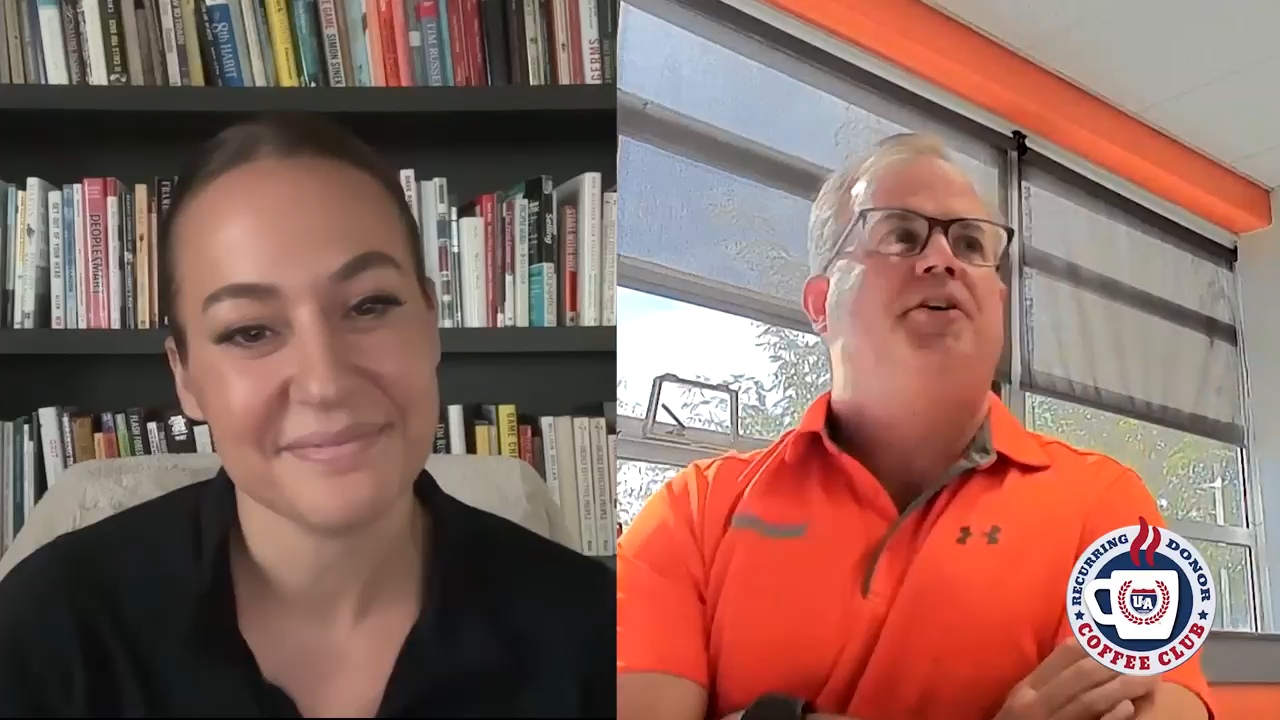
“It's really about continuing that legacy.”
Kevin Olsen · on Dorman’s innovation tradition
The accountant takes the operating chair
Olsen studied at Bryant University and identifies himself professionally as a certified public accountant. His early career included public accounting at PricewaterhouseCoopers. Management roles followed at Danaher, Netshape Technologies, Crane Energy Flow Solutions and the Forged Products Aero Turbine division of Precision Castparts. These were businesses where physical products, processes and costs had to agree with one another. An elegant spreadsheet could only take matters so far.
From January 2013 through June 2016, he served as chief financial officer of Colfax Fluid Handling. Dorman's current executive biography dates his arrival there to July 2016. The following June he became executive vice president while retaining the finance role. Then, in August 2018, Dorman announced a planned transition: Olsen would move into the presidency and operations before succeeding Mathias Barton as chief executive at the start of 2019.
Steven Berman, then executive chairman, publicly emphasized Olsen's attention to customers and his management experience. Barton supported the appointment too. The handover gave Olsen time in the operating role before the change at the top. It also put him into a succession with a familiar detail: Barton had originally joined Dorman as CFO. Finance had already proved a route into the company's leadership.
On January 1, 2019, Olsen became CEO; his board appointment followed that month. This progression helps explain the combination visible in his public responsibilities today. He has worked with the measurements of a business and with the business that produces them. At a parts supplier, those perspectives meet in inventory, product development, distribution and the daily question of how much cash is tied up between a purchase and a sale.
- 2016Finance
Joins as CFO - 2018Operations
President & COO - 2019Leadership
President & CEO - 2026Governance
Adds chairman
The useful part of a complaint
The business Olsen leads starts much of its product work with problems reported by repairers. Dorman sends field analysts into shops, examines information about recurring failures and accepts ideas through its website and technical support team. Engineers then work on replacement designs. The path from complaint to product is a fairly practical form of listening: a problem repeated in enough garages may deserve a place in the catalog.
Consider the oil filter housing used on certain Chrysler, Dodge, Jeep and Ram V6 vehicles. Dorman describes the original plastic housing as vulnerable to warping and cracking. Its OE FIX replacement uses aluminum and includes the cooler, filter and cap. This is a company product, developed by its technical teams. It gives concrete meaning to the innovation Olsen talks about: changing a material in response to a recurring weakness.
The attraction of that example is its scale of ambition. The customer already owns the vehicle and would prefer to keep using it. A repair part can answer that wish without asking the owner to become interested in the larger industrial system behind it. Dorman's catalog also stretches into electronics, steering and suspension, body components and heavy-duty applications. Each category brings its own demands for fit, testing and availability.
For Olsen, preserving that development process while running a larger organization is a continuing management task. By the end of 2025, Dorman marketed approximately 144,000 distinct parts. The count includes acquired businesses and excludes private-label variations. Breadth creates opportunity, but also a very long list of things that must be designed, sourced, stocked and delivered correctly. A catalog can grow faster than anyone's capacity to remember it.
Two acquisitions widen the workshop
Under Olsen's leadership, Dorman expanded into adjacent markets through substantial acquisitions. In August 2021 it completed the purchase of Dayton Parts, announcing approximately $338 million in cash consideration before customary adjustments. Dayton brought heavy-duty undercarriage components, manufacturing and distribution capabilities, and relationships in the commercial vehicle market. It widened Dorman's reach into the machinery that earns its living carrying other things.
SuperATV followed in October 2022. The announced transaction called for $490 million at closing, subject to adjustments, plus a potential performance-based earn-out of up to $100 million. SuperATV supplied aftermarket parts and accessories for utility terrain vehicles and all-terrain vehicles. Its mix included upgrades as well as replacement parts, taking Dorman further into the powersports market.
The logic connected familiar activities to different vehicles: develop products, serve an existing fleet, and find additional needs after the original sale. The purchases also changed what Olsen had to manage. Dorman now reports Light Duty, Heavy Duty and Specialty Vehicle segments. Their customers and demand patterns differ. Buying a business adds its capabilities and its complications in the same transaction; the complications rarely arrive in a separate box.
Three businesses, different speeds
Dorman recorded $2.13 billion in net sales in 2025, compared with $2.01 billion in 2024. Light Duty accounted for roughly $1.69 billion of the 2025 total. Heavy Duty contributed about $233 million and Specialty Vehicle about $206 million. The passenger-car and light-truck business remained the center of gravity after the acquisitions.
Fiscal year ended December 31, 2025. Rounded segment values may not sum to rounded total.
Growth was uneven. Light Duty sales rose 8.1% during 2025, helped by pricing actions, demand earlier in the year and new products. Heavy Duty increased only 0.5%, with weakness in freight transportation and the trucking aftermarket weighing on customer demand. Specialty Vehicle sales declined. Those differences make Olsen's job more specific than simply seeking a larger total: the work includes understanding why one segment is moving while another is waiting.
His responsibilities extend outside Dorman as well. Twin Disc appointed him to its board in August 2022. The company supplies power transmission technology for marine, land-based and other applications. Its board biography lists him on the audit and nominating and governance committees. The appointment connects his industrial operating experience with the oversight work expected of an outside director.
The title changes; the arithmetic continues
In April 2026, Dorman added chairman to Olsen's titles. Steven Berman, chairman since 2011, remained a director. Lead independent director Richard Riley described the succession as planned and expressed confidence in Olsen's leadership. The change brought the chairmanship and chief executive role together while retaining a founder's presence on the board. It marked another step in the transfer of responsibility that began with Olsen's arrival in finance.
The latest reported quarter, released in August 2026, also supplied a reminder to read corporate results carefully. Second-quarter sales were $544.6 million, up 0.7% from a year earlier. Diluted earnings per share rose 53% to $2.93. Earnings and operating cash flow benefited from the recovery of previously recognized IEEPA tariff costs. The profit increase therefore carried a specific explanation beyond the movement in sales.
Dorman also lowered its full-year sales growth outlook from 7%-9% to 3%-5% while raising its diluted earnings-per-share outlook. Olsen linked the update to first-half performance and targeted pricing actions in a more stable tariff environment. For someone whose career began in accounting, this is familiar territory: several numbers moving in different directions, each requiring an explanation. The next results were scheduled for October 26, 2026.
Back in the conversation with Lutz, Olsen's ambition sounded less complicated: keep the company's tradition of developing repair solutions going. Its consequences remain tangible. A part becomes available. A repair becomes possible. Someone gets the vehicle back. After all the acquisitions, appointments and quarterly arithmetic, the useful test is still waiting in a garage.
Keep reading & watching
- Kevin Olsen on LinkedIn
- Watch: Olsen’s conversation with Jacki Lutz
- Dorman Products: products and repair resources
- Dorman product and installation videos on YouTube
- The 2018 CEO succession plan
- The April 2026 chairman announcement
- Second-quarter 2026 results
- Dorman’s virtual tour
- Shop Press: Dorman’s automotive publication
- Dorman on X
- Dorman on Facebook