A factory can postpone buying a new machine. The machine already on the floor still expects attention. It needs parts, cleaning, adjustments, somebody who understands why an apparently small component has become the most important object in the building. Jeffrey Powell’s working world lives in that gap between the investment a customer can delay and the production it must keep moving.
His company, Kadant, supplies equipment and engineered systems for process industries. Paper, wood products, recycled materials: the familiar things arrive at the end of complicated journeys. Powell has spent years on the less photogenic portion of the route. There are knives, screens, fluid handling systems and conveyors. A roll-cleaning blade is unlikely to acquire a fan club. It may nevertheless have a very demanding customer.
Now Powell is approaching a transition of his own. He remains Kadant’s chief executive and a director in October 2026. Michael Colwell became president and chief operating officer on October 1 and is scheduled to become CEO on January 2, 2027. Powell will move to executive chairman. For someone whose work has involved keeping industrial operations productive, a handover with an overlap has a certain practical elegance.
The apprenticeship before the title
Powell’s education paired mechanical engineering at the University of Toledo with graduate business study at Florida Institute of Technology. The combination fits the professional terrain he would occupy: businesses whose products must work physically and whose economics must work on paper. Neither qualification explains an entire career. Together, they give the machinery and the balance sheet equal billing.
Before joining Kadant, he held management positions at Thermo Electron, including the chief executive and president roles at a publicly traded subsidiary. From April 2003 through December 2007, he was chairman and CEO of Castion, a business providing wastewater treatment and recovery solutions. Resource recovery was already part of his working vocabulary before it became part of his Kadant responsibilities.
He arrived at Kadant in January 2008 as vice president for new ventures, principally responsible for acquisition activities. Senior vice president followed in September 2009. By March 2013, as executive vice president, he supervised stock preparation, wood processing and fiber-based products. In March 2018 he became co-chief operating officer. The progression put buying businesses and running them on the same résumé.
*Scheduled for January 2, 2027.
When the board selected him to succeed Jonathan Painter in 2019, it pointed to his work acquiring and integrating businesses as well as his operating record. He became president that April and CEO that July. This was an appointment built on years inside the organization, with a predecessor who knew him from much further back.
Painter put the relationship plainly: “I have personally known and worked with Jeff for more than 30 years.” Their connection reached back to Thermo Electron. Corporate succession often comes with the language of continuity; here, there was a working relationship long enough to give the word some substance. Powell had spent eleven years alongside Painter at Kadant before taking the top job.
Buying a business, keeping its judgment
Acquisitions can make a company bigger very quickly. They also introduce the awkward question of who gets to decide things on Monday morning. Kadant’s stated answer is a decentralized operating model. Local businesses retain decision-making close to their customers, while gaining access to group resources, manufacturing capabilities and capital. The parent company buys expertise that it intends to keep using.
The acquisition criteria are revealing in their plainness. Kadant expresses strong interest in businesses where parts and consumables exceed 40 percent of revenue. It also seeks critical components whose failure carries a high cost. Those categories describe a particular kind of industrial relationship: relatively specialized equipment, repeated contact and consequences when something stops working. A small item on an invoice can have a very large job.
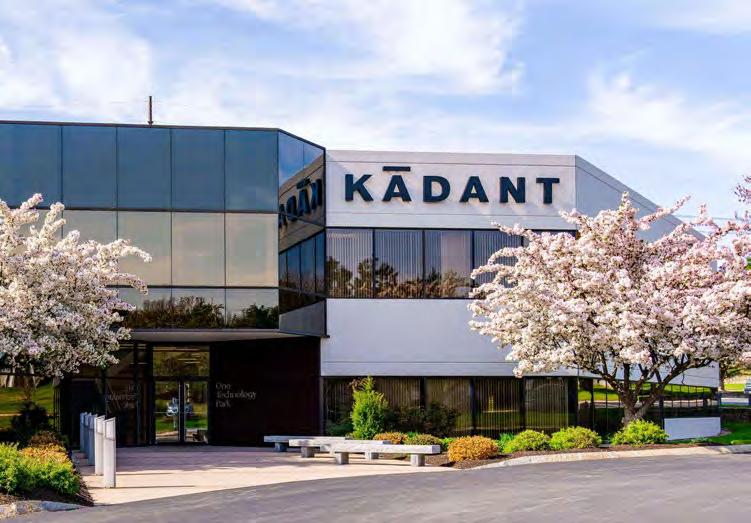
Colwell’s route offers a concrete example of the people who arrive with an acquisition. He led Carmanah Design and Manufacturing before Kadant acquired it in November 2013, then continued leading Kadant Carmanah Design through 2019. The business makes equipment for oriented strand board production. Its former chief is now preparing to lead the group that bought it.
That is an interesting detail in Powell’s succession. An acquired company can contribute equipment, customers and technical knowledge. In this case, it also contributed a future chief executive. Colwell’s later responsibilities included wood processing and the Industrial Processing segment. His appointment gives the acquisition story a human consequence that an enterprise-value table cannot show.
Why the spare part matters
Under Powell, Kadant crossed a visible threshold in 2024: annual revenue reached $1.053 billion. The composition of that growth matters. Total revenue rose 10 percent; acquisitions contributed 12 percent, while organic revenue fell 2 percent. Net income declined 4 percent to $111.6 million. A larger company and a uniformly improving company are different propositions. Both the expansion and the weaker measures belong in the picture.
The distinction is useful when thinking about his job. Buying additional businesses can broaden what a group sells and where it sells it. Existing operations still have customers making their own investment decisions. The acquisition ledger cannot make a mill approve a project. Powell’s responsibilities include both choosing what to add and managing what is already there.
Consolidated revenue mix. Percentages describe Kadant, not Powell’s personal income.
By the second quarter of 2026, parts and consumables represented 68 percent of consolidated revenue. The mix varied by business: 76 percent in Flow Control, 69 percent in Industrial Processing and 57 percent in Material Handling. These are repeat needs distributed across different activities. The numbers help explain why the installed equipment base receives so much attention in discussions of Kadant’s performance.
Quarterly revenue reached $312.9 million, up 23 percent from the corresponding 2025 quarter. Organic growth contributed 8 percent, acquisitions 13 percent and currency translation 2 percent. Net income rose to approximately $32 million. Gross margin, however, fell to 43.8 percent. The machinery of a company, like the machinery it sells, has several gauges. Sensible inspection involves looking at more than one.
Efficiency with a physical address
Powell’s sustainability agenda is closely tied to what Kadant sells. Its systems recover fiber, recycle process water, clean industrial surfaces and prepare wood for further use. These are practical interventions in how materials move through production. Yield, water and energy are tangible concerns for the customer trying to make a plant operate economically.
In his message for the 2023 sustainability report, Powell described programs that enlist employees in identifying manufacturing inefficiencies. He also emphasized local teams working directly with customers. The aspiration was to move toward more closed-loop systems, alongside more recycling, traceability and smart technologies. That places the environmental argument inside the operating process, where changes must survive contact with an actual production line.
“Our employees are our greatest resource, and we provide real opportunities to grow, learn, and make a lasting impact.”
Jeff Powell · Kadant’s culture statement
There is a related expectation in his message on corporate responsibility: employees should ask questions, seek guidance and report concerns. The statement applies the company’s conduct code across employees, temporary workers and directors. It puts responsibility at several levels of the organization. Decentralization requires local judgment; the accompanying obligation is that people have a way to challenge what they see.
Thirty years can precede a purchase
A deal announced in January 2026 gives the long view a specific shape. Kadant agreed to acquire Austria’s voestalpine BÖHLER Profil, a maker of customized profiles and industrial knives. The company had approximately 150 employees and €51.5 million in revenue for its fiscal year ended March 2025. It had also supplied several Kadant businesses for more than three decades.
That history gave Powell a business case grounded in familiarity with a supplier’s capabilities. The announcement described a fit with demanding industrial applications and the Industrial Processing segment. Many acquisition announcements introduce two companies to one another. This one described organizations that had already spent years doing business together. The proposed change concerned ownership of an established relationship.
The ambitions beyond any single transaction were laid out at Kadant’s December 2024 investor day. For 2028, the company targeted revenue between $1.5 billion and $1.8 billion. Its assumptions included both organic growth and acquisitions. Those figures remain targets. They also make the coming handover consequential: the plan extends beyond Powell’s scheduled tenure as CEO and into his successor’s work.
A handover with working overlap
The arrangement announced in September 2026 preserves a role for Powell in strategic planning, acquisitions, operational consultation and governance after Colwell takes over. Powell is scheduled to retire from executive employment on January 1, 2028, with an expected subsequent role as non-executive chairman. Painter is due to leave the board when Colwell becomes CEO. Responsibilities move in stages.
There is an echo of 2019, when Painter became executive chairman as Powell became chief executive. This time Powell brings thirteen years of working with Colwell to the overlap. The next chief already knows the businesses; the departing chief remains available for a defined period. No diagram can guarantee a smooth succession, but the calendar makes room for knowledge to travel.
Powell’s career gives that choice its context. He entered Kadant through new ventures, took responsibility for operating businesses and eventually inherited the whole company. Now another executive with experience inside an acquired business will follow him. The spare part, the local manager, the long-standing supplier: each belongs to a system that depends on accumulated knowledge. The final assignment is to keep that knowledge working as the name on the CEO’s door changes.