A perfume pump has a rather demanding audience. Someone presses down, expecting a fine mist, and receives either a small pleasure or a reason to be annoyed. The mechanism has a fraction of a second to justify itself. Adam Greenlee runs a company whose products face variations of this examination all day: caps must close, cans must hold, dispensers must dispense. Few customers pause to applaud the packaging. A failed performance, however, attracts immediate attention.
Greenlee became chief executive of Silgan Holdings in September 2021, after sixteen years inside the business. His route to the job ran through closures, operations and the presidency. It is an unusually useful career for understanding a company that sells much of its ingenuity in small physical objects. Before taking responsibility for the whole enterprise, he had spent years being responsible for how its parts worked.
Sixteen years before the corner office
The documented career begins before Silgan. In February 2001, Greenlee became director of marketing at ATI Allegheny Rodney. Two years later, he moved into its vice president and general manager role. That progression matters: marketing asks what a customer will buy; general management adds the awkward question of what it takes to deliver it profitably.
He joined Silgan White Cap in March 2005 as executive vice president of its North American operations. By January 2006 he was president of those operations. In October 2007, he became an executive vice president of Silgan Holdings, and in August 2009 he added chief operating officer. The presidency followed in April 2019. His responsibilities expanded in stages, from a regional operation to oversight across the company.
The succession announced in July 2021 had a revealing feature: Tony Allott, the outgoing CEO, stayed as executive chairman. Allott had led the company since 2006 and was only its second chief executive since its founding in 1987. Greenlee was entering an institution accustomed to lengthy tenures, with his predecessor still close enough to compare plans with experience.
Allott described a decade of working together on the company's major activities. His endorsement was rooted in familiarity with Greenlee's operating record and understanding of Silgan's culture. This was a handover between people who had already spent years making decisions together. Greenlee joined the board in November 2022, adding a director's seat to the executive responsibilities.
The first month brought a $485 million decision
Within weeks of Greenlee taking over as CEO, Silgan announced the acquisition of Gateway Plastics. The price was $485 million, subject to customary adjustments. Gateway made dispensing closures and integrated dispensing packaging, with a manufacturing facility in Mequon, Wisconsin. Its expected 2021 sales were about $150 million.
Greenlee's explanation went beyond adding products. Gateway had equipment and capacity for growth, relationships with shared customers and an automation platform that could be useful elsewhere in Silgan's factories. It offered both a business to own and methods the wider company could adopt. Buying an industrial company becomes more interesting when the machinery comes with transferable know-how.
There is a practical distinction here between collecting factories and learning from them. An acquisition can expand a map immediately. Improving what happens inside the enlarged footprint takes longer. Greenlee's public account of Gateway concentrated on that second task: using capabilities across operations and meeting customers' particular requirements. The deal's logic depended on work that would continue after the announcement stopped being news.
A pump is allowed to have a personality
Silgan's product range runs from metal food containers to custom plastic packaging and dispensing systems. In the dispensing business, engineering becomes part of the experience of buying something. A fragrance can arrive in an attractive bottle and still disappoint if the spray feels wrong. The pump participates in the product's manners.
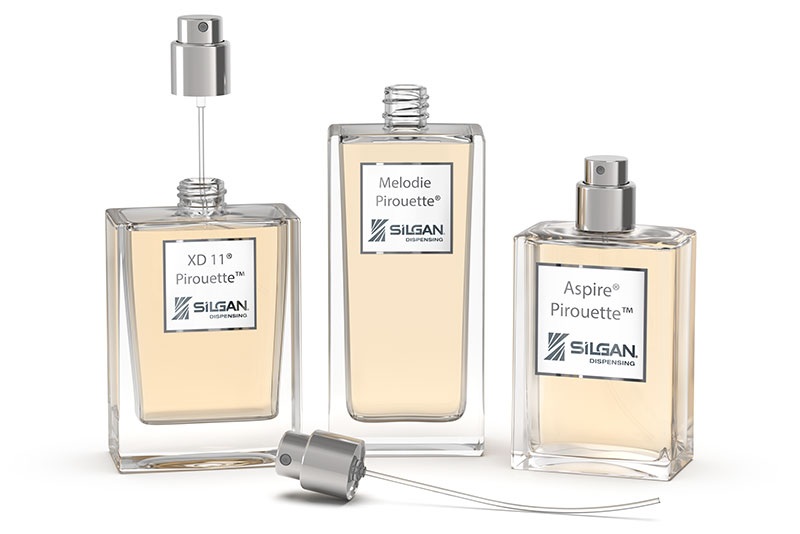
At Luxe Pack Monaco in 2022, Silgan Dispensing introduced Aspire Pirouette, extending its removable fragrance screw-pump range toward the lifestyle market. The screw mechanism lets consumers remove the pump to refill the bottle or separate it for recycling. Earlier Pirouette versions were available with its XD 11 and Melodie technologies. These are small design choices with consequences beyond the first use.
Custom Containers adds another set of problems: a package may need a particular shape, material or performance characteristic for products such as liquid soap, peanut butter or salad dressing. Silgan describes work on reducing material use and incorporating recycled and bio-based resins. That makes packaging development a negotiation among the customer's specification, manufacturing requirements and what the finished container can do.
The metal side deals in familiar pantry occupants: vegetables, soup, tomato products and pet food. Silgan reported $2.9 billion in metal-container sales for 2024 and said its United States metal food-container unit share exceeded half the market. Those figures describe an established industrial position, one Greenlee must maintain while investing in dispensing businesses with different customers and design priorities.
When the cupboard was too full
Running that mix has required some uncomfortable conversations. In July 2023, Greenlee told investors the Silgan team was “very disappointed” with second-quarter performance and its revised outlook. Quarterly sales had fallen to $1.43 billion from $1.54 billion a year earlier. Net income had declined as well. Consumer-goods packaging had encountered an unglamorous enemy: customers adjusting how much inventory they wanted to hold.
Inventory can make an everyday business behave unexpectedly. People may keep using products while manufacturers reduce orders for the packaging around them. The supplier experiences the change through production schedules and volumes. Greenlee was dealing with demand weakness and another round of customers working through stocks, after the earlier disruption to ordering patterns.
By the end of 2023, the strain showed across the portfolio. Full-year sales were $5.99 billion, down 6.6 percent. All three segments had fourth-quarter volume declines. As Greenlee discussed the next year, the response included a $50 million cost-savings program and consolidation of five manufacturing facilities announced by that point. A factory network built to serve customers still has to adjust when those customers order less.
There were improving pockets, too. Trigger sprayers had seen a sustained recovery late in 2023. That unevenness is central to Greenlee's job: one product category can be recovering while another remains weak. A company selling across kitchen cupboards, cleaning cabinets and dressing tables rarely gets a single, tidy verdict from the consumer economy.
“Seashells and balloons” meets the integration schedule
Silgan completed the Weener Plastics acquisition in October 2024. Weener brought nineteen facilities, mainly in Europe and the Americas, and approximately 4,000 employees. The acquisition added dispensing capabilities and an international operating network. At completion, Silgan expected about €20 million in operational cost synergies within eighteen months. An enlarged product offering came with a fairly specific integration assignment.
During the call discussing fourth-quarter 2024 results, an analyst pressed Greenlee about what had proved more difficult than expected. His reply briefly abandoned corporate formality: “not everything is seashells and balloons.” He went on to discuss communication and the work of bringing organizations together. The phrase supplied a welcome breeze to a conversation otherwise populated by margins and cost programs.
“Not everything is seashells and balloons.”
Adam Greenlee, discussing acquisition integration, Q4 2024 earnings call
He also said the team had found more commercial opportunities than it had originally credited during diligence. That answer contains both sides of an acquisition: the possibilities that become clearer after ownership and the ordinary coordination needed to pursue them. His emphasis on people understanding one another gives an otherwise numerical discussion a recognizable human problem.
The 2025 shareholder letter, signed by Greenlee and Allott, reported that Weener's full run-rate synergies had been achieved within twelve months. Silgan also said leverage had returned to its target range during the first year following the purchase. Those are more useful milestones than the purchase announcement alone: they address whether the promised operating benefits arrived and how quickly the borrowing burden was brought back within the company's parameters.
Silgan's reported annual net sales, a company record. Scale brings more operating responsibilities along with more revenue.
The next company inside this one
By July 2026, Greenlee was describing different kinds of growth within the same portfolio. Fragrance products had delivered high single-digit growth in the second quarter; pet-food packaging volumes were also growing. A new long-term vegetable-market supply agreement and further Custom Containers business awards underscored how much depended on individual customer relationships. Quarterly sales reached $1.64 billion, up 7 percent, primarily because of contractual pass-through of higher raw-material costs. Sales growth therefore needed an explanation beyond the headline percentage.
Then came October 19. Silgan announced a proposed partnership with American Industrial Partners to acquire Trivium, valued at approximately $3.4 billion including debt. Silgan would retain 60 percent of the combined metal-packaging partnership. Its dispensing and custom-container operations would remain wholly owned, together as Silgan Dispensing Solutions. The proposal would change the company's organization as well as its reach.
Proposed transaction. Expected closing: mid-2027, subject to approvals and other conditions.
The closing was expected in mid-2027, subject to approvals and other conditions. Trivium and Silgan would continue operating independently until then. On October 20, S&P Global Ratings placed Silgan on CreditWatch negative following the announcement. That response brings financing and execution back into view. An agreed structure still has to become a working business.
Greenlee's career has prepared him for the distance between those two things. He spent years overseeing operations before becoming the person presenting the larger plan. Now the work ahead involves a proposed new partnership, an enlarged manufacturing network and customers expecting the same dependable products throughout. Somewhere, a consumer will press a perfume pump. The mist will need to arrive on cue.