At 17, Kevin Figueroa arrived at a college commencement with one ceremony still waiting behind it: high-school graduation. Florida Atlantic University gave him a bachelor's degree in business management first. The diploma usually treated as a prerequisite would follow weeks later. In television footage from that spring of 2021, he seemed less interested in the novelty than in the arithmetic. He had removed roughly four years from the conventional educational calendar. Next came a master's degree at the University of Southern California, completed at 18.
It would be easy to mistake acceleration for the whole story. It is certainly the part that makes strangers blink. Yet the more durable idea in Figueroa's work is not speed for its own sake. It is the removal of friction: the errand, form, thread, or middle layer that quietly takes possession of somebody's afternoon.
At 13, his first reported online business bundled school supplies so parents could finish back-to-school shopping in minutes. At 17, he launched Freeferrals, a referral-marketing platform meant to reduce what shoppers paid online. Later, at the travel-software company Gordian, he wrote software and ran creator partnerships. Each stop offered a variation on the same puzzle. People wanted to do one thing. A thicket of smaller things stood in the way.
The shortest way through school
Figueroa entered FAU High School, where students take university courses that count toward high-school and college requirements. He finished his bachelor's degree with a finance minor and received FAU's University Scholar Award for the College of Business. His public record also includes a National Merit Scholarship, a Daveler Fellowship, a 760 GMAT score, and a 1570 SAT score. It is an unusually tidy set of numbers, almost suspiciously well behaved.
The family story gives those numbers weight. Figueroa described his parents as immigrants from Brazil who arrived in the United States with very little. He called them his inspiration. His graduation made him the first person in his immediate family to finish college, while his father gently wondered whether everything was happening too fast. Figueroa did not talk like a teenager mourning missed parties. That was not the life he wanted, he said. Entrepreneurship was.
An accelerated path
- Age 13School-supply venture
- 2021FAU degree at 17
- 2022USC master's at 18
- 2026Lighthouse launch
USC's Master of Science in Entrepreneurship and Innovation supplied the next compressed chapter. His professional profile says he graduated from the program at 18 with a $25,000 scholarship. Then came the less photogenic education of operating inside a startup: shipping software, measuring campaigns, and learning how an industry behaves once the pitch deck closes.
At Gordian, creator partnerships placed him close to a peculiar modern business. A creator's visible product might be a polished video or an audience's trust. Behind it sat a miniature back office: inbound messages, negotiation, contract review, dates, deliverables, approvals, invoices, and the sometimes ceremonial ritual of asking to be paid again. Figueroa helped run a creator-marketing program described by Lighthouse as seven figures, working with hundreds of creators and dozens of agencies. The administrative repetition looked ready for software.

The three-hour pitch
By December 2025, Figueroa had spent more than a year quietly building a prototype for an AI assistant aimed at creators. He had six months of savings and a missing piece. The software needed a brand with a point of view, not merely a list of automations. His younger brother Ryan had the complementary experience.
Ryan had started professional video work at 14. By 20, he was a full-time creator and filmmaker with a 100,000-follower brand and partnerships that included Adobe and Asus. He had declined management because the commission did not seem worth paying for work he could learn to do himself. Independence preserved his income. It did not preserve his calendar. Brand emails stretched into weeks. Deadlines lived across tabs. Invoices required pursuit.
Kevin drove three hours to Ryan's apartment with a proposal: build Lighthouse together. Ryan accepted before the pitch was finished. The following day, they decided to move in together. There are founders who commemorate such moments by ringing exchange bells. The Figueroa brothers had a shopping cart, an elevator, and a Black+Decker box.
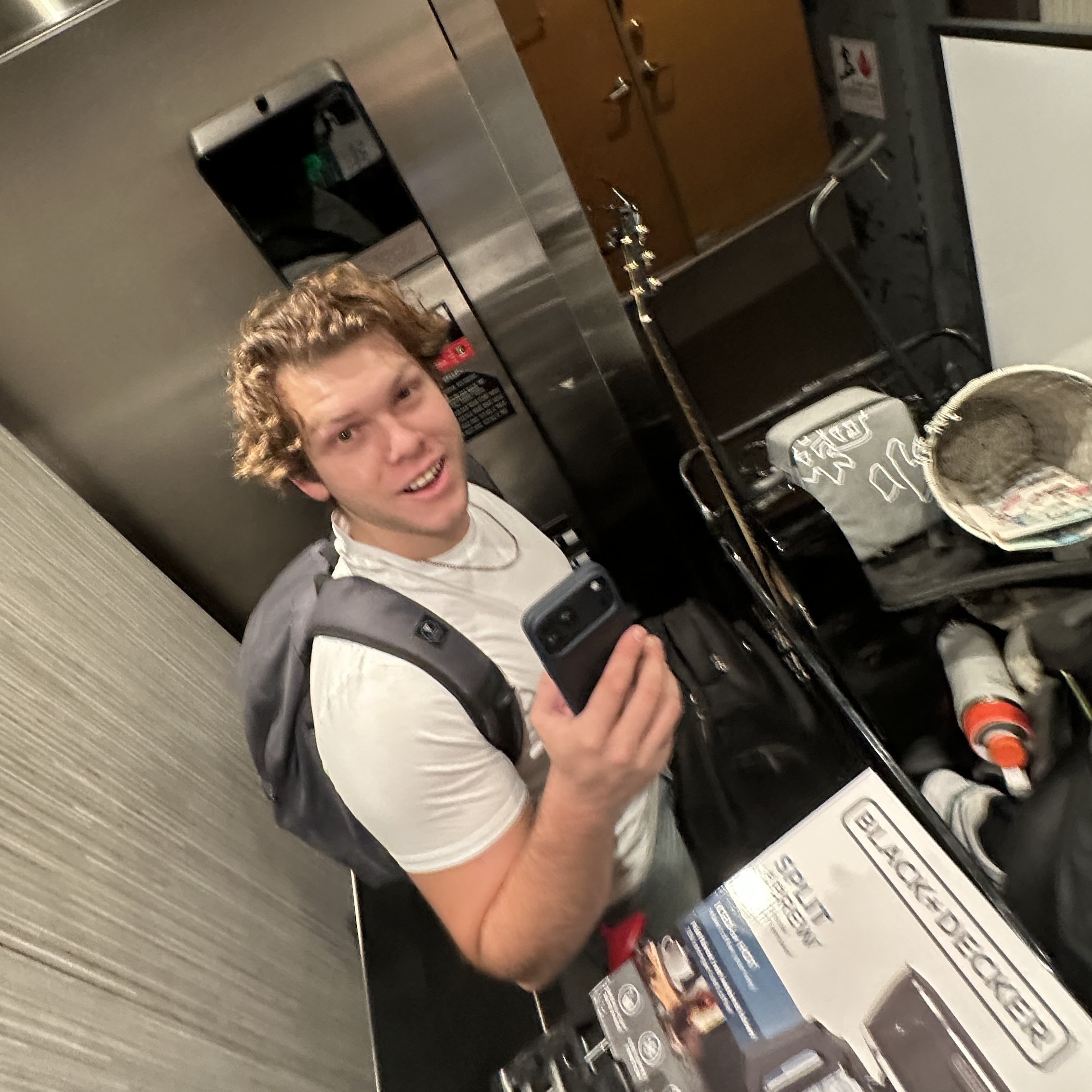
“He said yes before I finished talking.”Kevin Figueroa, on pitching his brother
The pairing turned the customer problem into something domestic. Kevin knew the systems that companies used to run creator campaigns. Ryan knew the creator's version, where every operational chore competed directly with the time needed to make the next piece of work. They became CEO and CMO, respectively. The division is almost too perfect: the engineer and operator beside the filmmaker and audience-builder, sharing an address as well as a cap table.
The invisible shift after the creative shift
Lighthouse is a workspace for independent creator businesses. It brings together inboxes, brand deals, contracts, deliverables, and payments. Its assistant can draft replies in a creator's voice, flag contract terms, keep track of deadlines, and follow up on invoices. When a decision needs the creator - a rate, a schedule, an answer no model should invent - the system surfaces it.
The company is built around a pointed economic argument. A creator can sign with management and give up a percentage of revenue, hire an assistant and acquire payroll plus another person to manage, or remain alone with the tabs. Figueroa and his brother are proposing a subscription instead. Lighthouse's launch materials use the example of a creator earning $100,000 in brand deals and paying $15,000 to $20,000 to management.
The commission question
An illustrative $100,000 year in brand deals, using the top of Lighthouse's stated 15% to 20% management range.
The argument is not that representation has no value. Negotiation, relationships, judgment, and advocacy do not evaporate because a model can summarize a contract. Lighthouse is making a narrower wager: a meaningful share of routine operational work can be handled by a tool, and many capable creators would rather buy that tool than permanently assign a slice of their earnings.
There is also a psychological claim tucked inside the product. Administrative work does not merely consume clock time. It leaves residue. The unanswered message follows a filmmaker onto the set. The late invoice sits in the edit. The contract clause interrupts the new idea. In Figueroa's framing, creative attention is not a pleasant extra. It is the underlying asset of the business.
A small company's manifesto, shot on camera
For its public introduction in March 2026, Lighthouse did not lead with a conventional product demo. The brothers made a 12-minute short film with friends. Ryan directed it. Production took a month and cost about $500, lunch included. The film turned the operational grind into a comic, cinematic origin story before revealing the product.
The choice was promotional, naturally, but it also served as proof of taste. A company asking creators to protect their creative work had made creative work of its own. The budget added a useful note of mischief. Software launches have spent more than $500 deciding which sandwich to order.
Kevin and Ryan also chose to bootstrap after attracting outside investor interest. That decision may change what the company can attempt and how quickly it can hire. For now, it reinforces the independence at the center of the pitch. Lighthouse is a small team using software and audience-building to extend its reach, selling the same leverage to customers who would prefer not to surrender control.
There is no guarantee that creator administration will yield quietly. An inbox is a human place wearing the costume of a database. Brand negotiations rely on context; contracts punish carelessness; payments can resist even the finest reminder. The credible version of Lighthouse will be judged in these unglamorous corners, where saving time depends on earning trust.
That makes Figueroa's early chronology more than a clever opening. He has spent years treating time as something that can be designed: a degree schedule condensed, a shopping errand shortened, a partnership workflow automated. At 17, he spoke about taking four years off the educational schedule. Years later, he was asking what an independent creator might do with a few hours returned every week.
The answer is not necessarily more content. It might be better work, a cleaner business, or dinner before the invoice reminder. For a founder whose résumé has always moved quickly, the mature ambition may be the simplest one: help somebody else stop rushing.