In 1919, George Ketchum discovered that persuasion could pay the rent. A fundraising campaign for Pittsburgh's Jewish War Relief Fund went well enough for the young University of Pittsburgh graduate to take an office and hire help. Four years later, he founded the company that would carry his name through advertising, public relations, a holding-company acquisition, a procession of mergers and, finally, into an agency that no longer belonged to him in any recognizable sense.
The geography mattered. Pittsburgh was not Madison Avenue. Local companies often looked elsewhere for advertising talent, and Ketchum built his firm in the place the fashionable business had overlooked. This became a useful institutional reflex: enter through the side door, find the human tension and make the audience feel as if it discovered the story itself.
By 2026, the side door had become an enormous global lobby. Ketchum advised consumer brands, health companies, food and agriculture businesses, technology firms, governments and nonprofits. It sold corporate reputation, crisis counsel, employee communication, public affairs, social strategy, creator programs, research, creative production and measurement. The client did not buy publicity by the pound. It bought a team capable of deciding what deserved attention, who might grant it and what useful behavior could follow.
The product was permission
A press release is an object. Public relations is a negotiation. Ketchum's strongest work gave people a reason to opt in. For Lay's, David Beckham and Thierry Henry finished a bag of chips during a live football match, then used a “Chip Cam” to locate fans holding Lay's in the stadium. The commercial was shot in under five minutes. A QR experience let people elsewhere prove they had a bag and compete for prizes. The snack became a ticket.
For Philips, the awkward fact was ecommerce returns. In Germany, hundreds of millions of packages were being sent back, and perfectly usable electronics risked becoming waste. Ketchum helped turn the liability into the Better Than New Refurb Editions: returned products sold with extended warranties, an Earth Day shop and an augmented-reality device that made the pile of returns visible in city streets. Philips sold 52,000 refurbished products and reported avoiding 185 tons of electronic waste and an estimated 277 tons of carbon emissions. The campaign won the Creative Business Transformation Grand Prix at Cannes in 2024.
The return became the reason to buy.
Philips did not hide an operational nuisance. The campaign made returned inventory visible, added a warranty and converted a waste problem into a product story.
That is the portable piece of the Ketchum method. Begin with a behavior or constraint that already exists. Add a simple public action. Give media and creators something demonstrable. Then count the result that matters to the business. It works when the product can bear inspection and the action is genuinely easier or more interesting than doing nothing. It weakens when a brand has only a message, no behavior and no credible proof.
A brand does not earn attention by asking louder. It earns attention by making the audience's next move unusually easy.The recurring logic behind Ketchum's strongest consumer work
The day influence became too invisible
The same machinery can fail for precisely the opposite reason. In 2005, a Department of Education arrangement became public: commentator Armstrong Williams had been paid through a Ketchum subcontract to promote the No Child Left Behind law without consistently disclosing the sponsorship in his commentary. The Government Accountability Office found that the department's arrangement amounted to covert propaganda and violated federal appropriations restrictions. The department paid Ketchum $188,543.48 across the two relevant task orders, of which $186,000 covered payments Ketchum made to Williams's company.
Ketchum called the episode a “lapse in judgment.” It announced tighter authorization for spokesperson contracts and required subcontractors to follow agency ethics standards. The first thing that failed was not distribution. The commentary reached people. What failed was provenance. An audience could not judge persuasion it did not know it was receiving.
That episode supplies a clean condition for the entire playbook: participation must be informed. Creator marketing, expert advocacy and branded entertainment depend on borrowed credibility. Hide the borrowing and the asset reverses. The more effective the message, the worse the eventual breach feels.
What survives when the company does not
Ketchum had rehearsed reinvention for decades. Omnicom acquired it in 1996 through a stock exchange involving 1,206,853 shares at the time, later doubled by a stock split; the companies did not disclose a cash price. Ketchum's leadership said it needed the capital of a public parent to grow internationally and invest in technology. The advertising operation left the name by 1999. A large merger with Europe's Pleon followed in 2009. New specialties accumulated: healthcare, food, crisis, analytics, entertainment and influence.
Fundraising learns advertising
George Ketchum formalizes the Pittsburgh business.
Independence buys scale
Omnicom ownership brings capital, technology and global reach.
The ad shop leaves
Ketchum becomes primarily a public-relations name.
The name becomes the bridge
Golin Ketchum opens under a single operating model.
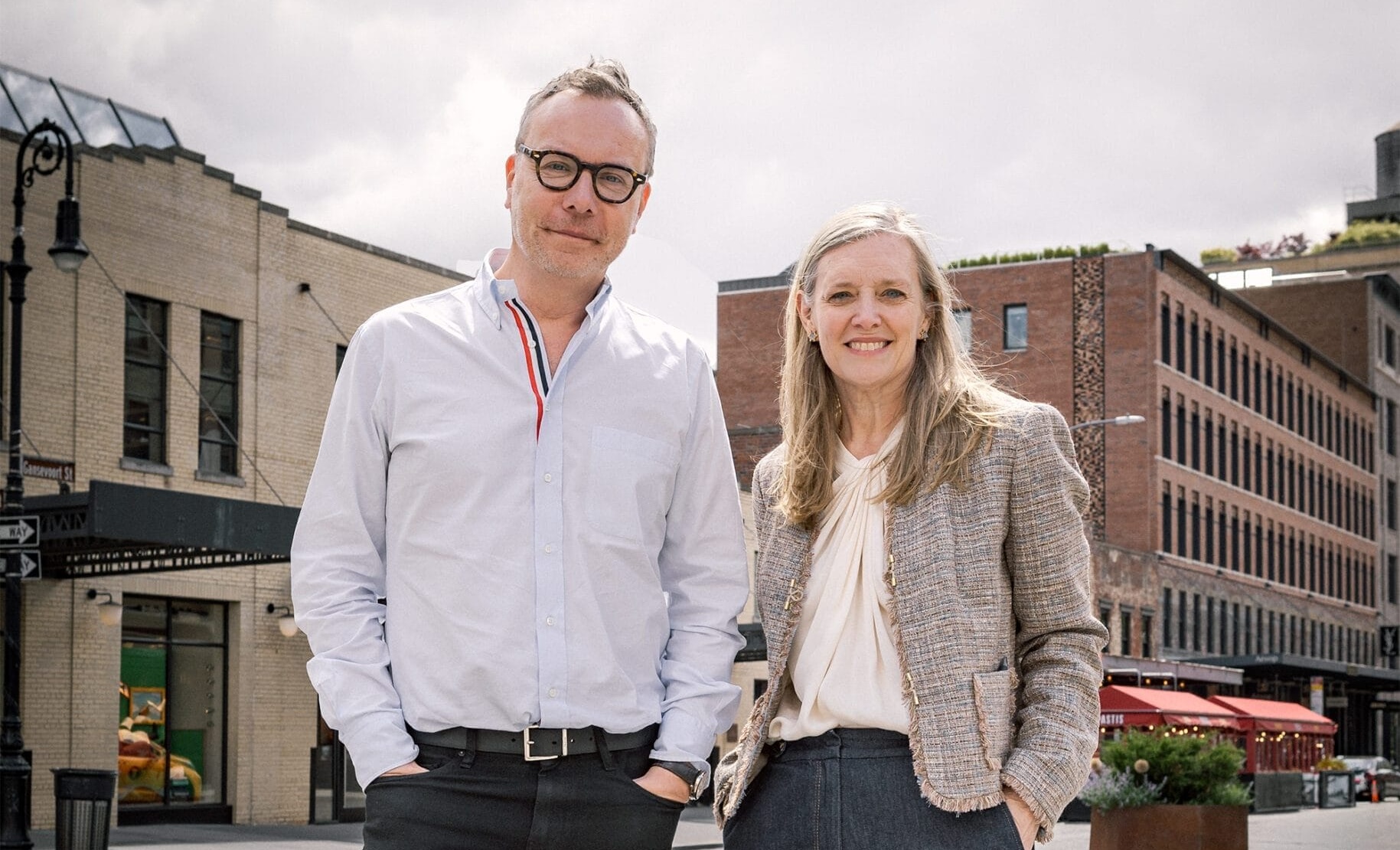
The final change was the largest. After Omnicom acquired Interpublic Group, it combined Ketchum with Golin. On June 10, 2026, Golin Ketchum officially opened with Matt Neale as chief executive and Tamara Norman, Ketchum's former U.S. CEO, as president. Its practices span brand and consumer work, corporate affairs, health, technology, and food, agriculture and nutrition. Existing teams and client relationships were meant to continue while the operating structure became one.
The stated logic was greater creative, data and AI capability. The unstated fact was visible in the branding: neither predecessor's reputation was disposable. A professional-services firm owns few factories or patents. Much of its value sits in client confidence, staff judgment, case histories and a name that helps the next call get answered. Ketchum ceased to be a standalone agency, yet “Ketchum” remained on the door. That is less sentimental than it looks.
The consultancy behind the spectacle
Awards made Ketchum visible, but retained counsel made it a business. In 2024, according to PRovoke Media, the agency added 46 clients. Thirteen existing accounts grew by at least $1 million, while 17 grew by at least 50 percent. Its new U.S. structure placed six sector businesses around shared planning, reputation and creative resources. Behind the campaign images sat the less photogenic work: monitoring risk, preparing executives, testing messages, briefing employees and measuring whether opinion moved.
Ketchum also pushed into AI-assisted reputation work, including OpenAI pilots, synthetic audiences and its KR Sensing listening tool. Emanate, its influence division, combined creator identification, human and technical brand-safety checks, talent negotiation, quick-turn content and full-funnel attribution. The competitive set was broad: Edelman, Weber Shandwick, FleishmanHillard, Burson, specialist shops and every in-house team deciding it could do the work itself.
The merger does not prove that bigger is automatically better. Large networks can add expertise and global delivery; they can also add meetings, overlapping capabilities and distance from the client. The model is most persuasive for multinational organizations with several audiences and genuine cross-border risk. A local company with one market, a narrow brief and a founder who answers the phone may be better served by a smaller specialist.
Ketchum's useful lesson is narrower and stranger. Durability did not come from defending the original form. The fundraising shop added advertising. The advertising firm became a PR firm. The independent joined a holding company. The global consultancy became half of a new name. Each time, identity was treated as an asset to deploy, not a museum to guard. After 103 years, the corporate shell finally disappeared. The word survived.