Keith Ryu’s first business had a modest financial endorsement: one customer paying $50 a month. In 2014, he graduated from Arizona State University and headed to San Francisco to sell it. A job in Arizona was the other option. He chose the product, despite the rather pointed difference between a salary and fifty dollars. The company was called Onvard, and the idea would undergo several revisions before becoming the hiring business now known as Fountain.
The interesting part of Ryu’s career is how often he has let a good idea change shape. He began with online education, moved into employee training, then followed customers into hiring. Years later, he handed Fountain’s chief executive job to someone who had first bought its software. Today he runs Palette Studios, where the arrangements for sharing revenue and profit are part of the proposition. His story rewards attention to the decisions between the milestones.
In February 2012, while studying computer information systems and finance, Ryu started Onvard with friends Diego Ortiz and David Choi. Learning online had frustrated him. He wanted to teach himself subjects such as investing, but a collection of search results offered little guidance about where to begin. The internet supplied information in abundance. A useful order in which to learn it was harder to find.
“You don’t know what you don’t know,” he said. Onvard offered tracks, effectively syllabuses, and missions that learners could complete along the way. By September 2012 it had 117 members and 12 tracks. The project was free and had yet to make money. Ryu was already hearing that small businesses might use it to train employees. A practical commercial possibility had arrived beside the educational ambition.
A little money, a different problem
Ryu’s route west ran through university entrepreneurship programs. He received $7,000 through the Edson Student Entrepreneur Initiative and won money in a pitch competition. That support gave him room to try. He graduated in 2014 with degrees in computer information systems and finance as a Barrett honors student. The early company was small enough for a university grant to make a consequential difference.
He has described a difficult first year with co-founder Jeremy Cai, including inexpensive meals of dumplings, boiled eggs and pizza pockets. Neither founder arrived with the engineering pedigree they thought a technology startup was supposed to possess. These details give the beginnings a useful scale. Before the funding announcements, the problem was how to keep working long enough to find a product that someone would buy.
The customer conversations supplied a different assignment. Employers approached about training software described a more urgent difficulty: finding and moving large numbers of hourly workers through recruitment. Ryu followed that demand. Onvard’s learning-management direction gave way to software for hiring, which became OnboardIQ. The initial plan had served a purpose even when the market declined to accept it. It had put him in conversations with people who had a problem worth solving.
There is a particular discipline in that kind of revision. A founder must remain interested enough to keep going while becoming less attached to the first answer. Ryu’s early story offers an example of that tension. He kept working on software, kept approaching employers, and changed the task the software performed. The continuity was in the effort. The product could be edited.
“It’s all about execution.”Keith Ryu · 2017
Hiring by the hundred
Hourly hiring gave the founders a specific market. A delivery business or retailer may need to recruit many people repeatedly, across locations, with applicants moving through the process at different speeds. Software built around filling one salaried position can leave a considerable amount of coordinating work untouched. For Ryu and Cai, those unglamorous steps became the business: screening, scheduling, communicating and onboarding.
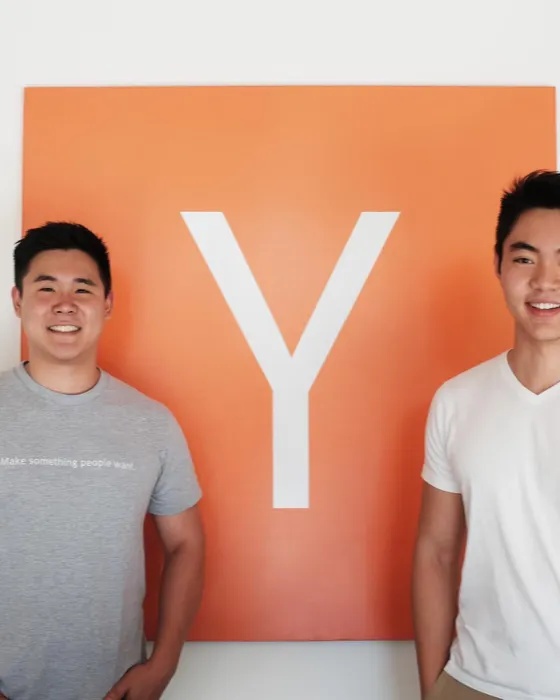
OnboardIQ joined Y Combinator’s Summer 2015 batch. In an October hiring notice that year, the company sought a lead Ruby on Rails engineer. It named customers including Munchery, Sprig, Caviar, Shyp and ZIRX, and said monthly recurring revenue had grown tenfold in three months. The advertisement offers a small, contemporary view of a startup trying to hire the people who would help it handle its own customers’ hiring.
By November 2016, Ryu was recruiting frontend and backend engineers and a data scientist. His notice described approximately a million applicants passing through the system, and work on predicting hiring rates and retention. The business had moved beyond an idea about a broken process. It was accumulating experience with that process at a scale a small team could never reproduce manually.
Origin Ventures led a $9.1 million Series A in 2017. At the time of that financing, the company had helped employers fill more than 400,000 jobs. That September, OnboardIQ became Fountain. Ryu’s announcement emphasized the team’s persistence and its aim of creating economic opportunity for local workers. The new name left more room for a product whose work had spread across the hiring process.
The art of making less to do
Ryu’s product thinking has often returned to the user’s immediate needs. In a 2019 contribution about interface design, he argued for simplicity and attention to the customer’s problem. A hiring platform has plenty of opportunities to become a cupboard full of buttons. Each extra control gives the person using it another thing to understand before reaching the task they came to complete.
Fountain’s mobile application process, automated scheduling and reminders put that concern into practical terms. An applicant could apply from a phone, while recruitment teams could move people through customizable workflows. This is the sort of software whose value is easier to appreciate through the number of interruptions it removes than through a screenshot. Its useful moments can be almost invisible: an appointment made, a reminder sent, a next step understood.
In 2018, Ryu was also discussing artificial intelligence as a way for workplace software to help people prioritize and make decisions. His argument extended beyond storing data and automating routine tasks. He expected tools to become more active in helping users decide what to do next. That interest makes his subsequent work with AI less of a sudden detour than it might appear from the dates alone.
Recognition followed the company’s progress. Ryu appeared on the Forbes 30 Under 30 Enterprise Technology list for 2019. Later that year, Fountain announced a $23 million Series B led by DCM. These milestones supplied public markers for work that had started with a student trying to organize his own learning. They also raised the next question: what kind of organization would the product now require?
The customer who took the chair
Sean Behr’s relationship with Fountain began as an early customer and developed through investment and advice. In September 2020, Fountain appointed him chief executive. Ryu remained with the company to focus on strategic initiatives. The transition put someone already familiar with the business in charge of its next stage, and gave its founder a different role in the company he had built.
Ryu later described the need to move beyond startup customers into enterprise sales. Building an initial product and selling it to young companies demanded different skills from winning and serving larger organizations. His explanation of the CEO search was matter-of-fact. The company’s requirements were changing; the leadership decision had to account for that change. Familiarity with the mission made Behr a natural candidate.
A founder’s title can become an awkward piece of furniture: acquired early, difficult to move, increasingly inconvenient as the room changes. Ryu’s handover is compelling because it treats the job as work with particular requirements. He had brought Fountain through its first stages. Behr brought experience for the next ones. The story gives ambition an unusual form, allowing the business to advance under someone else’s daily leadership.
The relationship also complicates the usual division between customer and company. A buyer can understand the product’s shortcomings from the inside. Over time, that knowledge can become useful advice, investment and leadership. In Fountain’s case, one early commercial relationship became part of the organization’s continuity. The person taking over had already spent years close to the work.
- CustomerUsed the early product
- Investor & adviserStayed close to the company
- CEO · 2020Led the next stage
Capital follows the next market
Fountain’s expansion continued under Behr. In June 2022, it announced a $100 million extension to its Series C, led by B Capital Group. The company identified international growth as the purpose of the financing, with dedicated resources for markets including Australia, France, Germany, India and the United Kingdom. Language support, local workflow templates and messaging were part of the work required.
Geographic expansion gives an abstract phrase like “scale” some ordinary chores. A recruiter needs the right language. A workflow must make sense in its market. A message has to reach an applicant through a channel they use. The money matters, but so do those details. Ryu’s co-founded business had reached a stage where a local hiring problem had to be handled in many different local circumstances.
His own professional life now crosses borders too. He lists New York and Seoul as places he lives, with frequent visits to San Francisco, and describes investing in more than 50 startups and funds. He also offers advice on fundraising, SaaS, recruiting and the differences between Korea and Silicon Valley. The founder who once needed support to move west now participates in other founders’ attempts to build.

A different way to split the proceeds
Palette Studios is Ryu’s current venture, a studio building and operating products with a team in Korea for a global audience. Its stated model gives team members a set share of revenue or profit. That arrangement places the distribution of money near the beginning of the company’s design. A successful product is meant to produce a direct financial return for the people doing the work.
The studio emphasizes making products, attention to design and small teams working with AI. Ryu describes himself as spending many nights coding with AI tools, and shares what the team makes and learns on Threads. The scene is smaller than the enterprise hiring operation Fountain became, but it carries a familiar preference for doing the work close to the product.
Read together, these chapters suggest a founder willing to reconsider more than a feature list. Ryu changed the problem his first company addressed. He changed his place in its leadership. With Palette, he is experimenting with how a team shares the proceeds. The original fifty-dollar customer is a fitting place to begin that story. Revenue first arrived in a very small quantity. Years later, the question of where it goes remains interesting.
Keep the conversation going
Follow the work, revisit the early days, or hear the founders talk it through.
- Palette Studios: Ryu’s current work
- Keith Ryu on LinkedIn · Threads · GitHub
- Ryu’s advisory profile
- Watch: Ryu and Sean Behr on building Fountain
- Watch: EO Korea’s Real Valley interview (Korean)
- Read: Ryu’s ASU interview
- Read: Onvard’s student beginnings
- Read: Fountain’s CEO appointment
- Read: Fountain’s 2022 international expansion
- Read: Origin Ventures on the 2017 investment
- Listen: the 2019 RecTech conversation