Founder · CEO · Plane
Matt Pelc
He has spent the better part of a decade on one stubborn idea: where you live should not decide whether you get the job.
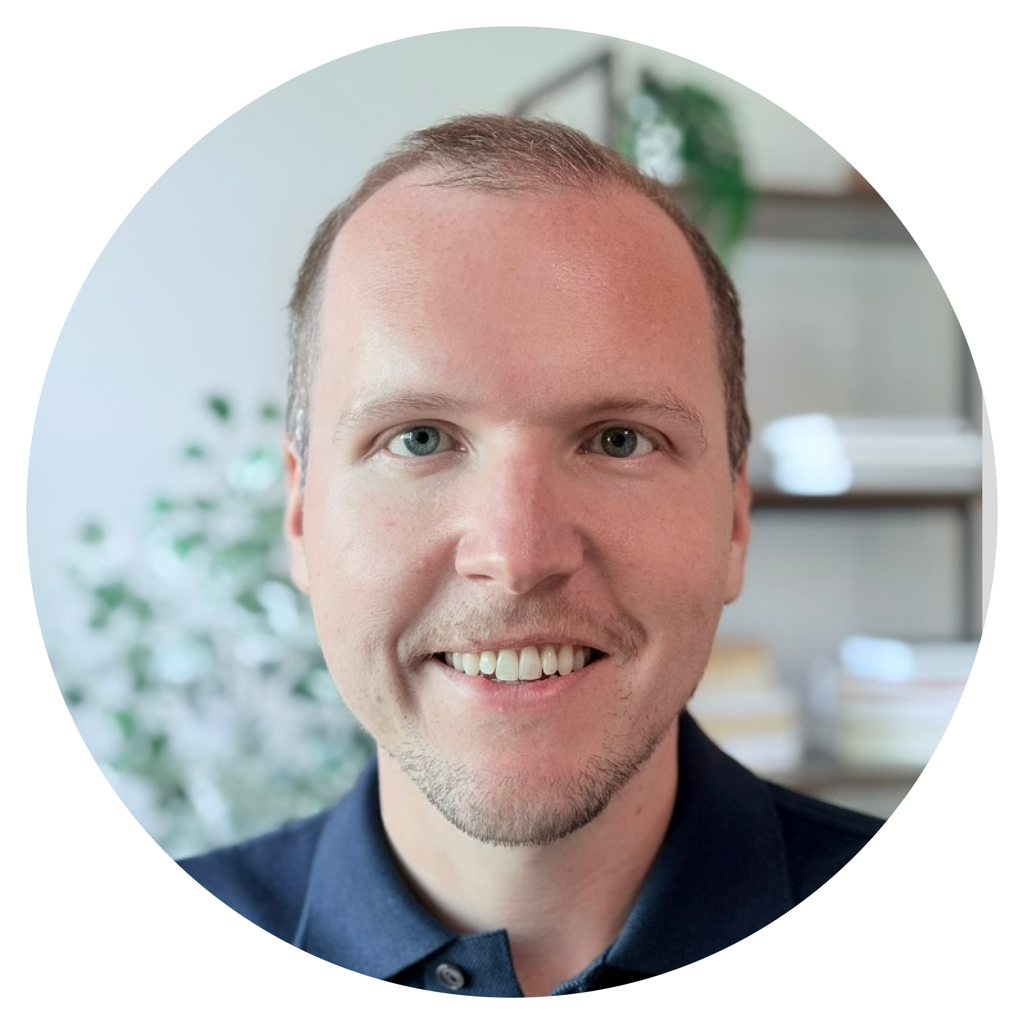
The engineer who'd rather your borders be boring.
He has spent the better part of a decade on one stubborn idea: where you live should not decide whether you get the job.
Rates equalizing across markets brings us closer to a world where you're paid for the value you create.Matt Pelc · on the global labor market
Before payroll, there was code. Pelc's earliest public appearance on record is a 2011 talk at EuRuKo, the European Ruby conference, on machine learning and sentiment classification - in Ruby. He trained as a computer scientist at the University of Cambridge, and the engineer's instincts never left. Years later, in 2016, he was still giving developer talks, including one with the unglamorous, very-of-its-moment title "Building bots for Slack."
That Slack-era context matters. Pilot grew up close to the messaging and marketplace world of the mid-2010s - a London panel in 2016 put Pilot alongside other marketplace startups of the day. Somewhere between the bots and the marketplaces, Pelc found the problem worth a decade: paying people who do not live where the company does.
You can read the whole arc in his speaking history. By 2020 he was no longer talking about bots; he was on podcasts about hiring international employees remotely, about how fintech powers a distributed workforce, about running a payroll company through the strangest labor-market years in living memory. The titles shift from "developer" to "founder" to "CEO."
There is a small biographical wrinkle worth noting plainly: he has gone by two names in public. Pilot's early years list him as Matt Drozdzynski (Mateusz Drozdzynski); more recently he goes by Matt Pelc. Same founder, same company, same fight. The handle that ties it all together - on X, on GitHub, on LinkedIn - has never changed. It is just matid.
Pelc is pragmatic where others are evangelical. He likes remote work, but refuses to sell it as gospel. He likes simple pricing, and he means it.
"Remote work is not for everyone. It requires a lot of effort for the company and for the individuals involved to make it work." Flexibility over ideology.
"Probably 90% of our revenue is per worker, per month subscription fees." No hidden FX cuts. The pricing is meant to be easy to read.
"The employment type literally becomes - it's in the background, it's completely secondary." Employees and contractors, handled the same way.
"It's about reducing friction and making sure that companies can make the right choices for their business." Software does the heavy lifting.
He wants location to stop mattering in hiring decisions - companies should hire the best person, full stop, wherever they are.
The ambition is for Plane to sit in the modern startup stack next to tools like Stripe and Mercury - the default people layer for new US startups.
A speaking history that quietly traces the pivot from developer to operator.
His handle is the same everywhere - X, GitHub, LinkedIn. Just matid. Consistency as a personal brand.
His personal site lives at matt.tm, a tidy two-letter domain. Of course it does.
He once declared publicly that being quick on email and text is one of his favorite things. The man replies fast.
His first recorded talk was about machine learning - in 2011, in Ruby, years before "AI" was every pitch deck's first word.
He renamed an entire company rather than fight over a crowded name. Pilot became Plane, and nobody missed a paycheck.