The first Spott was a modest machine. Feed it an interview transcript and a CV, and it would write the polished candidate report that an executive-search consultant might otherwise spend an afternoon formatting. It was practical, legible and rather sensible. This was precisely the problem.
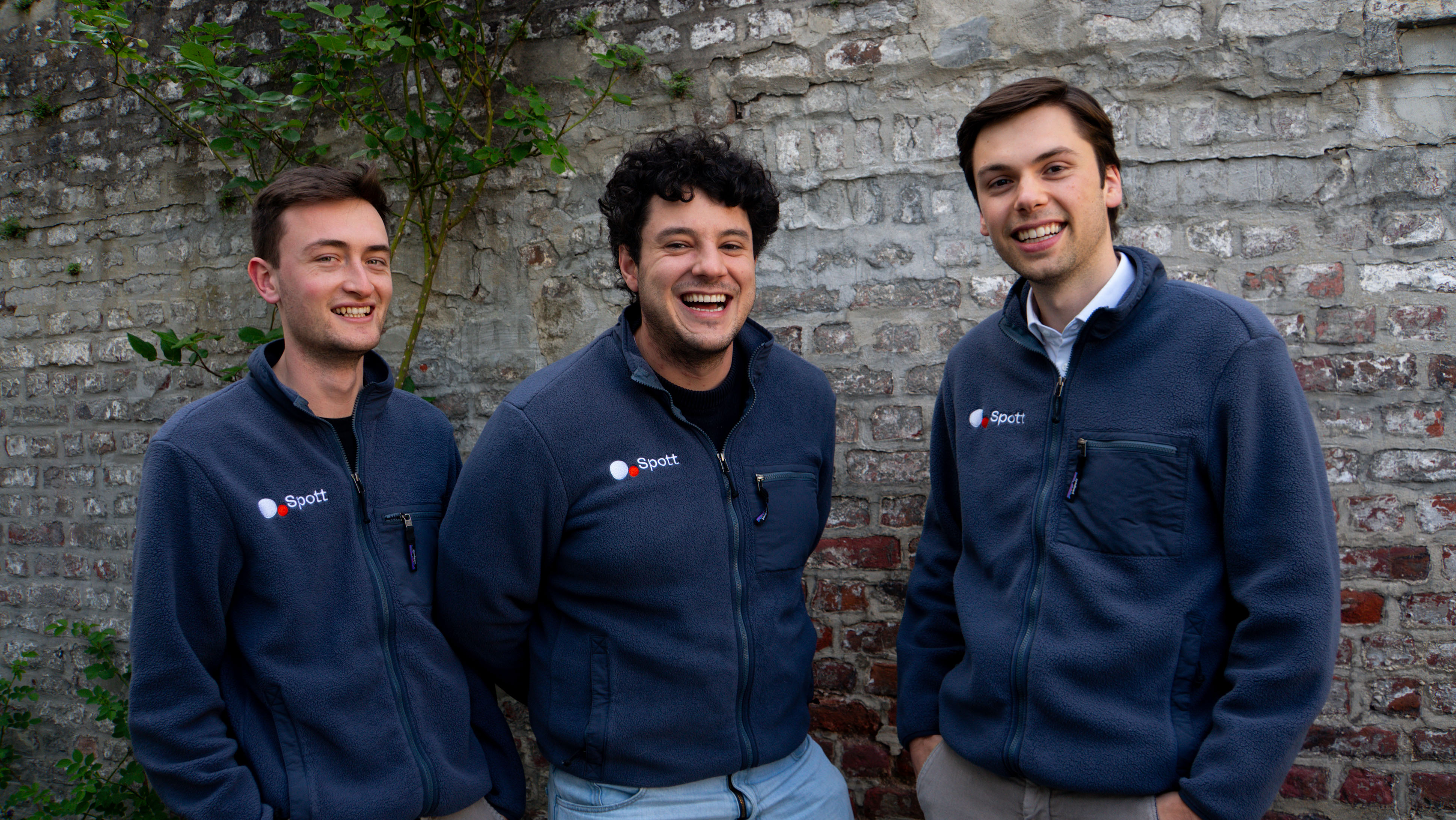
Lander Degrève, Manu Vanderveeren and Samuel Smeys had met as students at KU Leuven, then dispersed to Bain, McKinsey and BCG. On consulting projects across Europe, Britain and the Middle East, each kept finding recruiters trapped in the same ceremony: finish the call, type the notes, copy the message, update the record, change the stage, repeat. The applicant tracking system remembered that a person existed. It did not remember what that person meant.
The useful version, in 30 seconds
- Spott combines an ATS, recruitment CRM, search, outreach, note-taking, enrichment, analytics and candidate presentations.
- It serves recruitment agencies, not chiefly the occasional in-house hiring manager.
- Public annual pricing begins at $119 per user each month; Pro is $179, with enrichment credits extra.
- The company reports 500-plus agencies, 5,000-plus daily active users and $24.2 million raised.
- The copyable lesson: test the cheap layer, but rebuild when the old foundation blocks the promised outcome.
The sensible plan lasted weeks
At first, the founders tried to put AI on top of familiar systems such as Bullhorn and Salesforce. It was faster, safer and did not require persuading an agency to replace the database that runs its business. It also failed first. A chatbot could sit over a relational database, but it could not recover the intent in a six-month-old call, the nuance in a WhatsApp exchange or the reason a candidate with the wrong job title might still fit the role.
That failure changed their minds about the size of the product. The candidate-report writer with which they entered Y Combinator’s Winter 2025 batch became one feature inside a new ATS and CRM. They paired conventional structured records with vectorized data, allowing the system to retrieve information by meaning as well as exact fields. By Demo Day, the polite little time-saver had become an attempt to replace the machinery beneath an agency.
Calls, notes and messages were copied between a passive ATS and several point tools.
AI added above old systems could draft text, but could not reliably understand the full record.
Search, matching, outreach and reporting moved into one data model.
The archive begins answering back
Spott’s product is easiest to understand through an old database. H.W. Anderson, a roughly 40-recruiter executive-search firm, brought more than 100,000 candidate profiles and years of conversations from Loxo and side tools. The recruiters had not been careless. They had faithfully collected valuable material in a system that could not interrogate it well.
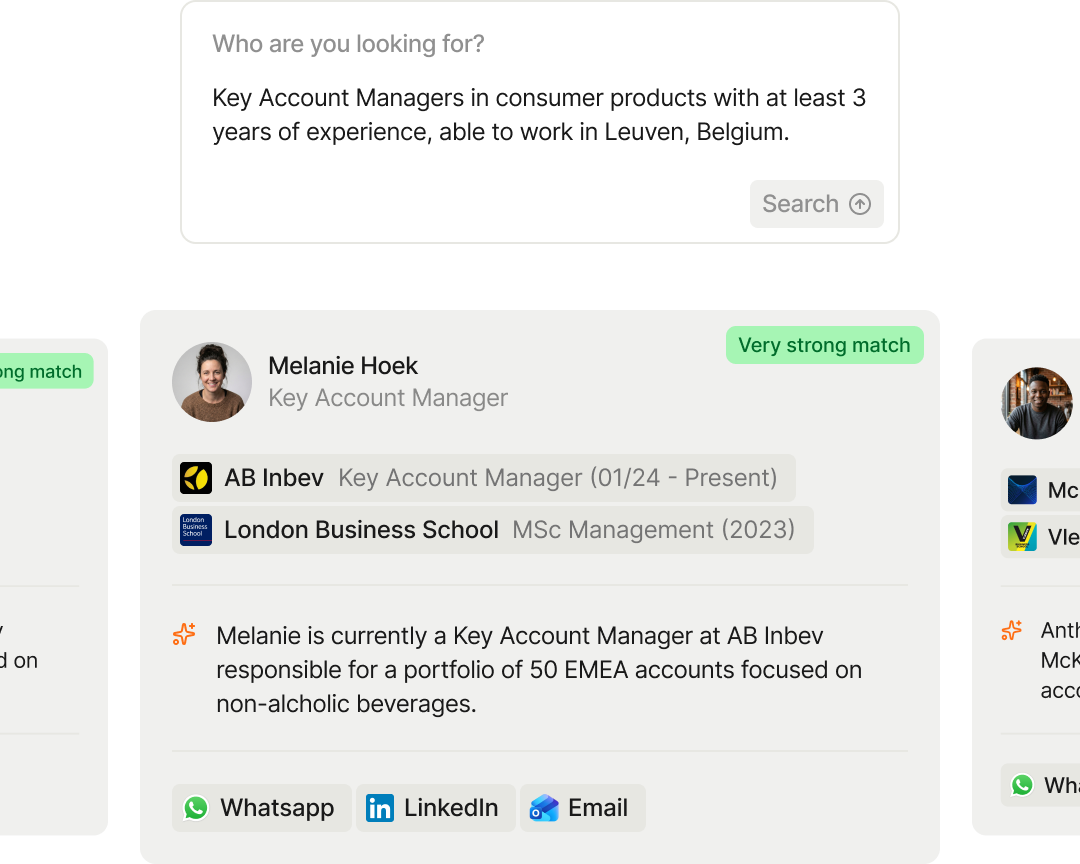
In Spott, a recruiter can ask for the substance: portfolio managers who mentioned relocation, candidates whose call notes imply an appetite for a smaller fund, or people whose experience fits a vacancy even when their title does not. Email and WhatsApp can sit against the same record. Calls become transcripts and summaries. Profiles update, matches explain themselves, and a client-ready shortlist can be produced without beginning another formatting pilgrimage.
“Recruitment succeeds through trust and human judgement.”Lander Degrève, co-founder and CEO
The qualification matters. Spott says it does not autonomously move candidates into pipelines or present them to clients. It searches, enriches, summarizes, drafts and recommends; the consequential step still belongs to a person. In an industry where a false positive has a name, a career and perhaps a current employer, restraint is a product feature.
A system of record must earn the move
The competitors are not obscure. Agencies already run Bullhorn, Loxo, Vincere, JobAdder, Recruiterflow, Recruit CRM, Invenias or a Salesforce configuration. Around those sit note-takers, sequencing tools, data vendors, diallers and CV formatters. Spott’s difference is less a single miraculous feature than a refusal to make those tools strangers. If the call creates the note, the note updates the profile, the profile improves the match and the match begins an outreach sequence, each step inherits context from the last.
| Choice | What it optimizes | The trade |
|---|---|---|
| Legacy ATS + add-ons | Familiar workflows, broad ecosystems | More contracts, handoffs and duplicated context |
| AI point tools | Fast relief for one task | Another tab, with the ATS still passive underneath |
| Spott | One contextual agency workspace | A young vendor and a genuine system migration |
The move is therefore part of the product. Spott describes a typical four-week process: map the export, load a dedicated migration environment, validate the history, train the team, then cut over with a fresh final export and no planned downtime. At CGP Group, the wager is larger. The 200-person firm is consolidating Mercury, Bullhorn and Vincere across 12 countries. Clever matching may win a demo. Complete notes, permissions, APIs and a quiet Monday morning win the account.
The price of one fewer stack
Spott sells per-seat SaaS subscriptions. As displayed in September 2026, Core is $119 per user each month when billed annually, while Pro is $179. Enterprise terms vary by market and contract. AI usage for matching, notes, recommendations and drafting is included; enrichment credits for contact details are the stated extra. A 40-seat firm would therefore see annual list-price software of roughly $57,120 on Core or $85,920 on Pro before extras and any negotiated terms.
Illustrative 40-seat annual list price
Simple list-price illustration, not a quote. Enterprise agreements, currencies, discounts and enrichment usage change the bill.
That only works when the subtraction is convincing. An agency with a large archive, several recruiters and separate bills for outreach, notes, CRM and reporting can compare the subscription with tools retired, hours recovered and placements accelerated. A tiny firm that loves its current workflow, an in-house team that hires intermittently, or an agency unwilling to standardize its data may find the migration and seat price difficult to justify. Semantic search is also not a substitute for precise compliance filters; certifications, locations and permissions still reward exact structure.
The bet got bigger, then faster
Spott says annual recurring revenue rose from around €100,000 in October 2025 to more than €1 million four months later, with zero churn at that point. By September 2026 it reported more than 500 agencies and 5,000 daily active users across five continents. The customer mix widened from specialist firms to H.W. Anderson and CGP Group, while 20 percent of revenue came from Asia-Pacific and 15 percent from the United States.
Capital followed. Base10 led a $3.2 million seed round with Y Combinator, True Equity and Fortino. Balderton then led a $21 million Series A in September 2026, bringing the total to $24.2 million. Spott opened in New York and Sydney alongside Leuven and planned to grow from 44 employees to around 60 by year-end. The next product promise is more proactive: surface likely vacancies, candidate moves and recommended actions before a recruiter asks.

This is also where another company should copy the method, not the vocabulary. “AI-native” is now available by the bucket. The more useful sequence is specific: watch the manual workaround; build the narrow relief; test it against the incumbent’s architecture; admit when that architecture prevents the result; preserve the customer’s history during the move; and keep a human at the final decision. Spott did not win attention because its first idea was clever. It won because the first idea revealed the larger problem, and the founders were willing to be inconvenienced by what they learned.