The Vodka That Cut Its Own Proof in Half - And Bet a Company On It
A trio of Rhode Islanders slashed vodka's proof, slapped a nutrition label on the bottle, and called it the Moderation Movement. Here is how the math worked - and what it cost them.
Every vodka in the world tells you roughly the same thing about itself: it is clear, it is strong, it is 40% alcohol by volume. That last number is so standard nobody thinks to question it. In 2011, three men from Rhode Island questioned it. What if a vodka could carry itself like a premium spirit - smooth, clean, worth the shelf price - and yet contain half the alcohol and half the calories? The answer they built is called KEEL, and for more than a decade it argued, one bottle at a time, that "less" could be the whole point.
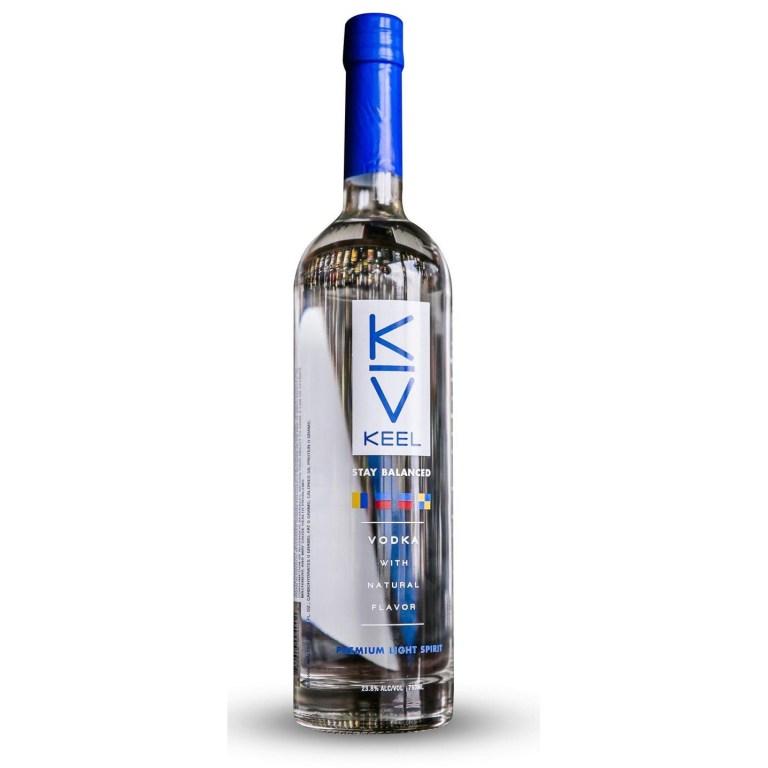
KEEL Vodka is a premium light spirit. The headline specs are the pitch: 23.8% alcohol by volume, 58 calories per serving, zero carbs, zero sugar, gluten-free, distilled from Idaho potatoes rather than wheat. The company markets it as the world's first premium light vodka, and whether or not you accept the superlative, the positioning is unusually honest. KEEL was among the first spirits brands to print a full nutrition label directly on the bottle - a small act that turned out to be the brand's entire personality.
01 / THE MATHHalf the proof, on purpose
Standard vodka sits at 40% ABV because regulation requires vodka to be at least that strong. KEEL sidesteps the category by classifying itself as a light spirit, which lets it land at 23.8%. That is not a rounding error - it is close to half the alcohol of a typical pour. The calorie count follows the same logic. Alcohol carries roughly seven calories per gram, so cutting the alcohol cuts the calories almost automatically. A serving of KEEL lands at 58 calories, less than most light beers, and because it is distilled from potatoes it carries no gluten and no residual sugar.
Alcohol by volume: KEEL vs. a standard bottle
The strategic bet inside that number is subtle. A weaker spirit is easy to dismiss as a lesser one. KEEL's counter-argument was to treat lower proof as a feature aimed at a specific person: the drinker who wants a second or third round and still wants to feel fine in the morning. The company gave that idea a name - the Moderation Movement - and a hashtag, #staybalanced, leaning on the nautical meaning of a keel as the part of a boat that keeps it upright.
"When we started KEEL, we made a commitment to do things honestly, with integrity, and putting a nutrition label on the bottle was one of the first things we did."Bill Dessel, CEO & Co-Founder
02 / THE PEOPLETwo sailors and a lineman
KEEL was founded in 2011 by Bill Dessel and Tom McGowan, Rhode Island natives whose love of sailing gave the brand both its name and its balance metaphor. They brought on a third partner with a very different résumé: Matt Light, the former New England Patriots offensive lineman and three-time Super Bowl champion who spent his career protecting Tom Brady's blind side. In a regional business where shelf placement and bar relationships decide everything, a recognizable New England name is not a gimmick - it is distribution.
The team stayed small. Right up to its acquisition, KEEL operated with roughly four employees, which makes its reach - distribution across about a dozen states, concentrated in New England but stretching to Colorado, Florida, Texas and Georgia - look less like a marketing budget and more like stubbornness. Dessel, who also serves as CEO, has been the consistent public voice of the brand for over a decade.
"It has always been a dream of ours to produce our product - that was conceived in Rhode Island - in our home state."Bill Dessel, Founder
03 / THE LINEFrom vodka to a can
In January 2020, KEEL extended the same logic into a new format with KEEL Sparkling, a hard seltzer. The differentiator was in the base: instead of the malt or sugar fermentation most seltzers use, KEEL Sparkling is built from the company's own potato vodka mixed with soda water, in lemon-lime and grapefruit. It carries 80 calories per 12-ounce can, again with zero carbs and zero sugar. It was a natural move - the seltzer boom was in full swing, and KEEL had spent years making the exact argument seltzer buyers were now making for themselves.
Calories per serving
The through-line across both products is subtraction. KEEL's identity is defined by what it takes out - alcohol, calories, sugar, carbs, gluten - and it sells that absence as a premium at a premium price. That is a harder trick than it sounds. Most "diet" or "light" products fight a perception of being cheaper or weaker. KEEL's answer was consistency: same nautical brand, same transparent label, same reason to reach for it whether you were pouring a cocktail or cracking a can.
04 / THE MARKETLess, not none
KEEL launched years before "sober-curious" became a marketing category, and its position is a useful one to understand. On one side sits traditional 40% vodka - Tito's, Grey Goose, Ketel One - selling strength and heritage. On the other sits the fast-growing zero-proof movement, selling total abstinence. KEEL planted a flag in the middle: less, not none. According to survey data the company has cited, more than half of Americans aged 25 to 34 are actively trying to reduce their alcohol consumption, and that group does not necessarily want to stop drinking - it wants to drink differently. That is the customer KEEL was built for.
The product is defined by what it removes. A whole brand built on subtraction - and priced like an addition.
Competition comes from every direction: full-strength vodka, other low-calorie spirits, the enormous hard-seltzer field led by White Claw and High Noon, and the no-and-low category. KEEL's edge is that it made the moderation argument early and stuck to it long enough to be believed. The nutrition label - once a novelty - now looks prescient as the entire industry drifts toward transparency.
05 / THE DEALComing home
On June 12, 2024, Newport Craft Brewing & Distilling acquired KEEL Vodka. For a brand conceived in Rhode Island but produced elsewhere, the most meaningful term of the deal was geographic: production would return to the founders' home state. KEEL joined a portfolio that already included White Squall Vodka & Gin, Sea Fog Whiskeys and Thomas Tew Rums - a lineup that shares KEEL's coastal, craft sensibility. The financial terms were not disclosed.
Read one way, the acquisition is the tidy ending to a thirteen-year story. Read another, it is the more interesting part: a small, four-person brand outlasted the hype cycle, proved that light spirits could sell, and became attractive enough to buy precisely because the market finally caught up to the idea it started with. For founders, that is the quiet lesson worth copying - a differentiated position, held long enough, becomes an asset someone else wants to own.
06 / THE POURWhat you can actually do with it
Practically, KEEL behaves like vodka with a lighter footprint. It mixes into the standard repertoire - a vodka soda, a light martini, a spritz - where its neutral potato base and lower proof let a cocktail stay sessionable across an evening. For anyone tracking calories or simply pacing themselves at a long dinner or a boat afternoon, the appeal is straightforward: the same rituals, roughly half the alcohol, a number on the label you can actually plan around. The seltzer covers the grab-and-go occasions the bottle can't.
Would it work for everyone? No, and that is fair to say. Drinkers chasing maximum strength per pour will find 23.8% underwhelming, and purists may bristle at the light-spirit classification. KEEL never pretended otherwise. Its bet was that a large, growing group of people wanted exactly this trade, and it spent thirteen years proving the group was real.