Kashish Gupta arrived in San Francisco with the clean optimism of someone planning to become a software engineer and the untidy logistics of someone without a job or permanent place to live. He couch-surfed, took interviews, and discovered that machine-learning employers generally wanted a seasoned developer or a doctorate. He was neither. Meanwhile, the travel idea he kept mentioning to people was producing something interviews were not: prospective customers.
So the job search became a company. Carry was a Slack assistant for corporate travel, an elegant chat window with a decidedly human backstage. In the beginning, Gupta, Tejas Manohar, and their first hire personally booked the flights, hotels, and cars. The interface suggested software; the work behind it resembled a very polite travel agency with excellent response times. It was a useful bit of theater. Before automating a service, they learned exactly what the service required.
Carry entered Y Combinator’s Summer 2019 batch and raised money. Then 2020 made corporate travel an unfortunate place to have placed a bet. The team shut the product down, gave severance to the small staff, and kept enough capital to begin again. Many company histories would hurry through this chapter. Gupta returns to it because it contains the mechanism that mattered.
The skill of losing attachment
The first pivots were slow. The founders loved their idea, which is usually considered a virtue until affection begins billing by the month. After changing direction a few times, attachment loosened. Gupta has said the team moved through four ideas in about three months before reaching the product that became Hightouch. Their question changed from “How can we make this work?” to “How quickly can we learn whether this works?”
- Carry: corporate travel booked through Slack.
- Customer communication: a post-travel attempt to solve another workflow.
- Customer dashboards: a route closer to the data problem.
- Data activation: sync warehouse data into the tools where teams work.
Gupta calls the idea the “speed of dis-validation.” It is a pleasingly awkward phrase for a hard discipline: decide which evidence could kill your thesis, then go look for it. Belief still matters. So does keeping belief on speaking terms with reality.
“You still want to be a believer, but you must get to the pulse of making decisions quickly on your business.”Kashish Gupta, on pivots
The eventual signal did not come from a grand whiteboard session. The founders spoke with roughly 30 businesses and heard a repeated complaint. Companies were centralizing customer information in cloud data warehouses such as Snowflake and BigQuery, but business teams could not readily use it in Salesforce, advertising platforms, email systems, and the other tools where work occurred. The warehouse had become a splendid library whose books could not leave the building.
Hightouch built the route out. The emerging category became known as reverse ETL: if traditional data plumbing loads information into a warehouse, reverse ETL sends modeled data back into operational systems. Gupta has noted that customers supplied the term. That origin suits the company. Its best label, like its decisive product insight, arrived from the people using it.
The same product, a better listener
Finding a problem did not immediately reveal the buyer. Hightouch first tried selling to marketing teams. The architecture made sense to the founders, but marketers were not especially interested in the warehouse underneath their campaign tools. Data practitioners were. They already believed the warehouse should be the source of truth. Hightouch changed its audience without changing the product, and demand began to move.
There is a practical lesson hiding there. A lukewarm market does not always demand another feature. Sometimes the product has entered through the wrong door. Data teams understood the premise and became the wedge. Hightouch could later expand toward RevOps and marketing from a position of technical credibility.
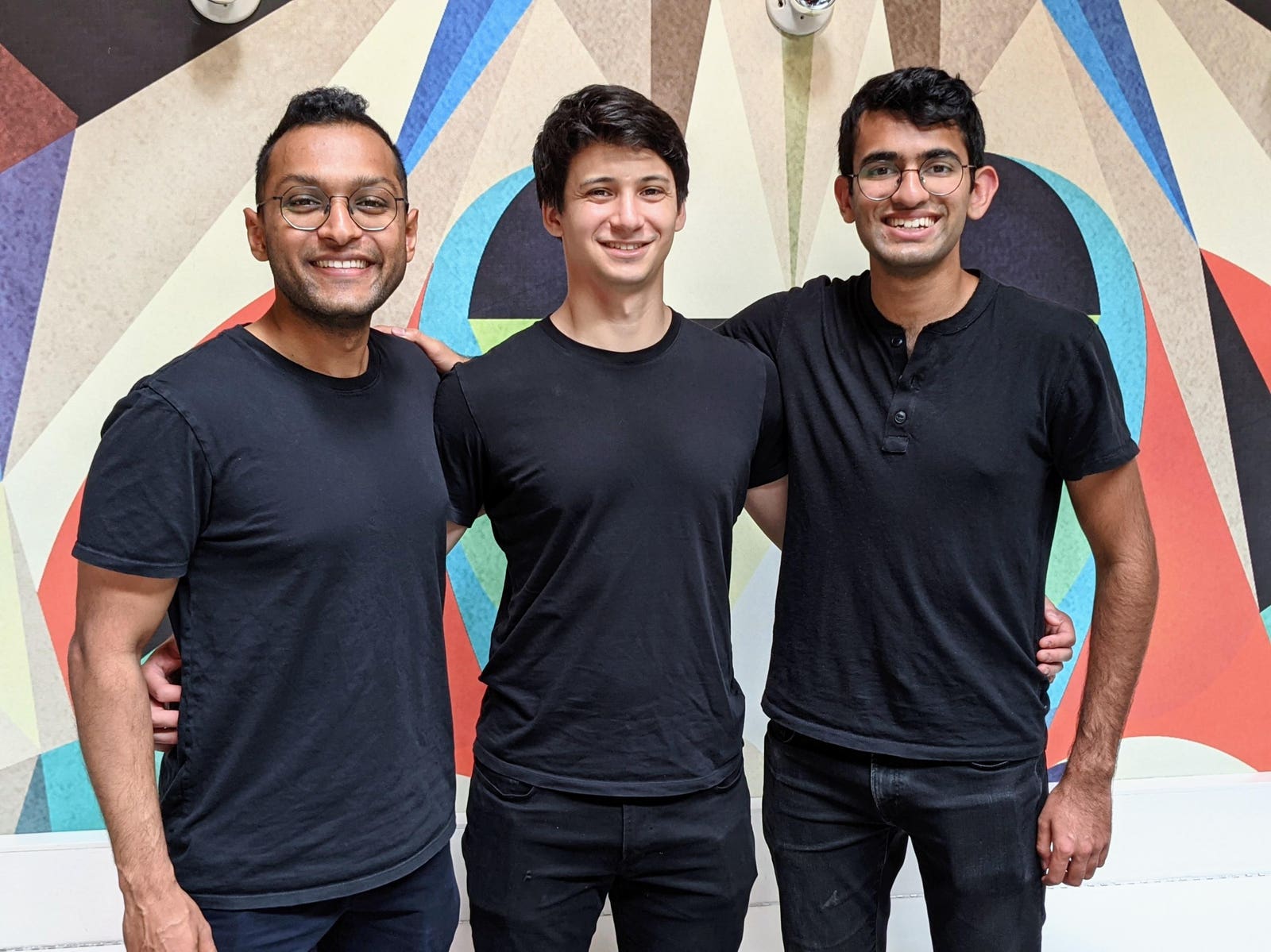
The founding arrangement is as unconventional as the route to the product. Gupta and Manohar share the CEO title; Joshua Curl serves as CTO. Gupta leads product and go-to-market. The three operate fairly independently and gather for consequential decisions. When agreement fails, the person closest to the domain has the final call. Shared leadership becomes workable because authority is not shared vaguely. It is distributed explicitly.
Gupta describes the structure as fluid. As Hightouch grew, each founder could “fire” himself from jobs he had once performed from necessity. The appealing part is not the double title. It is the willingness to treat a role as a current allocation of work rather than a permanent claim on territory.
A business education in fragments
Gupta’s ease between architecture and sales has an autobiographical explanation. He was born in rural Haryana, India, and moved to the Atlanta area at five. His father ran a gas station in Georgia. The young Gupta watched the daily arithmetic of margins, wholesale purchasing, bookkeeping, and keeping a family enterprise moving. His father’s lesson was plain: business is learned on the job.
At the Gwinnett School of Mathematics, Science, and Technology, Gupta found a demanding public STEM education and learned to value process over results. At the University of Pennsylvania, he began with business and economics at Wharton, then gravitated toward engineering, computer science, databases, robotics, and machine learning. Hackathons offered a particularly persuasive curriculum: an imagined thing could become a working application before the weekend was over.
He also tried entrepreneurship early. Small World Learning explored interactive education. Mama’s Cookin’, started at Penn, was a marketplace where students could buy and sell home-cooked food. A stint at Bessemer Venture Partners put him on the other side of the pitch table, sourcing young companies and explaining them to investors. These experiences do not form a neat ladder. They form a toolkit: technical curiosity, marketplace scars, investor vocabulary, and respect for the person doing the work.
One of Gupta’s more revealing memories comes from a New York internship. Standing on a handsome rooftop, he noticed that every neighboring roof seemed slightly higher and more desirable. The race, he realized, would keep inventing another finish line. He concluded that comparing himself with other people was less useful than comparing his present with his own past. It is a modest philosophy for someone in an industry that measures itself in funding announcements.
“It is only useful to compare yourself to where you used to be.”Kashish Gupta, on ambition
From moving data to giving it judgment
Hightouch’s scope widened. Reverse ETL became data activation, then a composable customer data platform: marketers could build audiences and orchestrate journeys while the warehouse remained the source of truth. In 2025, the company raised an $80 million Series C at a $1.2 billion valuation and emphasized AI Decisioning. In April 2026, it said annual recurring revenue had reached $100 million. Two weeks later, Gupta, Manohar, and Curl announced a $150 million Series D at a $2.75 billion valuation.
The new ambition is agentic marketing. In Hightouch’s formulation, an agent should do more than generate copy. It should understand customer behavior, campaign results, a company’s real products, its approved images, typefaces, rules, and channel constraints. It should spot an opportunity, propose a campaign, create material that belongs to the brand, send it through approval, launch it, and learn from the outcome.
Gupta argues that marketing has lagged coding and customer support in AI adoption because taste is difficult to verify and brand mistakes are costly. A general model can produce a plausible pizza that Domino’s does not sell, or a logo almost correct enough to be dangerous. Hightouch’s approach connects the agent to the places where the truth already lives, including customer warehouses, content systems, design files, and campaign platforms. For visual work, the company has described using code-driven SVG editing to preserve real logos, fonts, and products while allowing controlled variation around them.
This makes the shift from data plumbing to marketing intelligence less abrupt than the fashionable language suggests. The original Hightouch asked where customer truth lived and how to deliver it safely to the moment of action. The newer Hightouch asks the same question about brand truth and creative judgment. The nouns changed. The architecture kept its habits.
The opportunity in an inconvenient truth
Gupta has said his outlook is more opportunity-seeking than risk-mitigating. The phrase traces back to watching his father undertake immigrant entrepreneurship and to his own recognition that privilege creates room to pursue meaningful work. His 2022 Forbes 30 Under 30 remarks carried a related motive: he knew intelligence and effort were common where he was born, and opportunity was not. He wanted to share more of what chance had given him.
The noble version of a founder is a visionary who sees around corners. Gupta’s story is more practical and therefore more transferable. He listened to the market that vanished, the buyers who shrugged, the customers who repeated themselves, and the co-founders who knew their domains better than he did. He was willing to let each answer rearrange the company.
In late 2025, he wrote that returning to hands-on building had made the preceding months his most enjoyable since Hightouch’s early years. Scale had carried him away from the product; AI brought him back toward it. The delight is telling. Beneath the valuations, category names, and co-CEO choreography, Gupta still seems animated by the old hackathon promise: take an idea, make it real, and put it in front of someone quickly enough to learn what it deserves to become.