The room was full of bankers. The accounts were promising. The hospitality was paid for. Kasasa had invited 400 bank and credit-union executives to a Dallas-Fort Worth Hilton event that, CEO Gabe Krajicek later recalled, cost about $1 million. He expected roughly 100 institutions to sign up. He got five or six.
- Kasasa supplies local banks and credit unions with rewards, technology and the people who help sell them.
- Its economics depend on turning an attractive account into someone’s everyday banking relationship.
- A shared brand offers small institutions collective reach while leaving the actual banking in local hands.
01 The million-dollar room
The objection was painfully circular: institutions wanted evidence of a national brand before joining the effort to build one. In 2012, Kasasa signed 25 institutions, about half existing clients converting to the brand. Krajicek says the company considered abandoning it. A sharper commitment to the strategy preceded tripled sales in 2013.
That history gives Kasasa its interesting tension. A community bank sells familiarity. A national brand sells recognition. Putting them together asks a local institution to share part of its identity in exchange for reach. A pleasant conference cannot settle that bargain.
Kasasa occupies the space between a bank’s product menu and its ability to persuade people to use it. It sells technology and marketing services to community financial institutions. The bank keeps the deposits, the lending decisions and the customer relationship. Kasasa supplies capabilities that would be expensive to assemble separately.
02 The reward pays for a habit
For a customer, the offer starts with reward checking. Kasasa Cash pays qualifying interest; Cash Back rewards debit-card spending. Other options target groceries, food delivery or streaming subscriptions. Linked savings can collect rewards automatically. Qualifying accounts also offer nationwide ATM withdrawal fee refunds, within the institution’s limits.
The reward has a job. Monthly qualifications can include debit-card purchases, electronic statements and online-banking activity. Those behaviors help make the account part of daily life. The institution wants a relationship that earns revenue and costs less to maintain; the customer wants a worthwhile return for banking that way.
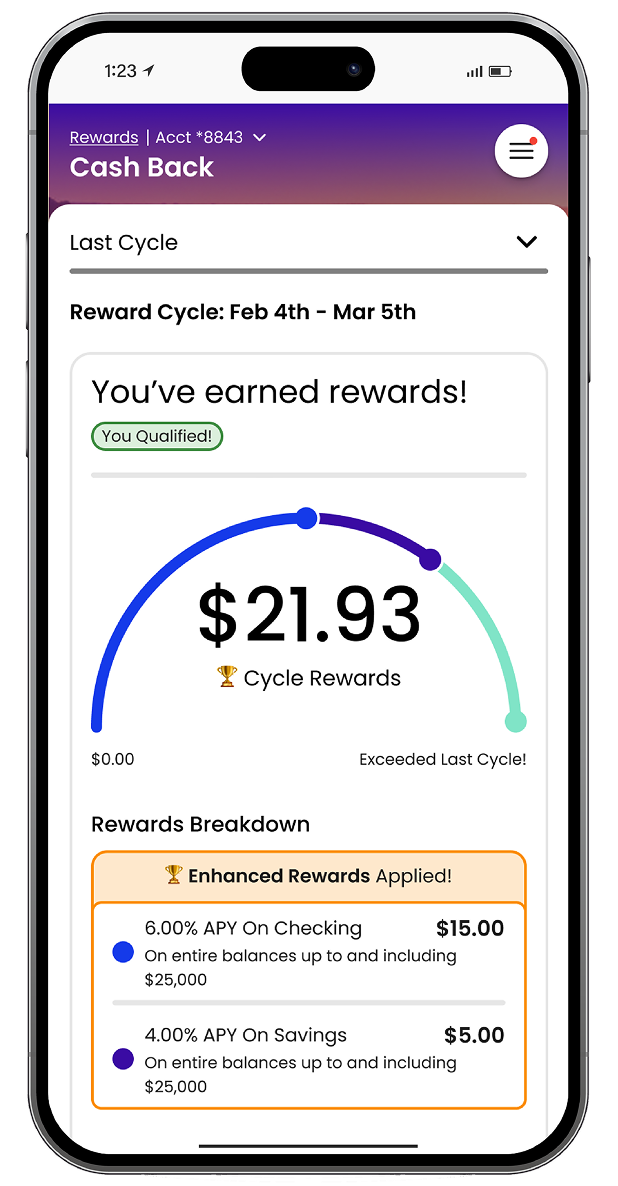
Monthly rewards.
A bank defines the qualifications. A customer decides whether the routine is worth it.
There is no universal Kasasa rate. Each institution sets qualifications, reward limits and cycle dates. Miss a cycle’s requirements and the qualifying rewards disappear; interest-bearing accounts pay the nonqualifying yield. The checking account remains free of a monthly maintenance fee, and the customer can qualify next time. An opening deposit or other charges can still apply.
This is why the useful comparison is personal: can you meet the rules through purchases you already make? A headline yield has little value if obtaining it requires rearranging your month. For the bank, the corresponding question is whether the rewarded behavior produces an enduring, profitable account.
The reward has to fit the customer’s life. The behavior has to fit the bank’s economics.
03 The first thing to fail was permission
Before the branding struggle came a regulatory scare. In a published interview, Krajicek recalled having roughly $1 million left while burning about $300,000 a month. Then the Federal Reserve told the company its original Reward Checking design was not compliant. He says a corrected version received approval three months later.
His account is a reminder that a product can attract buyers and still fail a more basic test. He describes the experience as the beginning of an intense focus on compliance. Today, Kasasa’s support includes disclosure resources, technical assistance and staff training. Permission and execution belong in the product’s cost.

The company began as BancVue in an old school building in Taylor, Texas, in 2003. Its history describes an early discovery: community institutions needed more than software. Marketing and operational resources became part of the offer. Riverside’s January 2016 investment announcement recognized that combination of financial technology and marketing services.
04 A loan with a return ticket
Kasasa applies a related behavioral idea to debt. Paying extra on a loan reduces the balance, but it also makes cash harder to reach. A borrower may hesitate because tomorrow’s repair bill could demand the same money.
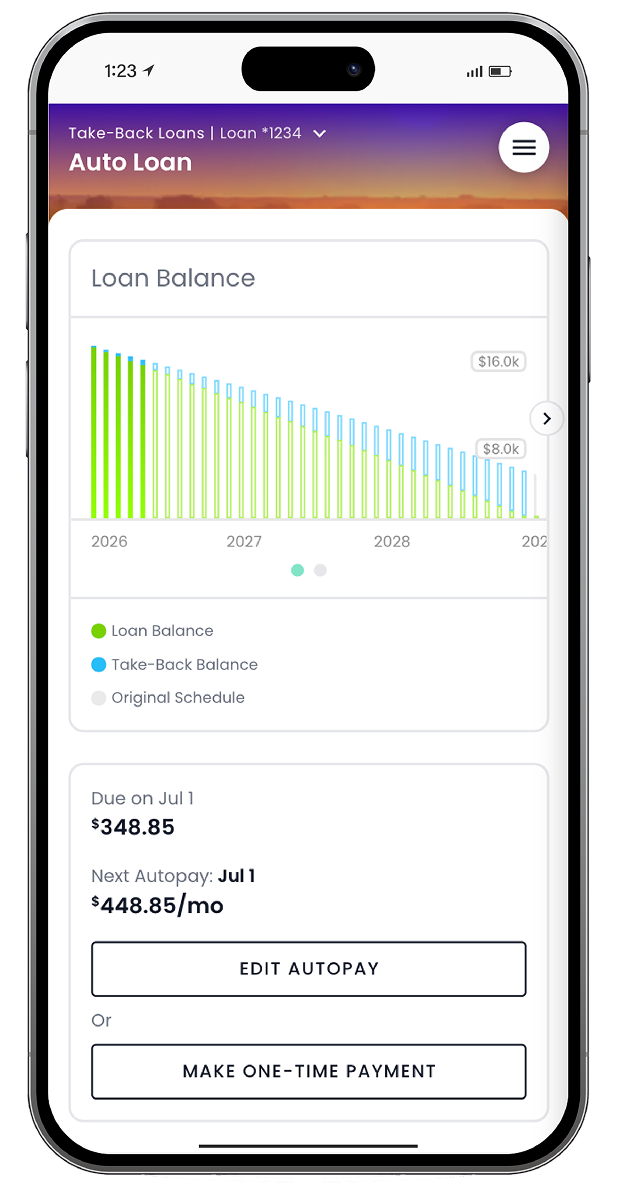
Take-Backs let eligible borrowers access extra principal payments while the loan remains outstanding. The lender still underwrites and services the loan. The feature’s boundary is the original amortization schedule: a withdrawal cannot push the balance beyond it. Paying extra also does not cancel the obligation to make scheduled monthly payments.
You paid $1,000 extra.
Then life sent a bill.
The withdrawn amount goes back onto the loan balance. Principal-only illustration; actual payments, eligibility, interest and terms depend on the lender.
The point is flexibility within an existing loan. It gives borrowers a reason to pay ahead without treating every extra dollar as permanently inaccessible. Kasasa’s 2022 pricing explanation described a setup fee, a monthly licensing fee and a small per-loan fee, with consulting, analytics, marketing and training included in the license.
05 The bank’s other front door
The website is where a local bank has to look competent before anyone meets its competent people. FIRSTBranch combines responsive websites, content management, hosting and ongoing support. Kasasa says the team has built more than 900 websites for banks and credit unions. INMO adds digital account onboarding; third-party applications can also be integrated.
FIRSTBranch can present an institution’s broader product range. Kasasa says support comes with the website cost rather than an hourly charge for changes. That matters to a small marketing team: a new page should not require a negotiation every time an account offer changes.
The broader service package includes market assessments, ready-to-customize creative work and lifecycle campaigns. Kasasa’s marketing page reports more than 1,000 available assets and over $5 million invested in consumer research and creative testing. Shared work gives a smaller institution access to material it could struggle to commission alone.
Consultation adds another layer. Client Directors review performance; reporting covers deposit profitability, peer comparisons and branch results. Frontline training includes workshops, online learning and mystery-shopping calls. A campaign is only partly a piece of creative work. Someone eventually has to answer the customer’s question correctly.
06 Protection joins the rewards club
Kasasa’s newer work adds a different reason to return to online banking. SureLock provides scam-risk assessment, dark web monitoring and one-click locking of a TransUnion credit file. That lock covers TransUnion, rather than every credit bureau. Institutions can offer the service free or use a fee-based model.
In August 2025, Scamnetic announced a partnership to embed its KnowScam product in SureLock. In January 2026, Heritage Community Credit Union announced SureLock for its members. The rollout connected fraud protection with the credit union’s search for alternative non-interest income. In March, SureLock received the Most Innovative Technology Award at America’s Credit Unions Governmental Affairs Conference.
“Members now have a stronger sense of protection.”Craig Engstrom / Heritage Community Credit Union / January 2026
Everyday Rewards takes another route: merchants fund debit-card rewards, which Kasasa advertises at no cost to consumers or institutions. Transaction extracts power the program without requiring a new core or online-banking integration. Feature Hub, meanwhile, brings products into a shared experience inside online banking. The existing digital relationship becomes a place to explain additional value.
07 A tattoo is cheaper than a merger
Kasasa’s internal vocabulary is unusually theatrical for a banking supplier. Employees are Spartans; the company values form the Patch. The careers page offers a subsidy for a Patch tattoo and payment to leave within the first 90 days if the fit is wrong. Its employee emergency Love Fund is less flamboyant: recurring payroll contributions are matched by the company.
The language suits a business built around collective effort. Hundreds of institutions can share research, creative work and technology while remaining independent. Kasasa’s consumer page reports more than three million cumulative account openings since 2009. That measures the history of its programs, rather than today’s active customer count.
What can another business copy? Start with a reward people want, identify the behavior that can fund it, and support the people responsible for delivery. Shared branding works only when participants accept coordination. Reward checking needs customers whose habits fit the qualifications. A digital product needs compatible systems and a credible explanation at the branch.
Kasasa now gives institutions the option to use their own brand, too. That is a practical accommodation to the million-dollar room’s objection. The shared capabilities can remain useful even where the shared name is a harder sell. A small bank need not become large to purchase some of the advantages of size.