The most revealing number in Karl Beutner's career is not a funding round or an acquisition price. It is 350. That is the number of Phase 1, 2 and 3 clinical trials conducted by the two research centers he created inside a Northern California dermatology practice. Before the pitch decks, before the chief medical officer titles, before DermBiont, there was repetition: protocols, recruitment, measurements, adverse events, endpoints, paperwork and the stubborn difference between an elegant idea and a result that can survive inspection.
This makes Beutner an unusual kind of founder. He did not arrive at company building through a single discovery or a sudden appetite for entrepreneurship. He reached it by slowly expanding the radius of his work. One practice became a research operation. The research operation joined a drug-development company. Clinical judgment became executive judgment. Decades after treating the first patients in his hometown region, he co-founded DermBiont in 2017.
The sequence matters. Biotech asks leaders to make expensive decisions under uncertainty. Beutner had already watched hundreds of smaller decisions resolve into data. He knew the distance between a plausible mechanism, a workable formulation, a well-designed trial and an approved product. That distance is where most of the company lives.
Start where the questions are
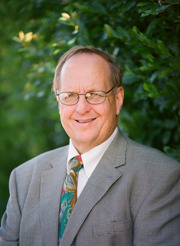
Beutner graduated from Saint Mary's College of California in 1971 with a biology degree. At the State University of New York at Buffalo, he added an M.A. and Ph.D. in microbiology and immunology, then an M.D. His postgraduate training crossed pediatrics at UCLA, infectious diseases and immunology, and dermatology at the University of Rochester.
After training, he returned to Vallejo, California. In 1985 he founded Solano Dermatology Associates, a general and specialty practice. The choice to return home is more than a geographic footnote. It placed his career in a community where he could build something durable rather than rotate through a sequence of institutions. He kept a part-time practice even as his industry responsibilities grew.
Inside Solano, Beutner created two clinical research centers. They conducted more than 350 trials. The arrangement produced an operating education that no single fellowship or executive course could duplicate. Trial work forces precision. A protocol cannot depend on charisma. An endpoint has to mean the same thing on a quiet Tuesday as it did in the room where the study was designed.
It also gave Beutner a front-row view of topical development, a category whose apparent simplicity conceals exacting formulation work. A product applied to the skin still has to deliver the right molecule, in the right amount, to the right layer, consistently enough to produce an interpretable result. The container may be small. The systems problem is not.
“The addition of Double Point Ventures as a major backer alongside continued financial and strategic support from Viking Global Investors and other investors allows us to accelerate the development of our pipeline of novel topical therapeutics.”Karl Beutner, on DermBiont's 2023 Series B
The career was a stack, not a ladder
In 2001, Beutner merged Solano's clinical trial units with Dow Pharmaceutical Sciences. He became Dow's chief medical officer, managing trials, supporting internal development and advising clients. The move did not discard the practice years. It stacked a broader set of responsibilities on top of them: multiple programs, external partners, formulation expertise and organizational tradeoffs.
Four years later he joined Anacor Pharmaceuticals as senior vice president and chief medical officer. Anacor was built around boron chemistry and pursued new medicines across several fields. Beutner stayed until 2010. Pfizer would acquire Anacor in 2016 for $5.2 billion. Dow, meanwhile, had been acquired by Valeant. Those transactions are part of his record, but they are best read as outcomes of long development work rather than as the point of it.
Build the base
Founds Solano Dermatology Associates and later creates two clinical research centers.
Expand the system
Merges the trial units into Dow Pharmaceutical Sciences and becomes chief medical officer.
Lead the portfolio
Joins Anacor Pharmaceuticals as senior vice president and chief medical officer.
Start again
Co-founds DermBiont, bringing the accumulated clinic-to-company playbook into one venture.
Fund the next tests
DermBiont announces a $35.2 million Series B to advance its clinical programs.
After Anacor, Beutner served as chief medical officer to a group of smaller dermatology companies, including Novan, Rogne Biosciences, Chromaderm, SeylanMED, Nflexion and PellePharm. The list reveals a preference for the messy middle of biotechnology, where a program is more than an academic possibility but still far from inevitable. He could move among teams without losing sight of the recurring questions: Is the biology sound? Can the product be delivered? Is the trial asking something answerable?
The Beutner feedback loop
DermBiont, after the apprenticeship
Beutner co-founded DermBiont in 2017 and became its chief executive. The company began with microbiome-based work and later broadened its portfolio through targeted small molecules. Its acquisitions of SeylanMED in 2020 and Chromaderm in 2021 added programs and mechanisms without requiring every idea to originate inside the company.
That buy-and-build approach fits the rest of Beutner's career. The unit of value is not the romance of invention. It is a program that can be developed responsibly. DermBiont has described its work through specific mechanisms and staged clinical milestones, with capital raised in steps as programs progressed.
The 2023 Series B put $35.2 million behind two clinical-stage programs. In February 2024, Beutner announced that enrollment had been completed in a Phase 2b trial and framed the next task plainly: produce the evidence needed for a meeting with the FDA and align on a pivotal Phase 3 design. In August, the company announced positive initial data from another Phase 2a study and adjusted its lead indications.
None of these milestones guarantees the next one. That is precisely why the language of development matters. Completion of enrollment is not approval. Early data is not a finished program. A financing is not a scientific result. Beutner's public comments tend to connect each achievement to the decision it enables, an operator's habit formed by hundreds of earlier trials.
“We believe that positive results from this trial will keep us on track for an End of Phase 2 Meeting with the FDA and ultimate regulatory alignment for designing DermBiont's Phase 3 pivotal trial.”Karl Beutner, February 2024
The other institution he kept returning to
Beutner's work did not stay inside companies. He served on the clinical faculty of the University of California, San Francisco Department of Dermatology for decades. He chaired a professional treatment-guidelines committee during a shift from opinion-based toward evidence-based practice guidelines. He also served as president of both the Solano County Medical Society and the San Francisco Dermatological Society.
Practice
Solano kept Beutner close to the daily realities that development programs eventually have to meet.
Research
Two centers transformed local clinical work into hundreds of structured experiments.
Industry
Dow, Anacor and a series of startups expanded his responsibility from protocols to portfolios.
Service
UCSF, professional societies and Saint Mary's connected private work to shared institutions.
The longest institutional relationship may be Saint Mary's. Beutner was a founding member and first chair of the college's School of Science Advisory Board. He received its Meritorious Service Award in 2018 and was elected to its Board of Trustees in 2019. His wife, Mary, and their three adult children are part of that Saint Mary's connection; all three children attended the college and entered biomedical careers.
There is a pleasing, unforced symmetry here. A biology student leaves in 1971, gathers degrees and trials and companies, then returns as an adviser and trustee. The return does not erase ambition. It gives the ambition somewhere to deposit what it has learned.
What founders can steal
Beutner's career offers no single trick. It offers architecture. Build the next capability beside the place where the evidence is generated. Let roles accumulate rather than cancel one another. Learn regulation before treating it as a late-stage obstacle. Use financing to buy decisions, not applause. Keep a professional home outside the company so the work remains accountable to a field larger than one balance sheet.
The architecture also explains why his late-career decision to co-found DermBiont feels coherent. By 2017, he had already practiced, taught, built trial infrastructure, managed development groups, advised startups and watched companies be acquired. Starting another company was not a reinvention. It was a compression of those roles into one job.
Biotechnology loves a eureka moment because it fits neatly in a paragraph. Beutner's story is made of less glamorous units: the protocol revised before enrollment, the formulation that must work outside a laboratory, the meeting that turns data into a next step, the committee that replaces habit with evidence. Over time, those units compound into judgment.
The number 350 matters because it is large. It matters more because no two trials return exactly the same lesson. A founder who has lived through that variation knows progress rarely arrives wearing a trumpet. It usually arrives as a cleaner question.