Long before Karen S. Carter became Dow’s chief executive, a senior colleague invited her into the CEO’s office. The chief executive was away. Carter had finished graduate school, and Kathleen Bater, a vice president, wanted to talk about her future. She took Carter through the executive wing, all the way to the corner office, and told her to sit down. Carter remembered being astonished. There was the chair, and here was someone suggesting that she belonged in it.
Decades later, on July 1, 2026, the job became hers. The young employee had become the person responsible for a materials science company with roughly $40 billion in annual sales. It is tempting to read the earlier visit as a prediction. The more useful detail is the person who opened the door. Carter’s account of her career keeps returning to people who made room, offered difficult advice, or saw a possibility before she could quite see it herself.
The bus that wasn’t on the itinerary
Carter grew up in Wichita, Kansas, the youngest of three sisters. Her professional name carries a piece of that family with it. The S stands for Shepard, her maiden name. She and her sisters agreed to retain it when they married, in honor of their father. An initial can look like a small editorial preference. For Carter, it is family history taking up its allotted space.
Her decision to attend Howard University involved a modest act of teenage independence. During a high school trip to Washington, she slipped away to visit the campus, which had been left off the official college itinerary. She caught a bus. The drumline, the students, the atmosphere: she wanted to be there. Back home, she delivered her mother a rather restricted set of options: “I’m either going to Howard or I’m not going anywhere.”
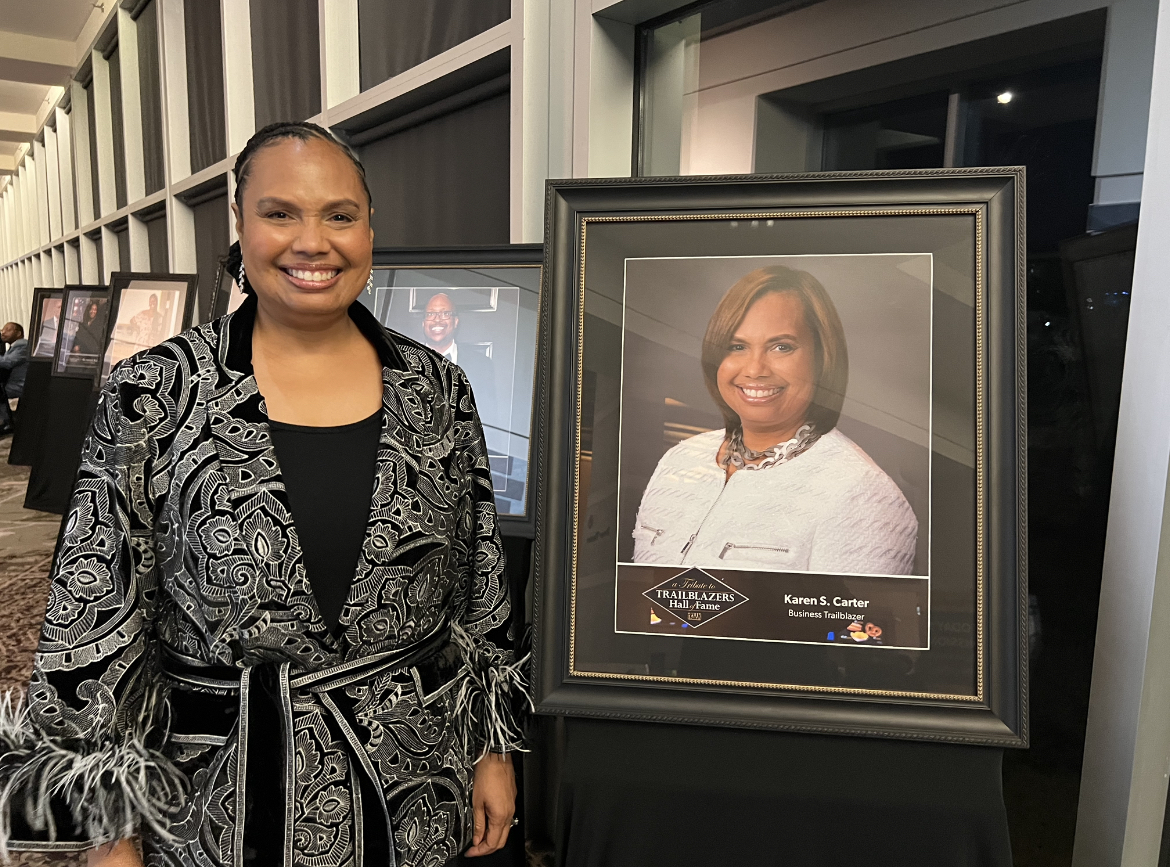
Howard gave her daily proximity to accomplished Black people and the expectation that she could become one of them. She studied marketing, danced with Ooh La La!, joined business organizations and pledged Sigma Gamma Rho. It was an education in finding her place, with a fairly crowded extracurricular calendar.
A job opening, and a little nerve
Paying for college made employment a practical concern. At Howard’s business school, Carter saw a notice recruiting Dow interns. She remembered the opportunity being intended for juniors. She was a freshman. She applied anyway, went through interviews and traveled to Midland, Michigan. Her academic transcript eventually revealed the discrepancy. Dow hired her.
That episode gives the intern-to-CEO story its useful complication. An institution had a requirement; a student had the nerve to test it; someone decided to give her a chance. Carter remembered the hiring manager’s name, Stan Land. In June 2026, she recalled that he had emailed her when her appointment as the next CEO was announced. A recruiting decision had acquired a very long afterlife.
She joined Dow in 1994 and built her career across its businesses. Those years took her through sales, marketing, profit-and-loss responsibility and people leadership. A single employer contained enough different assignments to make staying put a surprisingly effective way of moving around.
- 1994Joins Dow
- 2017First chief inclusion officer
- 2022Packaging & Specialty Plastics president
- 2024Chief operating officer
- 2026Chief executive officer
Shanghai supplied the uncomfortable part
For two years, Carter lived in Shanghai as Asia Pacific general manager for Building & Construction. She also served on the board of Dow’s Japanese joint venture with Sumitomo Chemical. In a 2014 account of that assignment, she said her team had more than doubled business earnings. She placed personal growth alongside the financial result.
The move also supplied the sort of discomfort she later recommended to younger people. She was working in a place where she did not speak the dominant language. Familiar social reference points were harder to find. An international business degree could prepare her for the subject; living there required her to participate in it every day.
There is a useful distinction between wanting an international career and making a life somewhere unfamiliar. Carter did both. Her experience abroad became part of the range she brought back to Dow: different customers, different markets, different assumptions about how work gets done. The business had expanded. So had her frame of reference.
The business leader who took the people job
In 2017, Dow asked Carter to become its first chief inclusion officer. Her account of the change begins with an admission that she had already been doing work she loved. She had spent most of her career on the commercial side. The move required her to reconsider where she could contribute, and eventually brought responsibility for human resources as well.
She continued to describe herself as a business leader. The assignment involved how a company hired, developed and retained people, and how those people could contribute to its performance. In her telling, inclusion belonged inside the operating system of the company. A title and an annual event would hardly be enough.
Asked about pay equity in 2020, Carter emphasized measurement: collect the data, track it regularly, and investigate gaps that refuse to close. It was an answer suited to a company accustomed to scientific evidence. Good intentions were going to need a spreadsheet.
“Data speaks at Dow.”
Karen S. Carter, 2020
She also made the case for gratitude toward earlier generations who had widened access to opportunity. Her own career had depended on such access. Now she was responsible for helping make it less accidental for other people. That is a considerable change in scale, from receiving a chance to examining the systems through which chances are distributed.
In 2022, she described an urgency to leave Dow, society and the planet better for the generations that followed. The ambition was broad; the everyday work she described was specific. It required leaders to examine behavior, decisions and accountability across a global organization. The future would arrive through a great many present-tense choices.
The babysitter test
When Carter explained how she chose managers in 2023, she reached for a comparison that would survive almost any management seminar: babysitters for her grandchildren. She wanted people who cared, showed empathy and helped others develop. The analogy gives a hiring decision the seriousness it deserves. Someone else’s daily experience will depend on the person you select.
She spoke about choosing colleagues whose abilities exceeded her own and encouraging them to accomplish more than they believed possible. She also emphasized direct communication and a willingness to admit mistakes. Her mother’s approach to raising three different daughters offered another reference point: people need different things. Leading them requires paying attention.
This makes her view of leadership unusually easy to picture. A manager has to listen closely enough to understand an individual, then speak clearly enough to help that individual act. Empathy carries an obligation to be honest. A pleasant conversation that leaves someone confused has not accomplished very much.
People, plastics, and the whole company
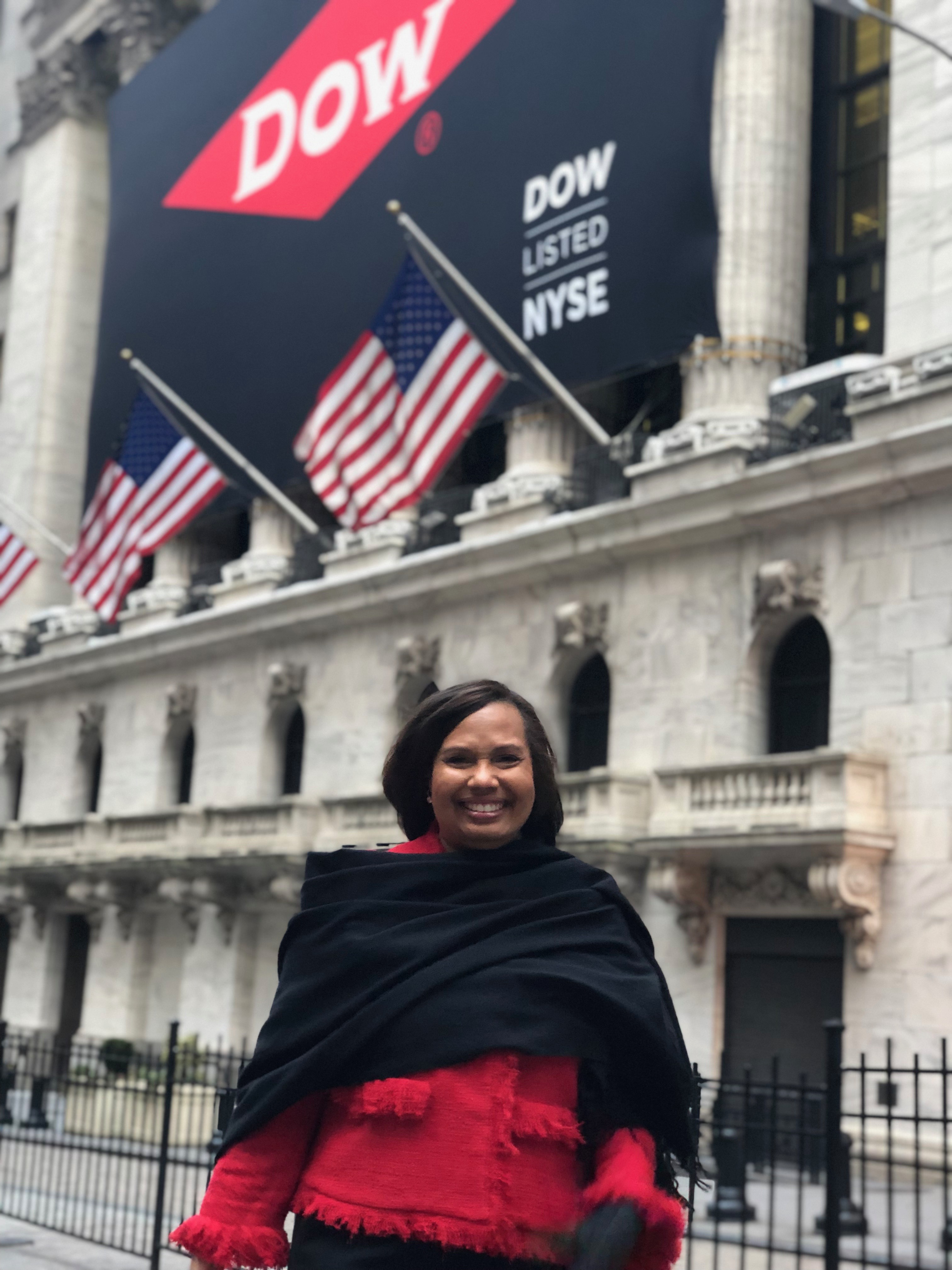
In 2022, Carter became president of Packaging & Specialty Plastics, Dow’s largest operating segment. By the time of her promotion to chief operating officer, the business had more than $23 billion in annual sales. Its work ranged from production assets to the materials customers needed for packaging.
Her tenure included asset upgrades, capacity expansion and work on plant reliability. It also included the acquisition of mechanical recycler Circulus and partnerships intended to increase access to circular feedstocks. Those are tangible ways to approach the ambitions surrounding recycled plastics: acquire capability, arrange supply and make products customers can use.
On December 3, 2024, she became COO. The remit covered Dow’s three operating segments, along with integrated supply chain, purchasing, information systems and commercial functions. The job connected much of what she had learned in separate assignments. Her responsibilities now crossed the boundaries between making materials, buying inputs, managing information and reaching the customer. Those connections had become part of the job description. A customer’s experience depends on all those functions managing to agree with one another.
Annual sales of the Packaging & Specialty Plastics segment described at her December 2024 COO appointment.
The board announced her selection as CEO on April 14, 2026. She also joined Dow’s board when the appointment took effect in July. Jim Fitterling moved to executive chair, with responsibility for governance, long-term strategy and key external relationships. Carter took responsibility for leading the company’s strategy and operations.
Her stated priorities were customers, reliable delivery, innovation and long-term value. These are commitments whose meaning will be settled in execution: what gets produced, what arrives on time, what customers buy again. The corner office gives its occupant a broader view and a longer list of things for which an explanation will be required.
A front porch remains on the map
For all the formal appointments, Carter’s interviews leave room for less corporate ambitions. In a 2019 conversation, she said she wanted to learn bartending. She liked the combination of mixing things and talking to people. The idea acquired a proposed venue: a Dow event. One imagines the networking would take care of itself.
Earlier, she had described unwinding with bingo on her iPad and an episode of The Golden Girls. Those were her reported habits in 2014, a small reminder that even a heavily scheduled global career leaves somebody choosing what to watch at the end of the day.
And through years of travel, she kept naming her mother’s front porch in Wichita as a favorite place. There is something pleasingly exact about that destination. After Shanghai, Midland, the executive wing and the chief executive’s chair, she can still tell you where she likes to sit.