A London restaurant before dinner is a business waiting for its customers. To Kaniyet Rayev, it was also an office waiting for its workers. The tables existed. So did the chairs, the electricity and the people carrying laptops from one unsuitable place to another. He put the two together and called the business Haus.
There is a pleasing economy to the idea. Most new offices require someone to find an office. Rayev found a different timetable. Years later, as the co-founder and CEO of Boxo, he would be asking a related question about software: what else could fit inside something people already use?
The distance between those ventures runs through London, Singapore and a travel app called Mitty. It includes an abandoned business idea, a company he chose to close and partnerships whose beginnings were much less polished than their announcements. Follow those decisions and a particular founder comes into view: someone willing to let an inconvenient detail redirect the plan.
A desk before dinner
Rayev was born in Bishkek and grew up in Almaty. He came to London for university, studying management at Cass Business School, now Bayes. He graduated in 2016. The broad degree suited his ambitions: running a business would involve finance, operations and marketing, and he wanted an education that covered all three.
One early plan grew from his dissertation: a service for buying experiences from other people. During his research, he discovered Airbnb was testing a similar concept and stopped pursuing it. Meanwhile, the research itself had created a more immediate problem. He needed somewhere to sit and work.
In his 2017 account, London’s coffee shops and museums were noisy or crowded. Leaving belongings unattended complicated even a short break. A desk was a rather ordinary thing to want, yet obtaining one had become a daily project. Restaurants closed until late afternoon offered another possibility.
Haus worked with hospitality venues to turn their quiet hours into coworking time. At its first Holborn location, Sway, members could work with coffee, tea, Wi-Fi and power outlets. In June 2017, the advertised general membership was £150 per person per month. The offer included the prospect of meeting other founders and freelancers, which mattered to someone building his own network.
Rayev’s advice to graduates that year was wonderfully measurable: speak to someone relevant to your industry every day. He had been meeting more useful contacts in a few months than he had during years at university. The desk business was teaching its founder how much happened away from the desk.
The travel app that became a different business
By March 2018, another project had a name and a public introduction. Mitty gathered services travellers needed in unfamiliar cities. A person arriving somewhere new might require food, transport and tickets, each supplied by a different local business. Rayev wanted the useful choices gathered together without a fresh collection of downloads.
His early description was specific about the product. Services should be appropriate to the city and quick to open. A prototype took two weeks; an interface prototype used Keynote. At the time of his post, the team had six people. It was an account of something being worked out in public, with user testing and deeper integrations still ahead.
Even the labels required revision. Mitty initially used “home sharing” for a category that led to Airbnb. Beta users found it confusing, so the team changed the tab to the familiar brand name. An elegant category could still leave someone wondering where to tap. The traveller got the deciding vote.
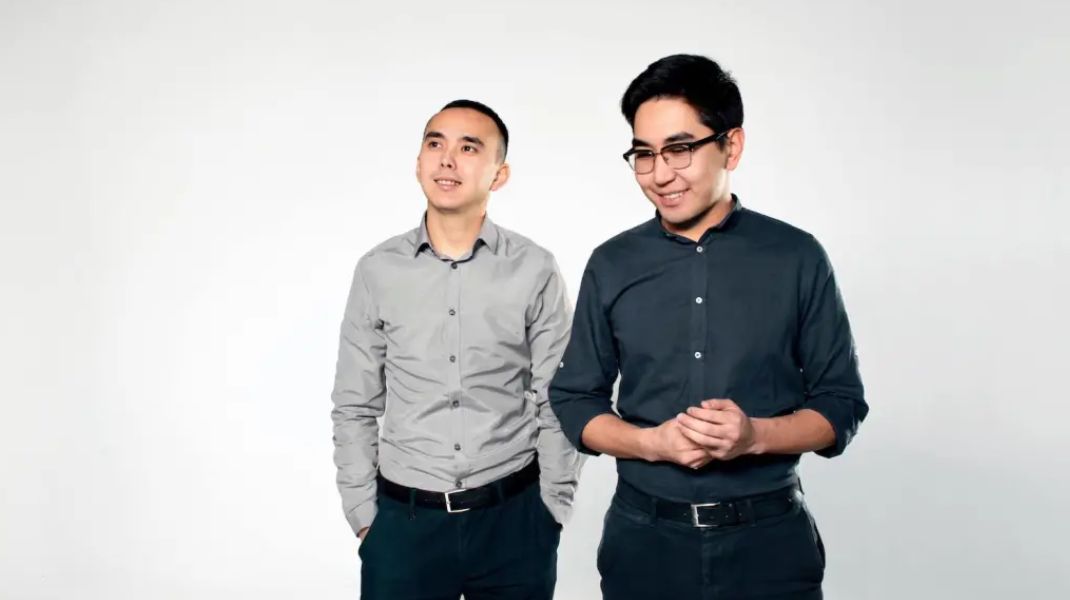
Working with co-founder Nursultan Keneshbekov, Rayev encountered the larger difficulty beneath those individual services: integration. Bringing outside applications together demanded its own technology. They recognised that other companies could need the same help. In 2019, they founded Appboxo, later renamed Boxo.
Antler’s announcement of its third Singapore programme’s investments identified Rayev as CEO and Keneshbekov as CTO. The proposition was already recognisable: an existing native app could offer third-party services, while providers could make their services available as miniapps. The work behind the travel product had become a product of its own.
The change also meant choosing where to spend his time. Haus had been profitable, but crowded spaces made Rayev question how well its experience could hold up as demand grew. He closed it in December 2019. A business he had learned to operate gave way to a different kind of problem.
A conceptual view of the integration model.
Find the people before the product
Boxo’s work can sound abstract until the customer enters the picture. A wallet or bank already has people opening its app. Adding another service means deciding how that service appears, connects and keeps working. Boxo offers a way to handle those additions through miniapps rather than treating every one as an entirely separate development project.
Rayev’s emphasis has repeatedly been on finding someone who wants the result. In 2021, he advised founders to identify potential customers before developing their product. He named distribution, design and LinkedIn among the things he thought were underestimated. Technology, he argued, could receive too much attention relative to those practical concerns.
That ordering helps explain the company’s direction. A new consumer app needs people to discover it and return. An established app has a relationship to build upon. Selling infrastructure to its operator changes where the work of finding an audience falls. Rayev had moved closer to businesses with customers already in place.
RTP Global led the round, with participation from Antler, SciFi VC, Gradient Ventures and 500 Southeast Asia.
In 2022, Rayev announced that financing alongside Shopboxo, a product for creating online stores and reaching buyers through super-app ecosystems. The same year brought inclusion in Forbes’ 30 Under 30 Asia list for enterprise technology and Tatler’s Gen.T Leaders of Tomorrow.
The store builder nevertheless required reconsideration. Acquiring merchants proved expensive, and Rayev saw sellers choosing established marketplaces. Boxo converted the solution into a marketplace service for its business customers. Funding had expanded what the team could attempt; customer behaviour still determined what deserved another attempt.
The long conversation with Airalo
Some of the story is easier to understand through a room than a funding round. Rayev recalled sitting in a windowless room at Antler with Airalo founder Ahmet Bahadir, talking about their plans. Bahadir was an early believer in the idea. Airalo became Boxo’s first miniapp in 2020.
The relationship continued, and in 2024 the companies announced a formal partnership. Airalo supplied eSIM capabilities; Boxo supplied a customisable storefront and the integration into the host app. An app’s customers could be offered mobile connectivity as another service within a familiar setting.
“The right time is just as critical as the right product.”
Kaniyet Rayev, reflecting on Airalo
The memory adds some useful patience to a career full of changes. A product experiment and a commercial partnership do not necessarily mature on the same schedule. Keeping a relationship alive gives an early piece of work another chance to become useful. In this case, the founders had stayed in touch across several years.
Travel, the original setting for Mitty, had returned as one service that other apps could offer. The customer and the packaging had changed. The underlying inconvenience remained recognisable to anyone arriving in another country with a phone that needed a connection.
A new door for the same problem
On April 16, 2025, Boxo launched on Product Hunt with another audience in mind. Rayev described a question from a customer: could Boxo publish AI-generated screens inside an existing mobile app? That request opened a further use for the miniapp platform.
His launch message invited solo founders, independent developers and teams to build screens with tools such as Lovable, Bolt, v0 or Replit, then bring them into an app through Boxo. The proposition addressed a gap between making a feature and placing it where users could actually reach it.
It was a new set of tools around an old point of friction. Producing a screen is one task. Connecting it to an existing application is another. Rayev’s company had spent years working in that space between the service someone could imagine and the service someone could open.

An explanation his friends could use
There is a domestic test for all this infrastructure. Rayev wrote that his parents and friends in Kazakhstan had spent years asking what, exactly, he did. A partnership with Freedom SuperApp finally supplied a convenient answer: an eSIM service inside a product people back home already knew.
He described the pleasure of seeing friends use it organically. For someone whose business generally sits inside somebody else’s app, that is a particularly concrete kind of recognition. An explanation that once required a discussion of platforms could now begin with a familiar icon on a phone.
Rayev lives in Singapore, but Kazakhstan remains home in the way he talks about that launch. The career has crossed borders repeatedly. Its small satisfactions can still be local: a friend trying something, a parent understanding the job, a piece of software appearing in everyday life.
The restaurant and the app are different businesses, of course. Still, both reward a second look. A room has hours left in it. An application has room for another useful service. Rayev keeps finding work in the space between what already exists and what someone needs next.