In January 2016, WhatsApp had a peculiar problem. Its service cost roughly a dollar a year, yet even that modest charge was getting in the way. Many users had no debit or credit card. They worried that the little app connecting them to friends and family might disappear after the free first year. The price was small. The obstacle was real.
WhatsApp removed the subscription. In its announcement, the company conceded that the approach “hasn’t worked well.” This is a useful place to begin understanding a company now used by more than three billion people in over 180 countries. Its important early insight was that communication should require very little from the person trying to communicate. Even collecting a dollar could ask too much. A payment system that feels effortless in California can be a closed door elsewhere, especially when a conversation cannot wait.
- Three billion people, one familiar app.
- Free chats; paid business tools and extras.
- The lesson: simplify a repeated task.
02Your address book was the invitation
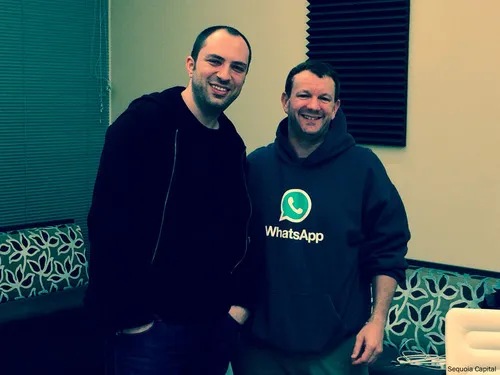
Jan Koum and Brian Acton, both Yahoo veterans, founded WhatsApp in 2009. The original application told contacts what someone was doing. Messaging arrived that summer. The company that helped displace SMS began with something closer to an availability notice. The name, inevitably, was a joke: What’s up?
Its practical appeal was less whimsical. Messages traveled over the internet, bypassing per-message SMS charges. A phone number supplied identity, and the address book supplied people to talk to. Users did not have to construct another social circle from scratch. Someone already had your number; now that person had a reason to install the app.
The founders kept their ambitions narrow. Acton’s note on Koum’s desk read, “No Ads! No Games! No Gimmicks!” Sequoia described an engineering operation with 32 engineers in 2014, using Erlang for the messaging infrastructure. That historical snapshot says something about focus, though it should hardly be mistaken for today’s headcount.
03Facebook bought the habit
When Facebook announced the acquisition in February 2014, WhatsApp had more than 450 million monthly users. About 70 percent were active on a given day. The announced package was approximately $16 billion in cash and shares, plus $3 billion in restricted stock for employees and founders. Facebook was paying for a communication habit already established across borders.
The app now covers text, photos, documents, voice notes, location sharing, and voice and video calls. Families use it across countries; friends arrange dinner; customers ask shops whether something is in stock. Its usefulness comes partly from this untidy mixture. The same place can hold a baby photograph and a delivery update.
In 2016, WhatsApp completed its integration of the Signal Protocol, bringing default end-to-end encryption to personal conversations. That made a technical protection part of an ordinary action: send a message. Users did not need to become cryptographers before calling their mothers.
04The shop moved into the conversation
WhatsApp Business gives smaller businesses a recognizable profile and tools such as quick replies, greetings, and away messages. The Business Platform supplies APIs for larger operations to connect messaging with customer-service systems and automated workflows. These are different products for different amounts of organizational mess.
Consider JioMart. In 2022, Meta and Jio Platforms introduced a WhatsApp shopping experience in India that let people browse groceries, fill a cart, and pay within the chat. The interesting step was removing the trip between asking a question and buying something. A conversation became a route through a shop.
The opportunity was already substantial: Meta reported more than 200 million WhatsApp Business app users worldwide in 2023. That is a dated milestone, not a current customer count. In May 2026, it introduced Business AI for eligible Indian businesses, offering customer responses, lead capture, and appointment booking without additional coding tools.
“No Ads! No Games! No Gimmicks!”Brian Acton’s note to Jan Koum, described in 2014
05Free to talk. Pay to reach.
The modern business model has several doors. Business Platform charges depend on the delivered message’s category and recipient market. Service replies within the customer-service window are free; certain utility replies are free too. Integration work and a provider’s charges can add to the bill. There is no single price that describes every business conversation.
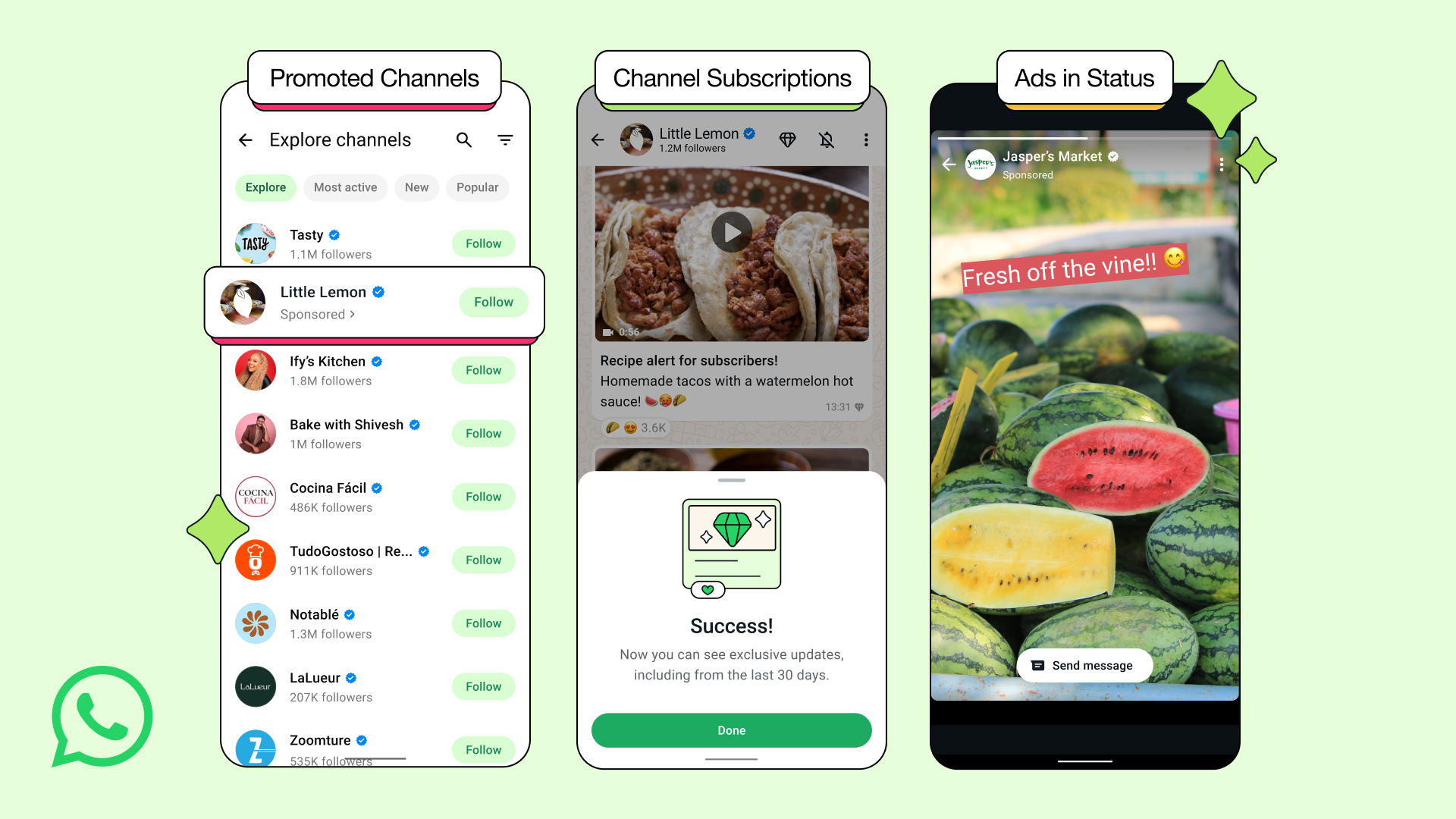
Advertising adds another door. In June 2025, WhatsApp announced ads in Status, promoted Channels, and Channel subscriptions in the Updates tab. Meta said personal messages and calls would remain encrypted and would not determine those ads. The old anti-advertising stance had changed; the company’s stated reasoning was to commercialize discovery away from personal chats.
By September 2026, an optional WhatsApp Plus plan was part of Meta One, with an announced starting price of $2.99 monthly for features including themes and more pinned chats. Prices and availability vary. Basic messaging remains free, apart from connectivity costs. The company that abandoned a compulsory subscription now offers an optional one.
Data costs apply
Market and category dependent
Availability varies
06The person at the other end
WhatsApp competes for conversations with Signal, Telegram, Apple Messages, and other local favorites. Its practical advantage is often the person already waiting on the other end. For a shopkeeper, an elegant new app matters little if customers never open it. For a family, switching requires persuading the family.
That also sets the limits. A business should first establish that its customers use WhatsApp and want to hear from it. Unwanted promotions make an intimate channel irritating. Encryption protects message transport, but a business receiving a message can still store it. A locked delivery route does not decide what the recipient does next.
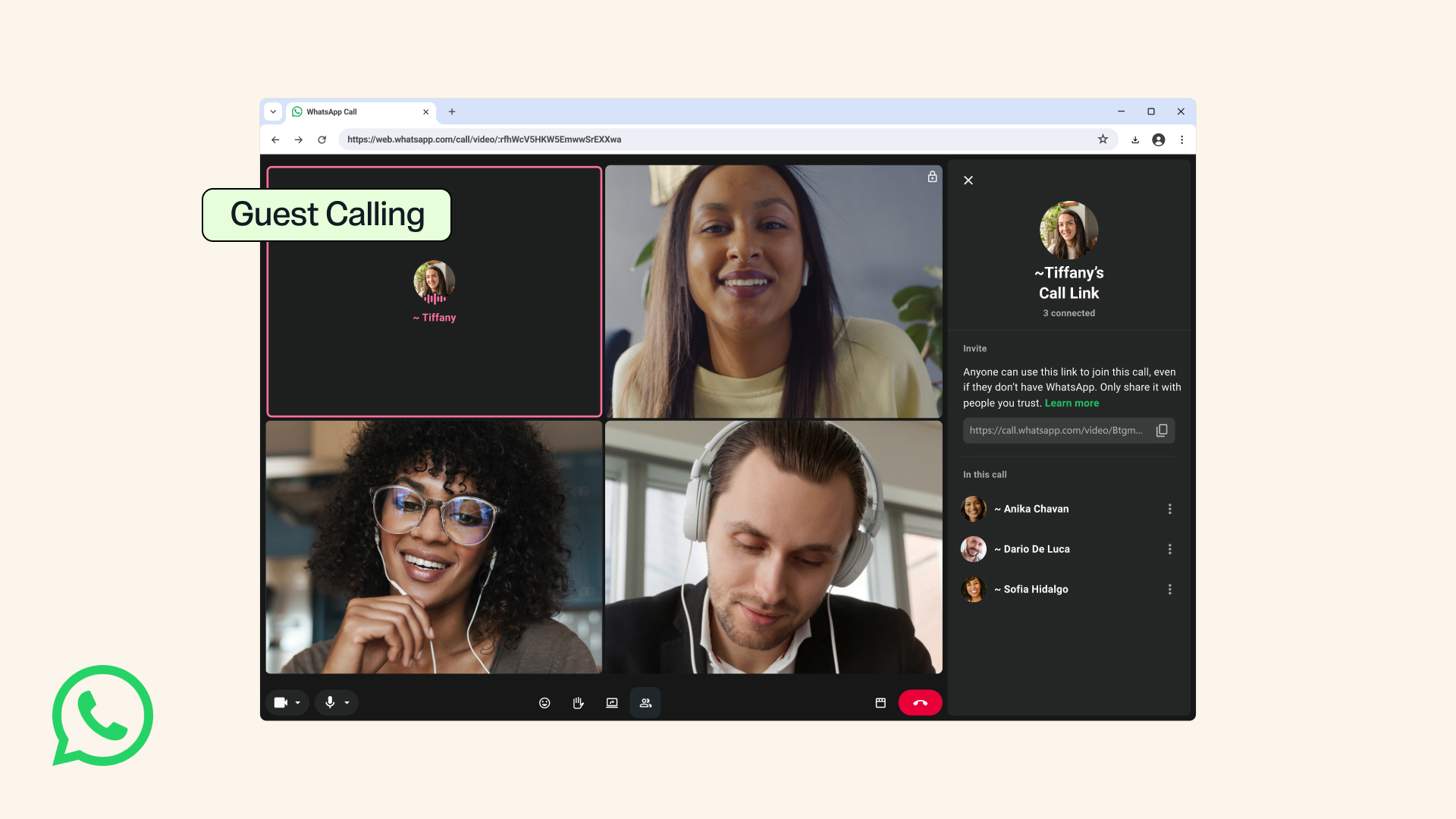
The product continues to remove small obstacles. In October 2026, WhatsApp announced guest calling: hosts can invite people without accounts to join from a computer browser, with host approval. It is a familiar maneuver for this company. Find the extra requirement between two people, then see whether it can go.
07What a smaller company can borrow
The useful lesson is specific: start with a recurring task and reduce the steps required to finish it. Use relationships customers already have. Separate a simple entry product from tools that more demanding customers will pay for. Revisit a price when payment itself excludes the audience.
Those choices need the right conditions. They depend on accessible internet, willing contacts, and enough repeated usefulness to create a habit. A service nobody’s customers use cannot borrow WhatsApp’s network by copying its interface. The achievement began with a much more ordinary question: how much trouble should it take to say hello?