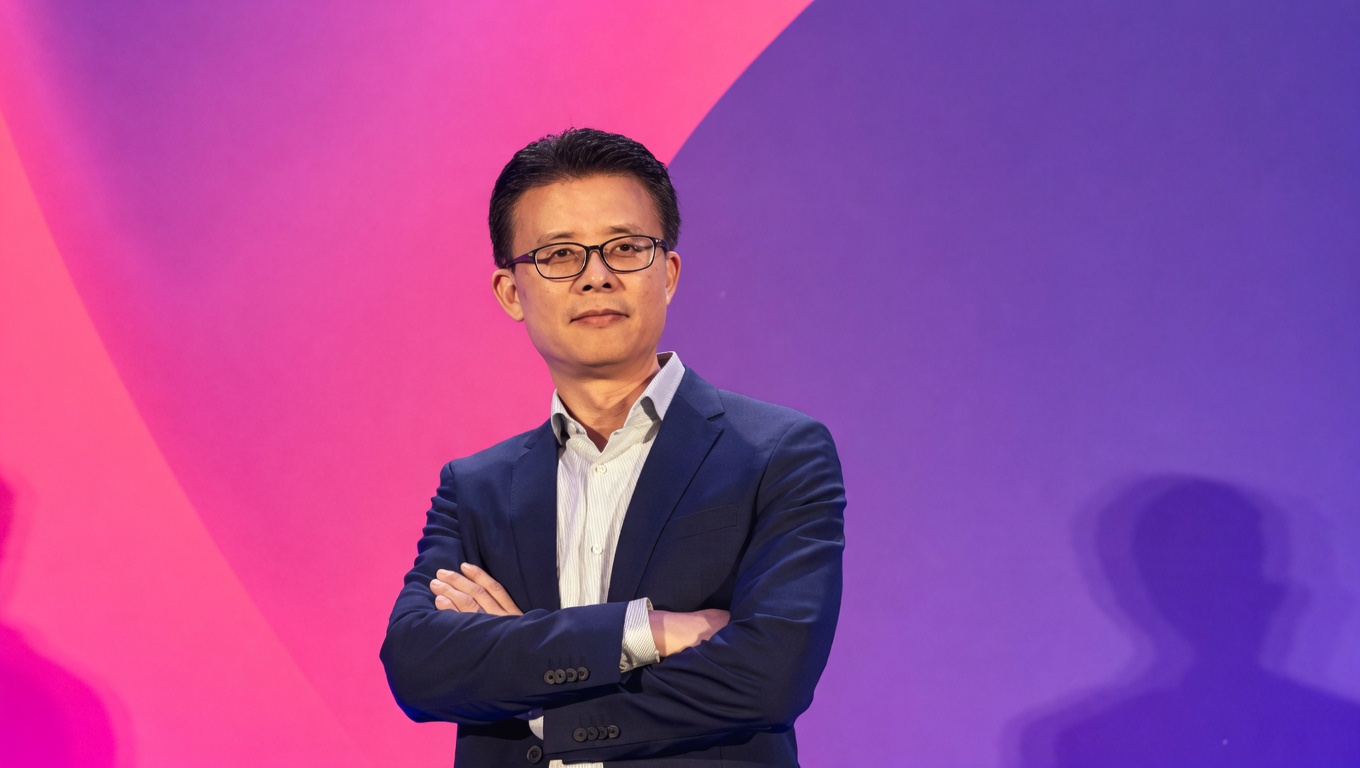
Running the Factory Behind the Cloud
Most people who work in technology have never heard of Accton. That's the point. For 37 years, this Hsinchu-based ODM has quietly manufactured the network switches, routers, edge servers, and SmartNICs that go inside the racks of the world's biggest cloud providers. No consumer brand. No retail box. Just engineering contracts and a relentless focus on hardware quality that keeps the hyperscalers coming back.
Jun Shi arrived in May 2023 - first as Executive Vice President and Chief Revenue Officer, then, three months later, as CEO. The speed of that elevation said something. Accton's board didn't need someone to steady the ship; they needed someone who had built sales organizations at Cisco, driven product growth at Juniper, and survived a startup acquisition at F5. They needed a Silicon Valley operator with deep technical roots. They picked Shi.
His mandate since day one has been uncomfortable in the best way: stop being just an ODM. The world changed. AI compute clusters don't just need fast switches; they need integrated, validated, lifecycle-managed stacks. Enterprises can't hire the teams to assemble disaggregated white-box infrastructure from scratch. The gap between "open" and "operational" had become a chasm - and Accton, with its manufacturing depth and Edgecore Networks' open networking brand, was positioned to bridge it.
"Disaggregation unlocked innovation, but operationalization lagged behind."
Jun ShiThat observation became a company thesis. Under Shi's direction, Accton has stopped framing itself as a box-maker and started calling itself a tech service provider - a supplier of outcomes, not components. In May 2025, that thesis shipped as a product: Nexvec.
Nexvec: Open Infrastructure, Day 0 Ready
Nexvec is Edgecore Networks' first full-stack, turnkey open infrastructure solution for Enterprise AI. It integrates disaggregated networking, composable compute with dynamic GPU allocation, unified storage, and a lifecycle management layer called the Nous controller - from deployment through Day 2 operations.
The pitch is pointed: open infrastructure that actually works out of the box, without compromising on openness or vendor flexibility.
In his own words: "We're moving beyond networking to deliver a full-stack solution, integrating disaggregated networking and composable compute to simplify Enterprise AI adoption." And the clarification that matters: "We are not stepping away from openness - we are stepping up."
That last sentence carries weight. Open networking's critics have long argued that the disaggregated model - buy your own chips, your own OS, your own management tools, assemble the whole stack - creates operational complexity that most enterprises can't absorb. Nexvec is Accton's answer: the benefits of open infrastructure, packaged with the operational guarantees enterprises actually need.
25 Years in Silicon Valley's Networking Engine Room
Jun Shi started at Cisco in 1998 - the year Google was incorporated, when the internet was still being bolted together. Over 13 years in San Jose, he moved through product management and technical marketing roles, working on network convergence during the period when IP networking absorbed everything from voice to video to storage.
Juniper Networks came next. Seven years, ending as VP of Sales Engineering for APAC - a region where networking at scale is less an aspiration and more a daily operational necessity. Shi's combination of technical depth and commercial instinct became his signature: he could build the product story and close the deal.
Career Timeline at a Glance
Then Volterra. The startup positioned itself as "Edge 2.0" - a distributed cloud platform bridging enterprise applications and edge infrastructure. Shi joined early, building the sales and business development function from scratch. F5 took notice. In 2021, it acquired Volterra for $500 million. Shi stayed through the integration, running VP roles in product engineering and global Volterra sales within F5.
The startup-to-acquisition arc gave him something no amount of corporate ladder-climbing could: firsthand knowledge of what it takes to build revenue from zero, navigate an exit, and operate inside a large company post-acquisition. When Accton's board came looking, they weren't just hiring a networking veteran. They were hiring someone who had done the full circuit.
The Roster
What Accton Actually Does
Accton Technology Corporation is listed on the Taiwan Stock Exchange (TWSE: 2345) and generates roughly $7.9 billion in annual revenue with approximately 4,500 employees. Founded in 1988, it operates through several key subsidiaries - most notably Edgecore Networks, the brand that sells open networking gear to cloud providers, ISPs, and enterprises globally.
The ODM model means Accton designs and manufactures products that other companies brand and sell. For decades, that was enough - the hyperscalers wanted commodity white-box gear they could customize with their own software, and Accton delivered it. But the AI wave changed the calculus. Customers began asking for more: pre-validated configurations, integrated management, lifecycle support. Components weren't the problem; making them work together reliably at scale was.
Shi's transformation strategy addresses this directly. Accton is expanding its contract with customers from "we make the box" to "we make the box work, integrated, validated, and supported." The company has also been selective about strategic investments - joining Cisco Investments and Wistron in backing Aviz Networks, the AI-driven open networking software company, in a $10 million funding round in late 2023.
"We are not stepping away from openness - we are stepping up."
Jun Shi — CEO, Accton Technology / Edgecore NetworksIn His Own Words
"The days of simply delivering standalone boxes are over."
"Disaggregation unlocked innovation, but operationalization lagged behind."
"We are not stepping away from openness, instead, we are stepping up."
"Now, with Nexvec, we're moving beyond networking to deliver a full-stack solution... to simplify Enterprise AI adoption."