The sign said property for sale. Julie Mackenzie and her husband had been talking about a cabin or a farm, the sort of conversation that can remain pleasantly hypothetical for years. They stopped. The land was near Sauk Centre, Minnesota, where her family still gathered long after the older generation was gone. What followed sounds suspiciously like a novelist had been allowed to arrange the facts.
There was an old house, part of it dating to 1890. There was a greening apple tree more than a century old. There was a nearby cemetery Mackenzie remembered visiting as a girl. And there were the names. When she asked the realtor whether Weedeck or Peshek meant anything locally, he pointed out adjoining parcels. Her grandmother was Rose Weedeck. The family line on that ground ran back six generations.
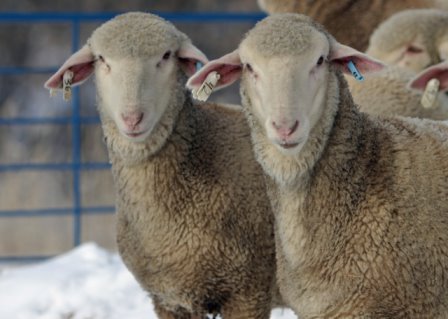
They bought the farm. Later they bought a portion of the neighboring Peshek property, restored the old house and built a working life around the place. The eventual cast included three horses, 27 purebred Rambouillet sheep and a llama named Hotrod, whose talent for minding sheep apparently exceeded the canine competition. Mackenzie dyed, spun, knitted and felted the wool. The sheep wore coats to keep their fleece clean for hand spinners, a detail both sensible and faintly formal. Even the flock had a dress code.
At the same time, Mackenzie commuted to Minneapolis to run a consultancy about change. That is the hinge in her story. The agency and the farm can look like opposite poles - one concerned with brands, audiences and ideas, the other with weather, animals and old timber. In practice, they ask remarkably similar questions. What is worth preserving? What must be rebuilt? How do you make a living system stronger without sanding away the qualities that made it valuable?
Before the sail, a sale
Mackenzie’s business career predates Mindsailing. In 2000, she was chief operating officer of Mackenzie Marketing when Colle McVoy acquired the Minneapolis strategic-marketing company. The firm was reported at the time to have estimated 1999 revenue of $8.5 million. Mackenzie and company president Andrew Mackenzie stayed after the acquisition.
Nine years later, she founded Mindsailing. The name risks being a little too perfect, but the work beneath it is concrete: research, strategy, branding, content, digital communications, workshops and the less glamorous labor of helping organizations make change intelligible. The agency describes itself as independent and woman-owned, based in Minneapolis and drawing on a global network of senior specialists. Its public portfolio spans established brands and startups, with an emphasis on organizations facing disruption.
Mackenzie’s own description of the culture she pursues is “creative, collaborative” and high performing. The order matters. Creativity without collaboration is a private hobby; performance without either can become a spreadsheet with a pulse. Her public writing circles recurring subjects: trust in business-to-business relationships, women’s economic influence, sustainability, emerging technology and the role of communication during upheaval.
Her agency’s recognition provides one visible measure of that work. A 2015 interactive project earned a Web Marketing Association honor, with Mackenzie credited as CEO; another winning microsite credited her as strategist. Her LinkedIn record lists agency awards across website strategy, video, thought leadership, interactive graphics and equity-focused communications from 2019 through 2023. Awards are imperfect narrators, fond of the polished ending. Still, the range suggests an operator comfortable moving between the idea and its execution.
A 2018 application for a Minneapolis public commission makes the range even clearer. Mackenzie described herself as both an entrepreneur and an innovation and communication consultant, then listed the machinery beneath those labels: financial management, organizational development, cultural-trend analysis, sales strategy, audience mapping, public relations, digital work, workshops and team building. She noted clients that included businesses, nonprofit groups, entrepreneurs, the United Nations and Minnesota’s Department of Natural Resources.
It reads less like a specialist protecting a narrow lane than a generalist interested in the junctions. Audience insight meets operations. Community partnership meets business development. A workshop becomes a decision, a decision becomes a message, and the message has to survive outside the room where it was approved. That breadth can be unfashionable in an era of exquisitely sliced job titles. It is also useful when the assignment is change, because change has the poor manners to ignore departmental borders.
The festival test
The more revealing management case may be Shepherd’s Harvest Festival. Mackenzie served as its executive director from 2006 to 2011. During that stretch, she says she grew the vendor and audience base by 30 percent, brought in nationally recognized speakers, expanded partnerships, and established a media strategy and social platform.
The important clause comes next: she put a core organizational structure in place so a long-term volunteer system could work. Growth is loud. Continuity is quieter. A leader can always make herself essential; the harder achievement is to make the enterprise less dependent on her. Mackenzie’s festival record describes the latter kind of ambition.
The Mackenzie pattern
FIND THE THREAD → BUILD THE SYSTEM → SHARE THE WORK → LEAVE IT STRONGER
The festival also connects the two halves of her working life. It was an arts-and-culture assignment, a community institution and a marketplace for people who raise animals or make things from fiber. Mackenzie was not parachuting into a charming rural theme. She knew the fleece. Her GreatWool farm listing described award-winning Rambouillet wool sold as fleece, roving and yarn. It recorded ribbons in six consecutive years at Shepherd’s Harvest, including reserve grand champion for fleece.
Her stated hope was that Minnesota might lead the country in small-flock ownership and related innovation. This aspiration is specific enough to be interesting. It joins agriculture, craft, commerce and community without forcing any of them to pretend to be the other. It is also classic Mackenzie: a local practice connected to a larger system.
The old tree and the new brief
By 2019, Mackenzie had added executive education at MIT Sloan to her formal record. The contrast with the farm is tempting, but too easy. One supplies management language; the other supplies consequences. A workshop can entertain a weak hypothesis for an afternoon. A field is less courteous.
In a 2024 essay, Mackenzie returned to a central conviction: communication can accelerate transformation. The word “accelerate” is useful. Communication does not perform the transformation by itself. It can reduce drag, connect the people doing the work and give the effort a shape others can understand. Mindsailing’s language about human-centered work, resilience and lasting impact follows from that premise.
There is an agreeable stubbornness in the way Mackenzie’s subjects recur. She wrote about trust and social good in business engagement years before those phrases became mandatory conference furniture. She has argued for women’s leadership and purchasing influence as economic facts, not decorative gestures. She has written about sustainability with the eye of somebody who knows that land remembers every clever shortcut.
Even a small anecdote about advertising fits. Asked to recall a holiday commercial, Mackenzie chose the old Folgers spot in which Peter comes home for Christmas. Her brother was eight years older, and she remembered a year when he could not be with the family. The advertisement raised her hopes that he might appear. For a strategist, it is a disarmingly personal explanation of what makes a message durable: not production tricks, but the private feeling it manages to borrow.
A useful kind of inheritance
Mackenzie once wondered why her dispersed family kept returning to Sauk Centre. The answer was not simply nostalgia. The place held a set of relationships - to people, work, trees, stories and obligations. Buying the farm made those relationships active again. Restoring the house did not turn back time; it gave the old structure another job.
That may be the most precise way to understand her work. Mackenzie is interested in inheritance, but not as an ornament. A brand has inherited assumptions. An institution has inherited habits. A farm has inherited soil, buildings and memory. The task is to decide what remains alive, then design the next use without pretending the past never happened.
The 27 sheep are not a whimsical footnote to the CEO biography. They are the biography in work clothes. They turn broad words such as stewardship, resilience and systems into daily verbs. Feed. Mend. Protect. Shear. Improve. Begin again next season.
Mindsailing’s promise is to help organizations navigate change. Mackenzie’s own story offers a less corporate translation: know what brought you here, build for the people who come after you, and keep an eye on Hotrod. He has the flock.
Keep exploring