Joy Scott’s son turned eighteen just before a presidential election. The family walked down the block to vote together, took a photograph, and put it in the holiday letter. When her daughter cast her first ballot, they repeated the ceremony. Some families chronicle graduations. The Scotts found space for a polling place.
The detail is worth keeping in mind when considering Scott’s career. She is the founder, president and CEO of Scott Public Relations in Los Angeles. Her job involves getting people to pay attention. In that family photograph, she was doing something more intimate: deciding what deserved to be remembered.
Her public work now ranges from agency leadership to civic publishing. There are books, podcasts and conversations about division in American life. There is also that walk down the block. It gives the larger projects a human scale. Before citizenship becomes an argument about the country, it can be an afternoon with your parents.
The photograph in the holiday letter
Scott recalled the first-vote ritual in a 2020 essay for parents. When the children went away to college, the family sent along mail-in ballots and information about local candidates. Participation involved some administration. Democracy, like a family holiday, occasionally needs someone to remember the paperwork.
Her advice was to make public questions concrete enough for young people to discuss. She also remembered spending an hour researching judicial candidates for the 2018 election. The professional communicator was, in that instance, simply a voter trying to work out who was asking for her vote.
That admission gives the essay its appeal. Information takes time to find and attention to assess. Encouragement helps; so does practical assistance. A person may need a conversation about why an election matters, or an envelope sent to the right address. Scott’s account makes room for both.
The family photograph does another kind of work. It tells a young voter that the adults noticed. The event belongs among the things the household shares with friends. A civic lesson can be delivered in an essay. It can also arrive between the family updates in December.
Leave room for the next conversation
Four years earlier, Scott had written about another family influence: her father, Richmond Lewis Scott. Her recollections emphasized generosity in negotiation and patience when circumstances looked discouraging. One instruction supplies a useful opening into her professional outlook.
“Always leave something on the table.”
Joy Scott, recalling her father’s advice
A negotiation continues to exist after the meeting ends. Someone has to answer the next telephone call. Someone remembers whether agreement felt possible, or whether being in the room meant accepting a public defeat. Her father’s advice gives that next encounter a place in the present calculation.
There is a quietly demanding idea here for a public relations executive. Persuasion is usually judged by an immediate result: the decision, the response, the coverage. Leaving room for another person asks the communicator to think beyond the immediate exchange. The relationship has a future, even when the deadline is this afternoon.
Scott also wrote about the difficulty of managing people. An owner can keep her principles and exercise patience; she cannot dictate everyone else’s behavior. The observation is less polished than a leadership slogan, and more recognizable to anyone who has tried to run a business. People decline to behave like tidy bullet points.
The agency with a wider address book
Scott established her agency in the late 1980s. Over time, her professional life also took her into PR Boutiques International, the network of independent communications firms she would serve as president. It offered a way for a smaller practice to work with colleagues beyond its own market.
In an essay on international public relations, she argued for assembling experienced local specialists across borders. The appeal was practical: a client could reach people who understood the customs, economics and media of a particular place, with senior practitioners directly involved.
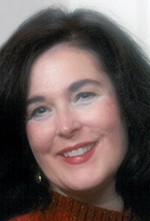
A small portrait beside a larger argument: local knowledge belongs in international PR. Author photograph accompanying Scott’s IPRA essay.
Her argument resists a common temptation in business communication: imagining that distributing a message widely means people everywhere will understand it the same way. A local colleague can identify the assumption a distant writer has failed to notice. The awkward question asked before publication can save a great many awkward explanations afterward.
Scott’s professional commentary also tracked changes closer to home. In a 2021 business-journal interview, she described the growing expectation that content creation, social media and search work would sit alongside media relations. The assignment had become broader than securing a single appearance in print.
That gives her career an interesting continuity. The tools multiply, the geography expands, and the work still returns to a particular audience. Who needs to understand this? What do they already believe? Where will the explanation meet them?
When the writer chooses the brief
A communicator ordinarily begins with someone else’s assignment. Scott’s civic writing put her own concerns on the page. By 2020, she had published Magenta Nation, a book concerned with bringing Americans together across divisions. A podcast carried the same name.
The move matters because the author has to own the purpose as well as the prose. Client work arrives with an organization’s priorities attached. A civic project asks the writer to decide which problem is worth her time, and why a stranger should spend time with it.
Scott described her reason in 2021: “My career as a communicator evolved into a passionate commitment to contribute what I can to preserve our democracy.” The sentence links the occupation to the obligation she chose for herself.
Her books include fiction, too: Love or Loyalty and Love Eternal... One More Time. One deals with forgiveness across a family’s history; the other takes up reincarnation. The subjects give her writing a reach beyond the professional brief. An executive can spend the working day pursuing clarity and still want a novel’s room for uncertainty.
Across those forms, the reader has different freedoms. A prospective customer may want a quick answer. A reader of fiction may enjoy a question that stays open. A participant in civic discussion may need enough space to reconsider an opinion without being hurried into a performance of agreement.
Three settings for Scott’s communications work. An editorial map, not a measure of audience size.
A meeting needs a time and a place
A book can propose that people talk to one another. Getting people into the same conversation requires a further decision: when?
An announcement for the Magenta Nation Project supplied an answer in January 2022. It listed a free virtual gathering on the second Sunday of each month, with Scott as the speaker. The program used intention and prayer as part of its approach to national division. Spiritual practice was part of the invitation, alongside the concern for public life.
A recurring date changes the shape of an idea. Readers can finish a book and set it aside. A gathering offers an appointment, a reason to return and the possibility of hearing someone else speak. Even an ambitious subject has to fit into a calendar.
Scott’s work in audio has included PRBI Insider, focused on international communications, as well as Magenta Nation. She has also hosted a virtual discussion series called Conversations With.... The formats give her several ways to put people and ideas together.
There is a difference between writing a complete explanation and asking a question that another person can answer. Hosting makes that difference visible. The guest gets a turn. The audience may follow an unexpected connection. A conversation can move somewhere the opening paragraph did not predict.
The audience gets a turn
Scott’s Fakchex publishing project brought her interest in communication to disinformation. She introduced it as a series of short articles intended to give readers facts about contested subjects and material they could share. The chosen unit was deliberately manageable: a particular topic, an article, a reader with limited time.
On July 20, 2024, she appeared with entrepreneur and author Andrew Edwards on Marco Ciappelli’s Redefining Society podcast. Their subject was misinformation and the relationship between technology and public trust. It placed an agency executive in a discussion about what happens to messages once they enter a crowded digital environment.
For a communications practitioner, that is consequential territory. Getting something seen is only one part of the problem. Readers also have to decide what warrants belief. A polished presentation can help a sound explanation travel; polish alone cannot settle whether the explanation deserves confidence.
Fakchex gives that concern a publishing form. Its stated purpose is to help readers examine public questions. The ambition leaves a responsibility with the reader, too: to consider the information before making the next decision, including the deceptively easy decision to pass it along.
The work after the argument
In 2021, Ragan recognized Scott in its Community Giver category for Top Women in Communications. Her activities included volunteering with her staff for VoteRiders, helping people obtain identification needed to vote. The work made civic participation a practical task as well as a subject for discussion.
The book asks people to consider division. The podcast offers another conversation. The volunteer work addresses a concrete obstacle. These activities have different demands, and none makes the others unnecessary. An explanation can encourage someone to act; sometimes a person also needs help completing the next step.
That is the useful perspective on Scott’s public life. A career spent communicating has given her several tools, and she has applied them to concerns she chose herself. The revealing details are often modest: an appointment on a Sunday, an article short enough to share, a family photograph saved for the holiday letter.
Her father’s instruction leaves space for the next encounter. The walk to the polls gives someone a way to participate in it. Between the two is a recognizable human ambition: keep the conversation possible, then give people a reason to show up.
Keep the conversation going
- Scott Public Relations · Joy Scott on LinkedIn
- Magenta Nation · Fakchex · Books, blogs and podcasts
- Her essay on raising voters · Lessons from her father
- Scott’s international PR essay · 2021 award announcement
- Listen: the 2024 misinformation conversation
- Redefining Society webcast archive on YouTube · Scott PR’s video channel